

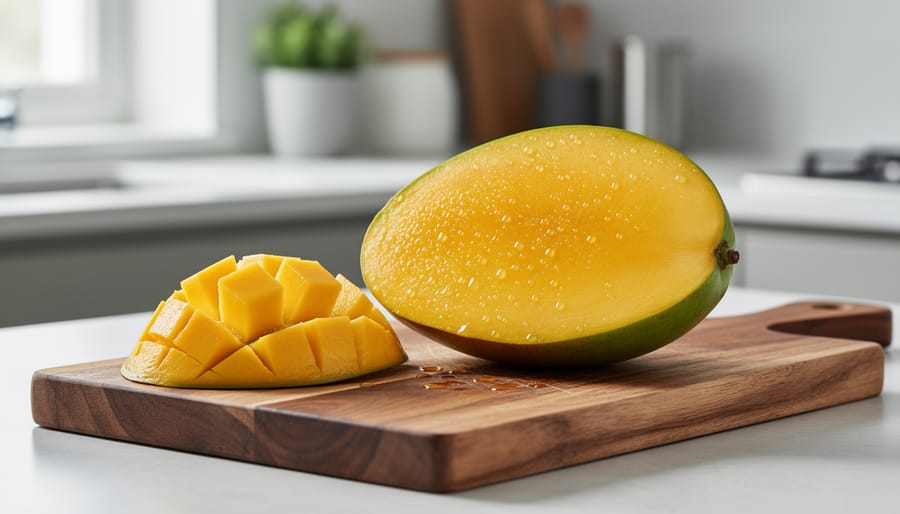
One medium mango delivers about 99 calories per cup, along with roughly 50% of your daily vitamin C, significant amounts of vitamin A, folate, and fiber, plus trace amounts of over 20 other vitamins and minerals. If you’re looking to understand exactly what this golden tropical fruit brings to your plate, the numbers tell a compelling story about why mangoes have earned their reputation as a nutritional powerhouse.
I’ll never forget the first time I truly paid attention to what I was eating. I was standing in my kitchen, mango juice dripping down my arm, when I realized I had no idea what was actually fueling my body. That moment sparked a journey into understanding food beyond taste, and mangoes became one of my favorite case studies in how nature packages nutrition.
The appeal of mango nutrition facts goes beyond counting calories. You’re here because you want specifics: the actual vitamin content, the sugar breakdown, how the macros stack up, and whether this fruit fits your personal health goals. Maybe you’re managing blood sugar, building a plant-based meal plan, or simply trying to make more informed choices at the grocery store. Whatever brought you here, you deserve clear, accurate information without the confusion.
What makes mangoes particularly interesting from a nutrition standpoint is their density of micronutrients relative to their calorie count. A three-quarter cup serving gives you 70 calories, 1.4 grams of protein, 25 grams of carbohydrates (including natural sugars and fiber), and just 0.6 grams of fat. But it’s what comes along with those macros that makes the difference: a substantial vitamin and mineral profile that supports everything from immune function to skin health.
The truth is, understanding nutrition facts shouldn’t feel overwhelming or restrictive. It should empower you to build meals that genuinely nourish your body and bring you joy.
The Complete Nutritional Breakdown of Mangos
When you pick up a fresh mango, you’re holding about 165 grams of tropical nutrition in your hand. Let’s break down exactly what that means for your body.
A standard serving of mango is 3/4 cup of sliced fruit, which weighs in at just 70 calories. If you’re like me and can’t stop at three-quarters, a full cup brings you to 99 calories. Either way, you’re getting serious nutritional value without the calorie overload.
| Nutrient | 3/4 Cup Serving | 1 Cup Serving |
|---|---|---|
| Calories | 70 | 99 |
| Protein | ~1g | 1.4g |
| Carbohydrates | ~19g | 25g |
| Fat | ~0.5g | 0.6g |
That one-cup serving delivers 1.4 grams of protein, 25 grams of carbohydrates, and 0.6 grams of fat. While mangos won’t replace your plant-based protein staples, they contribute to your overall nutrient intake alongside beans, nuts, and whole grains.
The carbohydrates in mangos come primarily from natural sugars, balanced with fiber that helps your body process them steadily. This combination means you get quick energy without the crash that comes from processed sweets.
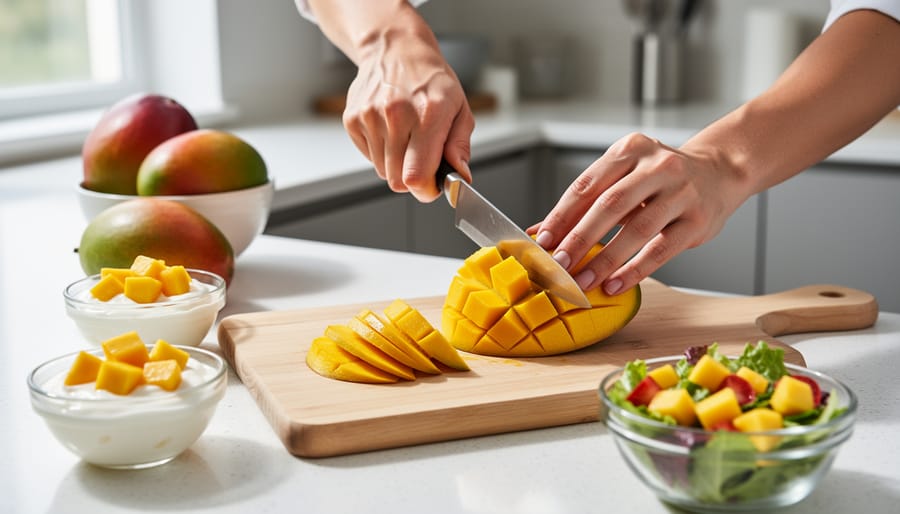
Measuring your serving is simpler than you might think. A 3/4 cup equals roughly one medium mango, sliced. I keep a measuring cup in my kitchen drawer and scoop out the chunks after cutting around the pit. If you prefer eating the whole fruit without measuring, one medium mango gives you slightly more than a single serving, but you’re still within a reasonable range for most eating patterns.
The beauty of these nutrition facts is how accessible they make mangos for any wellness goal. Whether you’re counting calories, watching your macros, or simply trying to eat more whole foods, the numbers tell a straightforward story: mangos pack substantial nutrition into a modest calorie count.
Vitamins and Minerals: The Hidden Powerhouses in Every Bite
Here’s the thing about mangos that catches most people off guard: that bright orange flesh isn’t just delicious, it’s working overtime to support your body in ways you might not notice until you really look at what’s inside.
Let’s start with the standout. Each 3/4 cup serving delivers 50% of your daily vitamin C needs. That’s half your requirement in less than a cup of fruit. Vitamin C does the heavy lifting for your immune system, helps your body absorb iron from plant foods (crucial if you’re eating plant-based), and supports collagen production for healthy skin. It’s also a powerful antioxidant that protects your cells from damage.
But vitamin C is just the beginning. That same serving contains over 20 different vitamins and minerals, each playing its own role. You’ll find vitamin A in the form of beta-carotene, which gives mangos their golden color and supports eye health and immune function. There’s folate, essential for cell growth and particularly important during pregnancy. Vitamin B6 helps your body metabolize protein and supports brain health. Vitamin E acts as another antioxidant, protecting your cells.
The mineral lineup is equally impressive. Mangos provide potassium, which helps regulate blood pressure and supports heart health. You’ll get some magnesium for muscle function and bone health, copper for iron absorption and nerve health, and small amounts of calcium, iron, and zinc.
What makes this micronutrient profile particularly valuable is the variety. Instead of being exceptional in just one or two nutrients, mangos offer a broad spectrum of vitamins and minerals that work together. This diversity means you’re supporting multiple body systems with every serving: immune defense, energy production, cellular repair, and cardiovascular health.
The beauty here is that you don’t need to memorize every nutrient or calculate percentages. You just need to know that when you eat a mango, you’re giving your body a wide range of tools it uses to function at its best.
Natural Sugars and Fiber: Understanding the Sweet Truth

Let’s talk about sugar, because I know that’s where some of you might pause before reaching for that juicy mango. Here’s what matters: the natural sugars in whole mangos come packaged with fiber and water, which changes everything about how your body processes them.
When you eat a cup of mango, you’re getting about 23 grams of natural sugars. That might sound like a lot until you understand the difference between these sugars and the added sugars in processed foods. Added sugars hit your bloodstream fast, causing those familiar energy spikes and crashes. The natural sugars in mangos, though, come with roughly 3 grams of fiber per cup that acts like a gentle brake pedal, slowing down sugar absorption and helping you maintain steady energy.
Think of fiber as your metabolic partner. It doesn’t just moderate how quickly sugars enter your system. It supports your digestive health, helps you feel satisfied, and keeps things moving smoothly. When you bite into fresh mango, you’re getting both the sweetness and the built-in balance that nature designed.
I spent years feeling guilty about enjoying sweet fruits, convinced I needed to limit them like candy. Then I learned that whole fruits work fundamentally differently in our bodies. That 3/4 cup serving with 70 calories isn’t just sugar, it’s a complete package of energy, fiber, vitamins, and satisfaction. Your body knows how to use it well.
You don’t need permission to enjoy mangos, but if you’re looking for reassurance: the fiber and nutrient density make them a genuinely nourishing choice, not something to ration or feel conflicted about.
How Mangos Fit Into a Plant-Based Lifestyle
I’ll never forget the morning I started blending mangos into my breakfast smoothies. At the time, I’d just transitioned to eating more plant-based meals and was worried about getting enough variety in my diet. Mangos turned out to be exactly what I needed, not just for their creamy sweetness, but for how perfectly they filled nutritional gaps I didn’t even know existed.
If you’re exploring plant-based diet basics mangos deserve a regular spot in your rotation. That 50% of daily vitamin C in each three-quarter cup serving supports iron absorption from plant sources like lentils and spinach, which matters when you’re not eating meat. The natural sugars provide quick energy before workouts, while the fiber keeps you satisfied longer than processed snacks ever could.
What I love most is how mangos play well with other whole foods. They pair beautifully with leafy greens in salads, balance the earthiness of quinoa bowls, and add brightness to coconut-based curries. That 1.4 grams of protein per cup might seem small, but it contributes to your daily total alongside beans, nuts, and whole grains. The over 20 vitamins and minerals work synergistically with nutrients from other plants you’re eating throughout the day.
The beauty of a whole-food approach is that you’re not counting nutrients obsessively or stressing about every meal. You’re simply enjoying real food that happens to nourish you deeply. Mangos fit this philosophy perfectly, they’re unprocessed, satisfying, and genuinely delicious. Whether you’re fully plant-based or just eating more plants, they make the journey easier and more enjoyable.
Simple Ways to Enjoy Mangos Every Day
Getting more mangos into your routine is easier than you might think, and honestly, it’s one of the tastiest nutrition upgrades you can make. I’ve found that keeping a couple ripe mangos on hand makes healthy choices feel effortless, especially when I’m rushing through weekday mornings.
The beauty of mangos is their versatility. Here are some ways I rotate them through my meals:
- Blend chunks into your morning smoothie with spinach and plant-based milk
- Dice fresh mango over oatmeal or chia pudding for natural sweetness
- Toss cubed mango into grain bowls with quinoa, chickpeas, and avocado
- Make a quick salsa with mango, lime, cilantro, and jalapeño for tacos
- Keep frozen mango on hand for easy additions to any meal
When you’re ready to start plant-based mangos become your secret weapon for adding natural sweetness without refined sugars.
For selecting mangos, trust your nose more than your eyes, a ripe mango smells sweet and tropical near the stem. A gentle squeeze should yield slightly, like a ripe avocado. Don’t worry if there are a few brown spots; those usually mean peak ripeness, not spoilage.
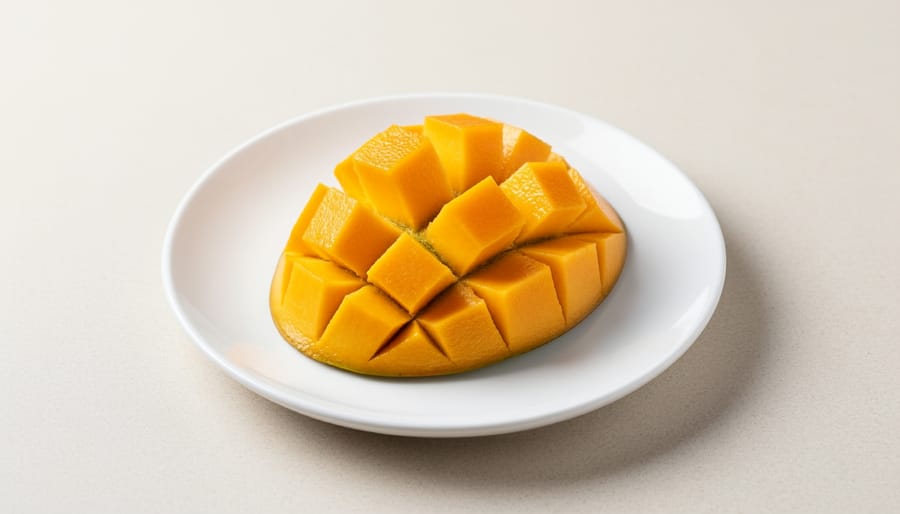
Store unripe mangos on your counter until they soften, then move them to the fridge to slow ripening. I’ve learned that cutting mangos doesn’t have to be intimidating, you can slice along both sides of the flat pit, score the flesh in a grid, and pop the cubes out. Or just peel and slice however feels natural to you. There’s no wrong way to enjoy something this nutritious and delicious.
Making Mango Nutrition Work for Your Wellness Goals
The nutrition facts you now know can become real tools for feeling your best, not rules to follow rigidly, but guideposts for choices that genuinely support you.
If you’re seeking sustained energy throughout the day, that 25g of carbohydrates in each cup of mango provides readily available fuel, while the fiber helps prevent sharp spikes and crashes. I’ve found that pairing mango with a handful of nuts or seeds balances the natural sugars with protein and healthy fats, keeping me satisfied longer during busy mornings or afternoon slumps.
For immunity support, that 50% of your daily vitamin C in just three-quarters of a cup works alongside the 20-plus other vitamins and minerals to help your body’s natural defenses. During seasons when I’m prioritizing immune health, I consciously include vitamin C-rich foods like mangos in my daily routine, trusting that consistency matters more than perfection.
Digestive wellness often responds beautifully to the fiber content in mangos. If this is your focus, notice how your body feels after eating mango, some people thrive with it as a morning fruit, while others prefer it as a midday refresher. There’s no universal prescription here, and that’s exactly the point.
Your wellness journey is unique, and healthy consistency comes from understanding what works for your body rather than following someone else’s formula. Use these nutrition facts as information, not limitation. Listen to how mangos make you feel, adjust portions based on your individual needs, and trust that small, intentional choices compound into meaningful wellness over time.
I still keep a bowl of fresh mango chunks in my fridge most weeks now, and every time I reach for them, I smile remembering how much my relationship with this fruit has deepened. Understanding the nutrition facts, those 99 calories per cup, that impressive 50% of daily vitamin C in just three-quarters of a cup, the balance of natural sugars with fiber, hasn’t made mangos feel like medicine. It’s made them feel like a delicious, intentional choice that supports exactly how I want to feel.
Here’s what I hope you take away: nutrition facts aren’t rules to follow perfectly. They’re information that helps you make choices aligned with your unique body and goals. Maybe mangos become your go-to energizing snack, or maybe they’re an occasional treat you savor without second-guessing. Both paths are completely valid.
You now have the facts about what’s in this tropical fruit and the freedom to decide what role it plays in your wellness journey. Trust yourself to know what feels good, what serves your body, and what brings you joy. That’s the kind of relationship with food, and with mangos, that truly nourishes.