

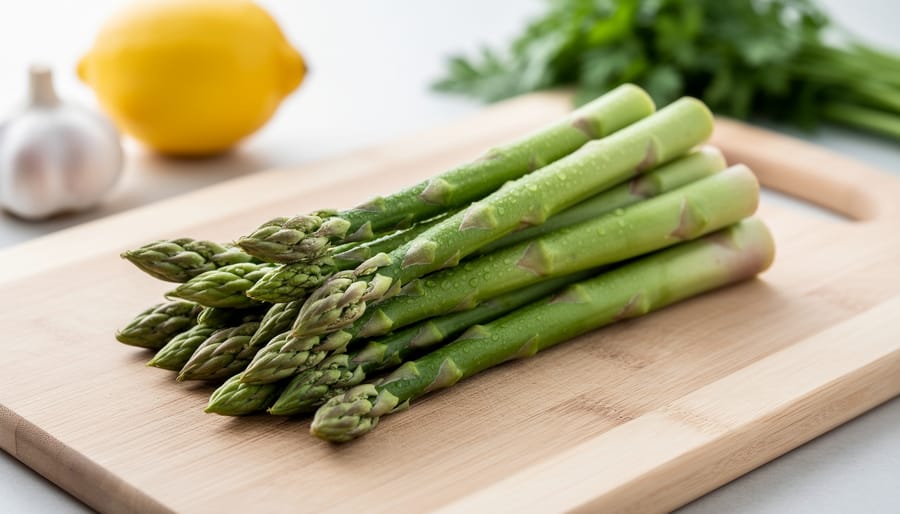
I still remember the first time I truly appreciated asparagus. Not as that mysterious green vegetable my grandmother served at Sunday dinners, but as a nutrition powerhouse that transformed how I approached spring cooking. One cup of cooked asparagus contains just 40 calories while delivering 4 grams of protein, 4 grams of fiber, and an impressive array of vitamins that support everything from bone health to cellular repair.
What makes asparagus particularly remarkable is its nutrient density. You’re getting 101% of your daily vitamin K needs, 57% of folate, and 34% of vitamin A in a single serving. That same cup provides significant amounts of vitamin C, iron, and potassium without any dietary cholesterol or saturated fat. For anyone tracking macros or simply trying to eat more vegetables, asparagus delivers genuine nutritional value without empty calories.
The spears also contain unique plant compounds like glutathione and rutin that you won’t find in many other vegetables. These antioxidants work alongside the high fiber content to support digestive health, while the folate plays a critical role in cellular function and tissue growth. If you’re pregnant, planning to conceive, or simply focused on long-term wellness, that folate content matters more than nutrition labels might suggest.
This guide breaks down exactly what’s inside those tender green stalks, explains why each nutrient matters for your body, and shows you how to prepare asparagus in ways that preserve its nutritional benefits while actually tasting delicious.
The Complete Nutritional Breakdown of Asparagus
Let me start by putting the numbers in front of you. One half-cup serving of cooked asparagus (about 90 grams) delivers 20 calories, and those calories break down into meaningful nutrients your body can actually use. You’ll get 2.2 grams of protein, 3.7 grams of carbohydrates, and just 0.2 grams of fat. That 1.8 grams of fiber is working behind the scenes to support your digestion, and the 13 milligrams of sodium keeps things light if you’re watching your salt intake.
| Nutrient | Amount per 1/2 Cup (90g Cooked) |
|---|---|
| Calories | 20 |
| Protein | 2.2g |
| Carbohydrates | 3.7g |
| Fat | 0.2g |
| Fiber | 1.8g |
| Sodium | 13mg |
Here’s what those numbers mean for your plate. Twenty calories is genuinely low, so asparagus won’t crowd out your calorie budget even if you’re managing portions carefully. The protein content surprises people, 2.2 grams might not sound like much, but for a vegetable, it’s respectable and contributes to your daily total when you’re building plant-based meals. The carbohydrate count includes that fiber, which means you’re getting slow-burning energy rather than a blood sugar spike.
That fiber content deserves attention. At 1.8 grams per serving, asparagus contributes about 7 percent of the daily recommended fiber intake for most adults. This isn’t trivial when so many people struggle to hit their fiber goals. The fat content is almost negligible, which makes asparagus an easy fit whether you’re tracking macros or simply trying to eat lighter.
Beyond these basics, asparagus brings vitamin K and zinc to the table. Vitamin K supports bone health and proper blood clotting, while zinc plays a role in immune function and wound healing. These nutrients work quietly in the background but matter for your long-term wellness. The sodium level stays minimal at just 13 milligrams, so you’re not dealing with hidden salt that undermines your efforts to eat clean.
The takeaway isn’t just about memorizing numbers. It’s recognizing that asparagus packs genuine nutrition into very few calories, giving you room to build satisfying meals without overthinking portions. That combination of protein, fiber, and key vitamins makes it more than just a side dish.
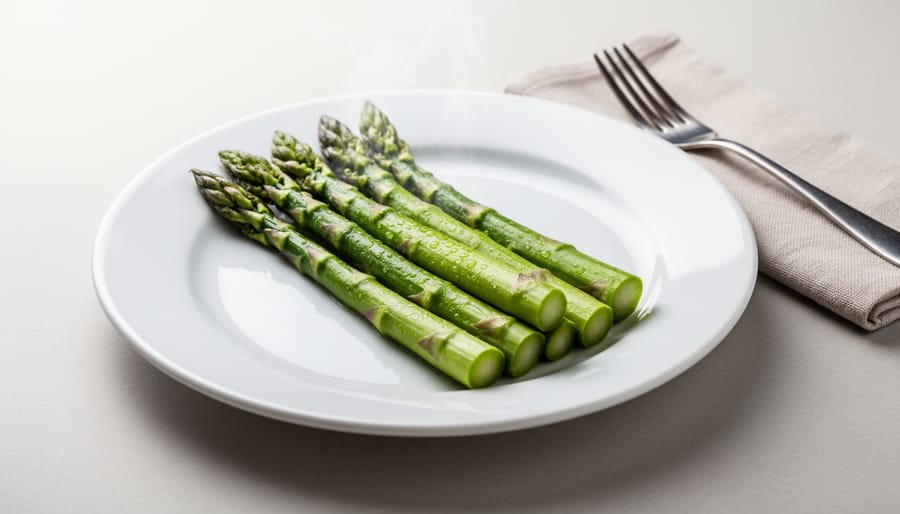
What Makes Asparagus a Nutrition Powerhouse
When I review nutritional data with clients, I always emphasize that the real power of a food isn’t just in its numbers, it’s in how those nutrients work together to support your body. Asparagus delivers on multiple fronts in ways that matter for your everyday wellness.
The fiber content is where asparagus really shines for digestive health. At 1.8g per half-cup serving, it contributes meaningfully to your daily fiber needs without filling you up too much. This isn’t just about regularity, fiber helps stabilize blood sugar, keeps you satisfied between meals, and feeds the beneficial bacteria in your gut. For a vegetable with only 20 calories, that’s impressive efficiency.
Vitamin K is another standout. While many people focus on calcium for bone health, vitamin K plays an equally crucial role in bone metabolism by helping your body use that calcium effectively. It also supports proper blood clotting. If you’re taking blood-thinning medications, you’ll want to discuss vitamin K intake with your healthcare provider, but for most people, getting adequate amounts from vegetables like asparagus supports skeletal strength as you age.
Zinc often gets overlooked in conversations about vegetables because we associate it more with meat and shellfish. But asparagus provides plant-based zinc, which supports immune function, wound healing, and even taste perception. For those eating primarily plants, every bit of zinc counts toward meeting your body’s needs.
What makes asparagus particularly valuable is that low calorie density I mentioned earlier. You can eat a generous portion, enough to actually enjoy it as part of your meal, without worrying about calorie overload. This means you get those beneficial nutrients in meaningful amounts rather than trace quantities that barely register. That’s the difference between a food that tests well in a lab and one that genuinely nourishes you at the dinner table.
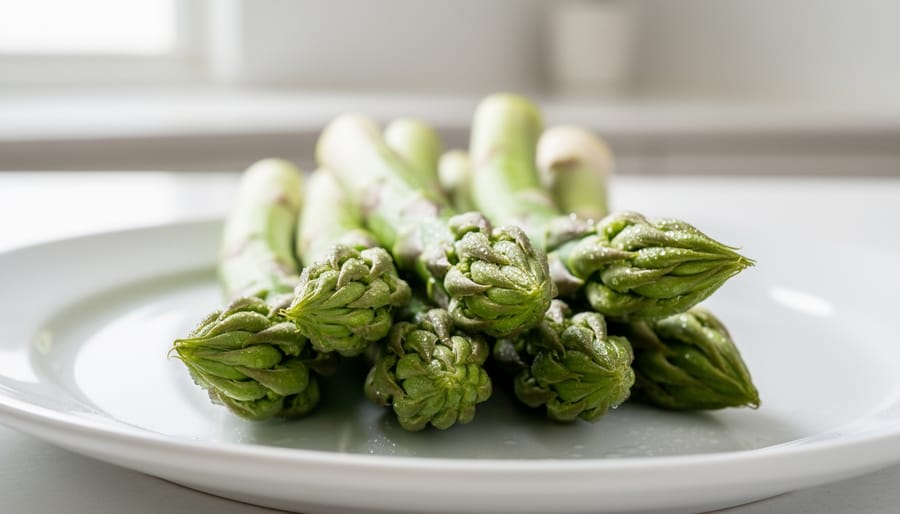
How Asparagus Fits Into a Plant-Based Diet
When I work with clients learning about plant-based diet basics one question comes up constantly: where do I get my protein? While asparagus won’t single-handedly meet your daily protein needs, its 2.2 grams per half-cup serving adds up when you’re building varied, nutrient-dense meals. I see it as a supporting player rather than the star, but that supporting role matters more than you might think.
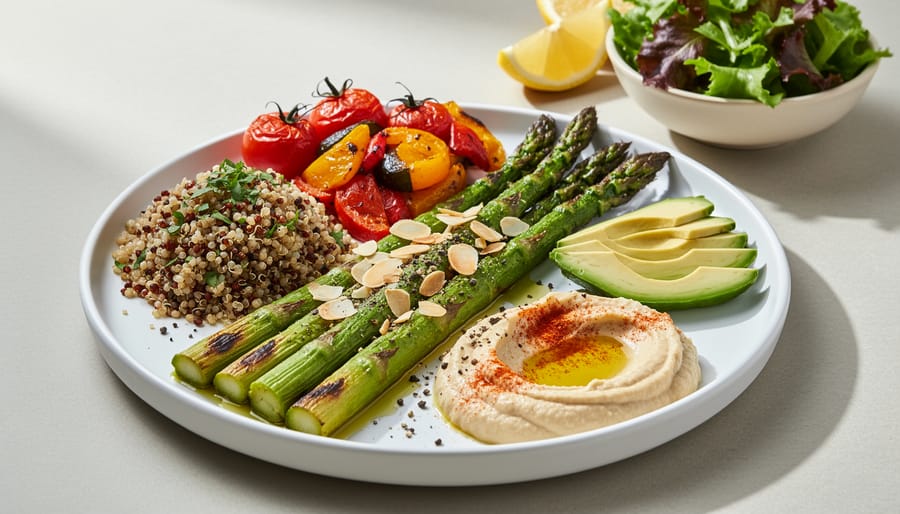
The real magic happens when you combine asparagus with other plant-based protein sources. Pair it with lentils, quinoa, chickpeas, or tofu, and you’ve got a meal that delivers complete amino acids plus that impressive 1.8 grams of fiber per serving. That fiber content is where asparagus truly shines for plant-based eaters, since it supports digestion and helps you feel satisfied longer.
If you’re just starting to start a plant-based diet asparagus is forgiving and versatile. Light steaming preserves more nutrients than boiling, which can leach water-soluble vitamins into the cooking water. Roasting at 400°F for 12 minutes caramelizes the natural sugars while keeping the fiber and protein intact. A quick sauté with garlic and a splash of lemon juice takes under five minutes and delivers full nutritional value.
The low calorie density (just 20 calories per half-cup) means you can load your plate without worrying about calorie overload, leaving room for calorie-dense staples like nuts, seeds, and whole grains. That balance is exactly what I encourage in a sustainable plant-based approach.
Choosing and Preparing Asparagus for Maximum Nutrition
The moment you walk into a farmers’ market or grocery store during spring, you’ll spot asparagus bundles lining the produce section. But picking the freshest stalks and preparing them correctly can make a real difference in getting the most nutrition out of this vegetable.
When you’re shopping, look for firm, straight stalks with tightly closed tips. The cut ends should look fresh, not dried out or shriveled. Thinner spears tend to be more tender, while thicker ones offer a meatier texture, both are nutritious, so choose based on your recipe. I always give the bunch a gentle squeeze near the tips; they should feel crisp and snap easily if you bend one. Avoid asparagus with slimy or mushy spots, as those are past their prime.
Once you get your asparagus home, proper storage helps preserve those valuable nutrients we talked about earlier. Trim about an inch off the bottoms and stand the bundle upright in a jar with an inch of water, like a bouquet. Cover the tops loosely with a plastic bag and refrigerate. This keeps them fresh for up to four days. For longer storage, wrap the trimmed ends in a damp paper towel and store in a produce bag.
Cooking method matters tremendously for nutrient retention. Steaming for five to seven minutes preserves the most vitamins and minerals while keeping that satisfying crunch. Roasting at 425 degrees for 12 to 15 minutes caramelizes the natural sugars without sacrificing nutrition. Grilling works beautifully, too, just brush with a bit of olive oil and cook for eight to ten minutes, turning once.
The key is avoiding overcooking. Asparagus should be tender-crisp, not limp. When it turns bright green and you can pierce it easily with a fork, it’s done. That slight resistance when you bite into it means you’ve locked in the fiber, protein, and all those beneficial compounds that make asparagus such a nutritional winner.
Simple Plant-Based Asparagus Recipe to Try
One of my favorite ways to showcase asparagus nutrition is this Lemon-Garlic Roasted Asparagus with Tahini Drizzle. It’s incredibly simple yet packed with flavor, and it transforms those nutrition facts we’ve discussed into a dish you’ll actually crave.
This recipe brings out asparagus’s natural sweetness through roasting while adding heart-healthy fats from tahini that help your body absorb all that vitamin K. It works beautifully as a side dish or can be the star of your meal when paired with quinoa or served alongside other spring salad ideas.
Ingredients:
1 pound fresh asparagus, woody ends trimmed
2 tablespoons olive oil
3 cloves garlic, minced
Juice of 1 lemon
2 tablespoons tahini
1 tablespoon water (to thin tahini)
Salt and pepper to taste
Red pepper flakes (optional)
- Preheat your oven to 425°F and line a baking sheet with parchment paper.
- Toss the trimmed asparagus with olive oil, minced garlic, salt, and pepper until evenly coated.
- Arrange the spears in a single layer on your prepared baking sheet.
- Roast for 10 to 12 minutes until the asparagus is tender but still has a slight bite.
- While the asparagus roasts, whisk together tahini, lemon juice, and water until smooth and drizzle-able.
- Transfer the roasted asparagus to a serving plate and drizzle with the tahini sauce.
The beauty of this recipe is how it honors asparagus’s nutrition without overthinking it. You’re getting all those benefits, 20 calories per half-cup serving and nearly 2 grams of fiber, wrapped in flavors that make healthy eating feel effortless rather than restrictive.
Looking back on my own journey with asparagus, I realize it taught me something essential about nutrition, numbers on a label only matter when they translate into how you actually feel. The 20 calories and 1.8 grams of fiber per half-cup aren’t just data points; they represent energy, satiety, and the kind of nourishment that supports your body without weighing it down.
The beauty of understanding asparagus nutrition facts is that it removes guesswork from your plate. You know you’re getting vitamin K for bone health, zinc for immune support, and quality plant-based protein, all in a vegetable that’s genuinely delicious when prepared with care.
Here’s what I hope you’ll take away: there’s no single “right” way to eat asparagus or build your meals. Maybe you’ll love it roasted with garlic, tossed into grain bowls, or blended into spring soups. Experiment in your own kitchen. Notice what makes you feel good. The nutritional foundation is solid, how you enjoy it is entirely yours to discover.