

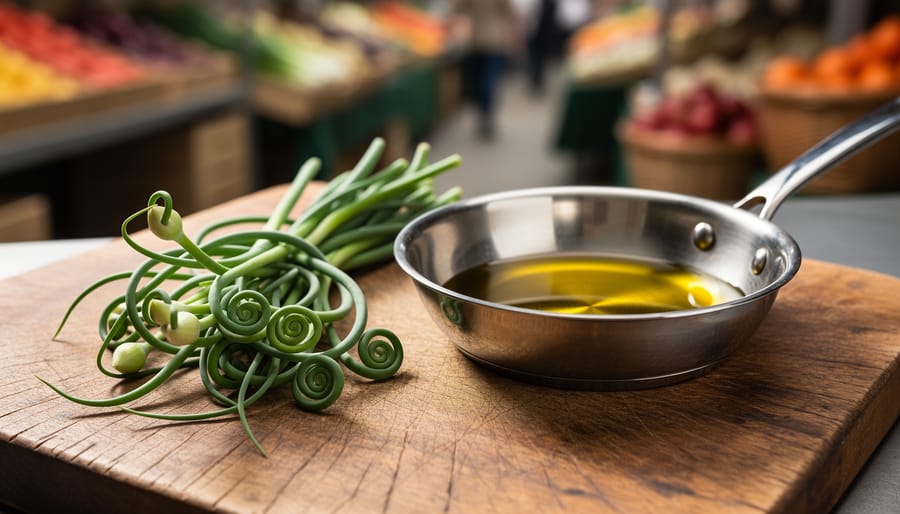
Cooking garlic scapes is simple: trim the woody ends, chop the tender green stems into pieces, and sauté them in olive oil for 3-5 minutes until bright green and crisp-tender. These curly, green shoots grow from hardneck garlic bulbs in late spring and early summer, offering a milder, slightly sweet garlic flavor that works beautifully in stir-fries, pestos, and roasted vegetable medleys.
If you spotted these spiral stalks at your farmers’ market and wondered what to do with them, you’re not alone. Scapes are one of those seasonal treasures that appear for only a few weeks each year, and they’re incredibly forgiving for first-time users. Unlike garlic cloves, scapes won’t burn easily or turn bitter, making them perfect for quick weeknight cooking.
I still remember the first time I brought home a bundle of scapes, unsure whether to eat the entire stem or just the tip. Turns out, nearly the whole scape is edible except for the very bottom inch and the flower bud at the top, which can be tough. Once I learned that, I started adding them to everything: scrambled tofu, grain bowls, and even blended into creamy dressings.
Beyond their versatility, scapes pack nutritional benefits similar to garlic itself, including vitamin C, manganese, and antioxidants that support immune health. They’re a natural fit if you’re looking to start plant-based cooking or simply want to explore more seasonal, whole-food ingredients. Whether you’re grilling, roasting, or pureeing them into a vibrant sauce, scapes bring fresh, garlicky flavor without overpowering your dish.
What Are Garlic Scapes and Why Cook Them?
Garlic scapes are the curly green stalks that shoot up from hardneck garlic bulbs in late spring, and harvesting them before they flower gives you an entirely edible vegetable with a surprisingly mild kick. Unlike the pungent intensity of garlic cloves, scapes offer a gentler, slightly sweet garlic flavor that won’t overpower your dishes. This makes them incredibly versatile, you can treat them as a standalone vegetable (think sautéed greens or grilled spears) or use them as a seasoning substitute wherever you’d normally reach for garlic cloves.
The scape grows from hardneck garlic varieties specifically, which is why you’ll only find them during a brief window each year at farmers markets and specialty grocers. Their fleeting availability is part of their charm, but it’s their nutritional profile that makes them truly worth seeking out. For just 30 calories per 100 grams, garlic scapes deliver hefty amounts of vitamin C and vitamin A to support your immune system and vision, plus vitamin B6 for energy metabolism. They’re also packed with manganese and selenium, two minerals that play crucial roles in antioxidant defense, and they’re high in fiber to support digestive health.
What really sets scapes apart is their dual nature. You can slice them into stir-fries where they act as the main vegetable component, or mince them finely to replace raw garlic in dressings and marinades without the sharpness that sometimes feels aggressive. That flexibility means you’re not locked into one type of preparation, which is perfect when you’re trying to make the most of a seasonal ingredient with a short harvest window.
Tools and Materials You’ll Need
You don’t need a well-stocked kitchen to work with garlic scapes, most of what you’ll use is probably already in your drawer. Since these tender stalks adapt to various cooking methods, your tool requirements depend on how you plan to prepare them.
Here’s what you’ll want on hand:
- Sharp knife or kitchen shears for trimming ends and cutting scapes to size
- Cutting board with a stable surface to handle the curled stalks
- Skillet or grill pan for sautéing or grilling
- Baking sheet for roasting
- Blender or food processor if you’re making pesto
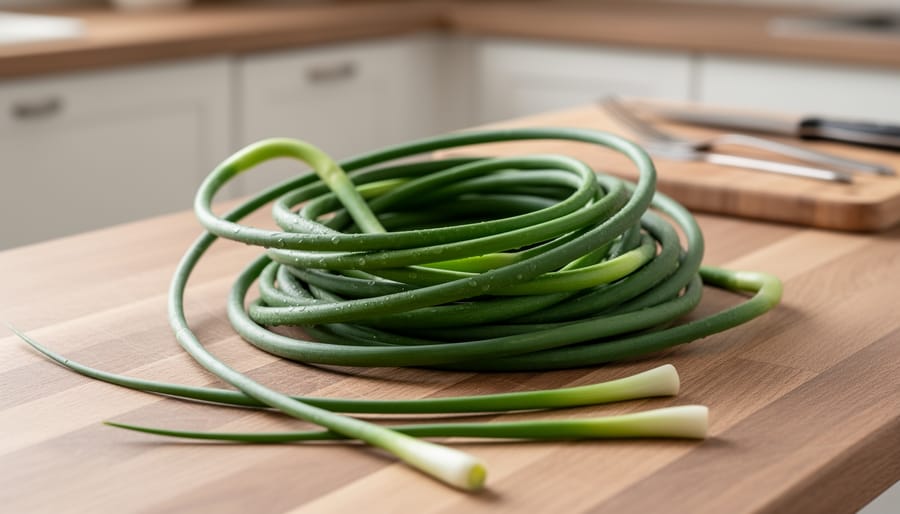
When selecting scapes at a farmers market or grocery store, look for firm stalks with vibrant green color. The curls should feel supple, not limp or dried out. Avoid any with yellowing tips or slimy texture, which indicate they’re past their prime. Fresh scapes should snap cleanly when you bend them rather than bending without resistance.
Once you’re home, wrap your scapes loosely in a damp paper towel and store them in a plastic bag in the refrigerator. They’ll keep for about a week, though their flavor is best within the first few days. If you notice the flower buds starting to open or the stems becoming woody, use them quickly, they’re still perfectly edible but will require a bit more trimming before cooking.
How to Prepare Garlic Scapes for Cooking
Start by gently rinsing your garlic scapes under cool water to remove any dirt or debris from the garden. Pat them dry with a clean kitchen towel, then lay them on your cutting board. You’ll notice that scapes have a natural curve, embrace it, because that’s part of their charm.
When harvested before they flower, the entire scape is tender and edible. However, you’ll want to make a few simple trims to ensure the best texture and flavor. Here’s how to prepare them:
- Trim the woody bottom end where the scape was cut from the bulb. Remove about half an inch, or wherever the stem looks dry or fibrous.
- Check the top of the scape for a flower bud, it looks like a pointed, bulbous tip. If present, snip it off, as it can be tough and slightly bitter.
- Cut the scapes into your desired length. For sautéing or grilling, 2 to 3-inch pieces work well. For pesto or finely chopped garnishes, go shorter.
To tell if a scape is tender enough, gently bend it. Fresh scapes should be pliable and crisp, snapping cleanly rather than bending limply. The middle section is typically the most tender, while the very top near the flower bud can be slightly tougher. If you’re unsure, taste a small raw piece, it should be crunchy with a mild, fresh garlic flavor, not stringy or woody.
Once prepped, your scapes are ready for any cooking method you choose. The beauty of this ingredient is its forgiveness: even if you leave a slightly tougher section on, cooking will soften it considerably.
Safety and Selection Tips
When choosing garlic scapes at the farmers market or grocery store, look for firm, bright green stalks with tightly closed buds. Fresh scapes should feel crisp and snap easily when bent, not limp or rubbery. Avoid any with yellowing leaves, dried-out ends, or buds that have begun to open, as these indicate the scape has passed its prime and may taste woody or bitter.
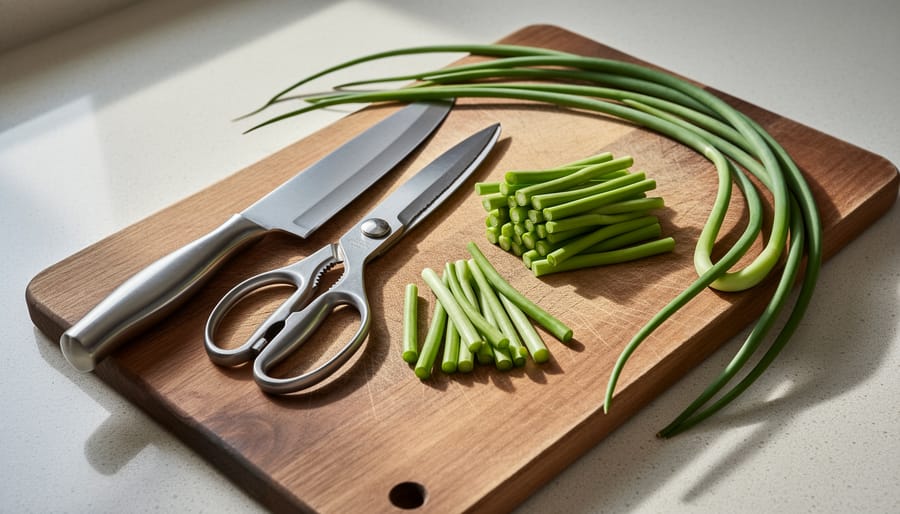
Before cooking, rinse your scapes under cool running water to remove any dirt or debris from the farm. Pat them dry with a clean kitchen towel. When trimming the curled stalks, use a sharp knife on a stable cutting board and work slowly, the spiral shape can make them roll unexpectedly. Trim away about half an inch from the bottom where the stalk appears dry or tough, and snip off the pointed flower bud at the top if present, as this part tends to be fibrous.
Store unwashed scapes in a plastic bag or wrapped in a damp paper towel in your refrigerator’s crisper drawer, where they’ll stay fresh for up to two weeks. The key to safe handling is the same as with any produce: clean hands, clean tools, and thorough washing before use.
5 Simple Ways to Cook Garlic Scapes
Sautéed Garlic Scapes
Heat a tablespoon of olive oil in a skillet over medium heat. Toss in your trimmed, chopped garlic scapes and cook for three to five minutes, stirring occasionally, until they turn bright green and tender. You’ll know they’re ready when they soften slightly but still hold their shape, think crisp-tender green beans, not mushy vegetables.
The mild garlic flavor intensifies just enough to become fragrant without overwhelming your dish. Season with a pinch of salt and black pepper, or add a squeeze of lemon juice for brightness. A sprinkle of red pepper flakes works beautifully if you want a little heat.
Serve sautéed scapes as a simple side dish alongside roasted chickpeas and quinoa, or toss them into pasta with cherry tomatoes and white beans. They also make a fantastic topping for avocado toast or stirred into a warm grain bowl. This method is forgiving and fast, perfect for weeknight cooking when you want maximum flavor with minimal effort.
Grilled Garlic Scapes
Grilling transforms garlic scapes into a sweet, smoky side dish with minimal effort. The high heat creates caramelized edges and softens their texture while mellowing the garlic flavor even further.
Start by preheating your grill to medium-high heat. Toss whole scapes (or halve them lengthwise if they’re particularly thick) with a drizzle of olive oil and a pinch of salt. Lay them directly on the grill grates perpendicular to the bars so they don’t fall through.
Grill for three to five minutes per side, turning once, until you see charred stripes and the scapes become tender. They should remain bright green in spots with darkened, blistered areas where they touched the grates. The curly shape means some parts will char more than others, which adds visual appeal and flavor depth.
Serve grilled scapes as a standalone side, chop them to top grain bowls or salads, or arrange them on a platter with other grilled vegetables for plant-based barbecues. Their mild sweetness pairs beautifully with tangy dressings or a squeeze of lemon.
Roasted Garlic Scapes
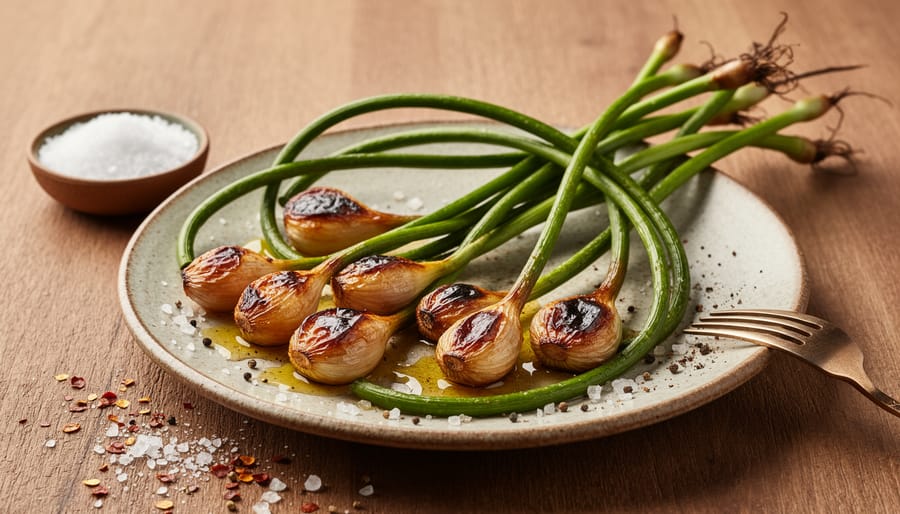
Roasting transforms garlic scapes into a deeply flavorful side dish with sweet, caramelized edges and a tender texture throughout. Preheat your oven to 400°F and toss whole or halved scapes with a tablespoon of olive oil, pinching of sea salt, and fresh black pepper. Spread them in a single layer on a baking sheet, ensuring they don’t overlap so each scape develops those crispy, golden edges. Roast for 15 to 20 minutes, turning once halfway through, until the scapes are tender when pierced with a fork and their edges are deeply browned.
The concentrated flavor that develops during roasting makes them perfect as a standalone side dish, but they’re equally versatile stirred into grain bowls, layered into sandwiches, or chopped and folded into plant-based pasta sauces. The mild garlic flavor becomes sweeter and more complex with roasting, offering all those nutritional benefits, vitamin C, vitamin A, fiber, in a deeply satisfying form.
Garlic Scape Pesto
Garlic scape pesto transforms these mild stalks into a versatile sauce that brightens everything from pasta to roasted vegetables. You can blend scapes raw for a punchy, verdant pesto, or blanch them briefly in boiling water for thirty seconds to mellow the flavor even further. The base is simple: combine scapes with nuts (try walnuts, almonds, or sunflower seeds for a budget-friendly option), lemon juice, nutritional yeast or a plant-based parmesan alternative, olive oil, and salt. Pulse everything in a food processor until you reach your preferred texture, smooth or slightly chunky. The beauty of scape pesto is its adaptability. Swap half the oil for vegetable broth to lighten it, add fresh basil or parsley for complexity, or stir in a spoonful of white miso for umami depth. Store it in an airtight container with a thin layer of olive oil on top to preserve that vibrant green color, and it’ll keep in the fridge for up to a week or freeze beautifully for months.
Raw Garlic Scapes
Raw garlic scapes deliver the mildest garlic experience you’ll find, making them perfect for anyone who loves garlic flavor without the intensity. I discovered this when I nervously nibbled a raw scape at the farmers market, it tasted fresh and bright, almost like a cross between asparagus and spring onions, with just a whisper of garlic.
Slice scapes thinly and toss them into green salads or grain bowls for a crisp, onion-like crunch. They add texture and subtle flavor without overpowering delicate greens or fresh herbs. You can also serve them whole or cut into sticks as part of a crudité platter alongside hummus or plant-based dips, they’re sturdy enough to scoop and surprisingly addictive.
For finishing touches, mince scapes finely and sprinkle them over soups, tacos, or avocado toast as you would chives or scallions. The raw application preserves all their vitamin C and fiber while keeping prep time under a minute, which feels like a win when you’re rushing to get dinner on the table.
How to Know When Your Garlic Scapes Are Perfectly Cooked
Knowing when your garlic scapes are perfectly cooked comes down to three sensory checks. First, look for color: properly cooked scapes maintain a vibrant green hue. If they’ve turned grayish or olive-drab, you’ve overcooked them and lost both nutrients and flavor. Second, test the texture by piercing a scape with a fork. It should yield easily but still have a slight bite, similar to al dente green beans. Mushy scapes have been cooked too long and won’t hold up in dishes.
The aroma test is equally important. Cooked scapes should smell pleasantly garlicky and slightly sweet. If you detect a burnt or acrid smell, pull them off the heat immediately. Before serving, taste a small piece to verify doneness. When using scapes as a vegetable side, aim for tender texture with a mild garlic flavor that complements plant-based protein mains. When incorporating them as a seasoning in pesto or sauces, you can cook them slightly longer to mellow the flavor further. Trust your senses over rigid timing rules, since scape thickness varies throughout the season.
Creative Ways to Use Cooked Garlic Scapes
Once you’ve mastered the basic cooking methods, cooked garlic scapes can elevate a wide range of plant-based meals with their subtle, sweet garlic flavor. Their tender texture and versatility make them easy to incorporate into everyday dishes.
Stir chopped sautéed or roasted scapes into warm pasta with olive oil and lemon for a simple weeknight dinner. They bring depth without overwhelming other ingredients. Layer grilled scapes over grain bowls alongside roasted vegetables and tahini dressing, or fold finely chopped sautéed scapes into hummus for an unexpected twist on the classic spread.
For breakfast, mix cooked scapes into tofu scrambles or chickpea omelets, where their mild flavor complements spices and nutritional yeast. They work beautifully as a pizza topping too, scatter roasted scapes over plant-based cheese before baking for pockets of concentrated flavor.
- Toss with warm quinoa, cherry tomatoes, and fresh herbs for a quick grain salad
- Blend into creamy cashew-based pasta sauces for extra depth
- Chop and stir into mashed potatoes or cauliflower mash
- Layer onto sandwiches or wraps as a flavorful vegetable addition
- Mix into rice pilaf or fried rice during the last few minutes of cooking
Cooked scapes also shine in a spring salad where their tender texture contrasts beautifully with crisp greens and creamy dressing. The key is treating them like you would any cooked vegetable, they can stand alone as a side or integrate seamlessly into composed dishes. Their mild profile means they enhance rather than dominate, making them a reliable flavor builder that supports your plant-based cooking without requiring complicated techniques.
Frequently Asked Questions About Cooking Garlic Scapes
Can I use garlic scapes instead of regular garlic?
Yes, and they’re wonderful when you want a gentler flavor. Because scapes taste milder than cloves, you’ll need more volume, roughly three or four scapes to replace one clove’s intensity. They work beautifully in any dish where you’d use garlic, from stir-fries to soups, and they add a subtle sweetness that regular garlic doesn’t bring.
Do I need to remove any parts before cooking?
Trim the tough, woody bottom end where the scape was cut from the bulb, it’s fibrous and unpleasant to chew. If your scapes still have the flower bud at the tip (a small bulge), you can remove it or leave it; the bud is edible but slightly tougher in texture. Everything else is fair game.
How long do cooked garlic scapes last?
Store cooked scapes in an airtight container in the refrigerator for up to five days. They reheat well and hold their flavor, making them a great meal-prep ingredient. If you’ve made pesto, it keeps for about a week in the fridge or several months in the freezer.
Are garlic scapes suitable for all diets?
They fit seamlessly into most eating patterns, including plant-based diet basics and they’re naturally gluten-free, vegan, and low in calories. If you have a garlic sensitivity, scapes may still trigger a reaction since they contain similar compounds, though their mildness is often easier to tolerate.
Can I freeze fresh garlic scapes?
Absolutely. Chop them into your preferred size, spread on a baking sheet to freeze individually, then transfer to a freezer bag. They’ll keep for several months and can go straight from freezer to pan.
What if my scapes taste too strong?
Cooking mellows their flavor significantly, roasting or sautéing brings out sweetness and tames any sharpness. If you’re using them raw and find them too pungent, blanch them in boiling water for 30 seconds before adding to salads or pesto.
Don’t overthink it. Scapes are forgiving, and there’s no wrong way to prepare them. If you’re new to cooking with seasonal ingredients, they’re a gentle introduction, flavorful enough to be interesting, mild enough not to overpower, and nutritious enough to feel good about adding to your meals.
Step-by-step process
Cooking garlic scapes is straightforward once you understand the basic flow. Start by inspecting your scapes and trimming off the woody bottom ends, usually about half an inch. If the flower bud is present at the top, snip that off too, though it’s edible when young. Rinse the scapes under cool water to remove any soil or debris.
Next, decide on your cooking method based on how you plan to use them. For sautéing or stir-frying, cut the scapes into one to two-inch pieces. Heat a skillet over medium heat with a bit of oil, add the scapes, and cook until they turn bright green and tender, stirring occasionally. For grilling, leave them whole or halve them lengthwise, brush with oil, and place directly on the grates until charred in spots and soft. Roasting works well in a single layer on a baking sheet, tossed with oil and your choice of seasoning.
If you’re making pesto, you can use raw scapes or blanch them briefly in boiling water first to mellow the flavor even further. Blend with nuts, oil, and nutritional yeast or cheese until smooth. Taste as you go, scapes have a milder profile than garlic cloves, so adjust quantities based on your preference.
I remember the first time I brought home a bundle of garlic scapes from our local farmers market. I wasn’t sure what to do with these curly green stalks, but experimenting with them opened up a whole new world of flavor in my kitchen. They became a springtime staple that I looked forward to each year, adding brightness and nutrition to everything from quick weeknight stir-fries to weekend pesto sessions.
Cooking garlic scapes is one of the most forgiving and rewarding ways to embrace seasonal eating. Whether you sauté, grill, roast, blend, or enjoy them raw, you’re nourishing your body with vitamin C, vitamin A, manganese, and fiber while exploring a gentle, versatile ingredient that fits beautifully into any plant-based meal. There’s no single right way to prepare them, which means you can trust your instincts and let your taste guide you.
I hope this guide gives you the confidence to try garlic scapes for yourself. They’re a delicious reminder that holistic wellness doesn’t require complicated recipes or hard-to-find ingredients, sometimes it just takes a willingness to explore what’s fresh, local, and in season.