

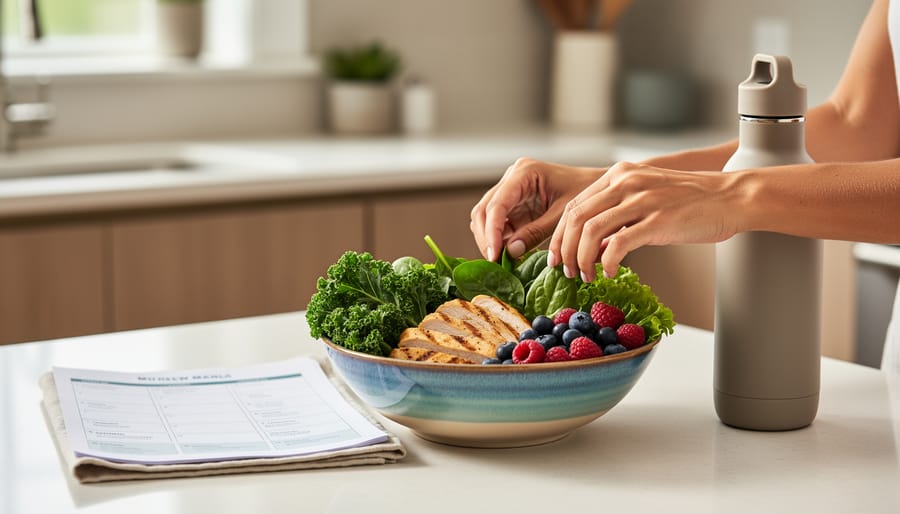
A personalized nutrition program tailors your eating plan to your unique biology, lifestyle, and health goals rather than following a cookie-cutter diet. This approach considers your genetics, food sensitivities, activity level, cultural preferences, and even your daily schedule to create sustainable eating patterns that actually work for your body. The result is better energy, improved health markers, and freedom from the exhausting cycle of diets that promise everything but deliver disappointment.
I understand the frustration. You’ve tried the trending diets, counted every calorie, followed meal plans designed for someone else’s life, and wondered why your body didn’t respond the way the success stories promised. Here’s what I learned after years of watching clients struggle with generic programs: you weren’t failing the diets. The diets were failing you.
Your body doesn’t process food the same way mine does, or your neighbor’s does, or that influencer’s does. Some people thrive on three square meals while others need smaller, frequent eating windows. Certain foods that fuel one person might trigger inflammation in another. Your stress levels, sleep patterns, gut microbiome, and even your ancestry play roles in how you metabolize nutrients. Generic plans ignore these differences entirely.
The shift toward personalized nutrition in 2026 reflects growing recognition that sustainable health changes require individual solutions. This doesn’t mean expensive genetic testing or complicated tracking systems, though those tools can help. It means starting where you are, paying attention to how your body responds, and building a framework that fits your real life.
What follows is a practical guide to creating your own personalized nutrition program, one that respects your preferences, addresses your specific needs, and evolves as you do.
What Makes a Nutrition Program Truly Personal
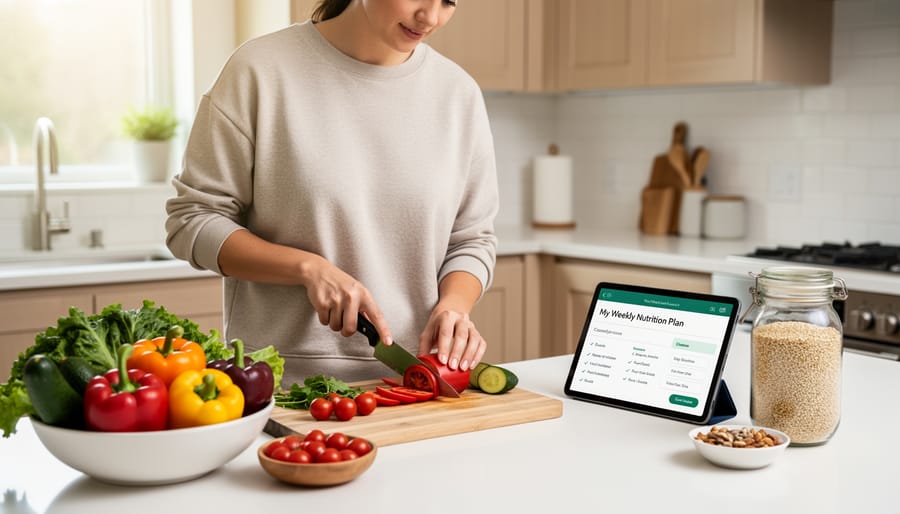
Beyond the Cookie-Cutter Meal Plan
You’ve probably downloaded meal plans that looked perfect on paper. Grilled chicken and steamed broccoli for dinner, overnight oats for breakfast, meal prep every Sunday. But then Tuesday hits, you’re stuck late at work, the kids need different things, and that pristine plan becomes another reminder of what you “should” be doing but aren’t.
Generic meal plans fail because they assume everyone has the same Tuesday. They don’t account for your partner who won’t touch anything green, your night shifts, or the fact that your budget can’t absorb weekly salmon runs. They ignore that you hate cooking before 7am or that your culture’s food traditions don’t involve quinoa bowls.
A personalized nutrition program starts where you actually live. It considers that you grab breakfast on your commute, that you share meals with people who have different needs, and that your grocery budget is real. Instead of forcing your life around a rigid plan, it builds nutrition strategies into your existing rhythm.
This isn’t about lowering standards. It’s about creating something that works Monday through Sunday, not just on your most motivated day. When your program accounts for your actual constraints, you stop fighting your circumstances and start working with them.
The Role of Self-Discovery in Your Journey
Before you can create a nutrition program that truly serves you, you need to become fluent in your own body’s language. This isn’t about tracking every calorie or obsessing over macros, it’s about paying gentle attention to the signals you’ve been receiving all along.
Start noticing how different foods affect your energy. Do you crash an hour after certain meals? Feel energized and focused after others? These patterns hold valuable information. Pay attention to your hunger cues too. Are you actually hungry, or responding to stress, boredom, or habit? There’s no judgment here, just curiosity.
Your relationship with food carries clues about what your personalized program needs to address. Maybe you eat quickly without tasting anything, or feel guilty after enjoying certain foods. Perhaps you skip meals when busy, then overeat later. These observations aren’t failures, they’re starting points.
I spent years ignoring my body’s feedback, pushing through afternoon exhaustion with coffee instead of asking what my body actually needed. When I finally started listening, everything shifted. Self-discovery takes time, but it’s the foundation that makes personalization possible.
Starting Your Personal Nutrition Journey: First Steps
Getting Clear on Your ‘Why’
Before you choose a single meal or map out your first week, pause and ask yourself a question that might feel uncomfortably simple: Why does this matter to you?
Most of us start with answers like “I want to lose weight” or “I should eat healthier.” These aren’t wrong, but they’re starting points, not destinations. They’re the surface ripples that hint at deeper currents beneath.
Try digging one layer down. If you want more energy, ask why that matters. Maybe it’s so you can play with your kids without feeling wiped out by 3 p.m. If you’re thinking about longevity, what do you want those extra years to hold? Traveling without physical limitations? Being present at family celebrations? Feeling comfortable in your own skin when you look in the mirror?
Your “why” becomes your anchor when motivation wobbles and life gets messy. It’s what reminds you that skipping the late-night snack isn’t about restriction but about waking up feeling good. That meal prepping on Sunday serves your Tuesday-morning self who deserves nourishment without stress.
Write down three ways you want to feel six months from now. Not three pounds you want to lose, but three feelings you want to experience regularly. Energized? Confident? Peaceful around food? Those feelings are your compass, and they’ll guide your personalized nutrition program far better than any generic meal plan ever could.
Working With a Registered Dietitian

Working with a professional takes the guesswork out of personalization. While you’re the expert on your life, a personal nutrition coach or registered dietitian brings the nutritional science and practical strategies to help you build a program that actually fits.
I’ll be honest, when I first met with a dietitian years ago, I expected a list of rules and foods I couldn’t eat. Instead, I found someone who asked about my favorite meals, my relationship with cooking, and what I’d tried before. That conversation shifted everything. Rather than handing me a meal plan, she helped me understand how different foods made me feel and taught me to build eating patterns around my real life, not some ideal version of it.
During consultations, dietitians provide medical nutrition therapy tailored to your health history, current challenges, and goals. You’ll discuss what you’re already doing, what feels hard, and where you want support. The best ones listen more than they lecture. They’ll ask about your schedule, cooking skills, budget, and food preferences, not to judge, but to create recommendations you can actually follow.
Finding the right fit matters. Look for someone who specializes in your areas of interest, whether that’s plant-based eating, intuitive eating, or managing specific health conditions. Check credentials (RD or RDN in the US, or your country’s equivalent) and read their approach on their website. Do they sound prescriptive or collaborative? A good dietitian partners with you, adjusting the plan as you learn what works.
This isn’t about perfection or compliance. It’s about having a knowledgeable ally who helps you figure out your unique nutrition puzzle, one conversation at a time.
Building Your Personalized Nutrition Framework
Adapting for Plant-Based Preferences
Plant-based eating offers incredible flexibility within a personalized nutrition program, but it requires thoughtful attention to certain nutrients. You’re not missing out, you’re choosing a different path that can absolutely meet your body’s needs with the right approach.
Protein often dominates the conversation, yet getting enough is simpler than many believe. Incorporate diverse sources like lentils, chickpeas, tempeh, tofu, edamame, and quinoa throughout your day rather than obsessing over each meal. A scoop of plant-based protein powder in smoothies adds convenient variety. Focus on eating enough calories overall, restriction makes adequate protein nearly impossible.
Beyond protein, personalize your plan around vitamin B12, iron, omega-3s, and calcium. B12 supplementation is non-negotiable for vegans and wise for many vegetarians. Pair iron-rich foods like spinach and beans with vitamin C sources to boost absorption. Ground flaxseed, chia seeds, and walnuts provide plant-based omega-3s your body converts (though less efficiently than fish sources).
Processed plant-based products can fit your personalized plan, but learn to read vegan cheese labels and similar items for hidden sodium, oils, and additives. Use these foods as enhancements, not foundations.
The beauty of personalization means you decide how strict your approach feels right. Some thrive fully vegan; others include occasional eggs or dairy. Your program should energize you, not drain you with rigid rules.
Making It Work With Your Lifestyle
The most beautifully designed nutrition program means nothing if it collects dust because it doesn’t fit your actual life. Real personalization isn’t just about what you eat, it’s about when, where, and how you eat in the context of your daily reality.
Start with your honest schedule, not an idealized version. If you’re not a morning person, don’t force yourself to prep elaborate breakfasts at 6 AM. Keep grab-and-go options ready: overnight oats, smoothie ingredients portioned in freezer bags, or whole fruit with nut butter. Your program should bend around your energy patterns, not the other way around.
For social situations, shift your mindset from restriction to contribution. When dining out, scan the menu beforehand and identify a couple of options that excite you and align with your needs. At gatherings, bring a dish you love, something substantial enough to be your main if other choices feel off. This removes the anxiety of “will there be anything I can eat?” and lets you enjoy the company instead of obsessing over food.
Travel requires flexibility built in from the start. Pack portable staples like trail mix, protein bars, or single-serve nut butter packets. Research restaurant options near your destination, but also give yourself permission to prioritize experience over perfection. A truly personalized program accounts for vacation meals and special occasions without derailing your progress.
Family meals present unique challenges when everyone has different preferences. Build “customizable” dinners where each person adds their own protein, toppings, or sides to a shared base. Taco nights, grain bowls, and pasta bars work brilliantly for this. You maintain your plan while everyone else gets what they want.
Remember to hydrate intentionally throughout your day, think summer hydration strategies extended year-round with water-rich foods and regular fluid intake adjusted to your activity level.
Your lifestyle isn’t an obstacle to your nutrition program. It’s the container it must fit within.
Navigating Challenges and Adjustments
Let’s talk about the part of your personalized nutrition journey nobody warns you about: the moments when everything feels harder than it should. About three months into my own plant-based transition, I hit a wall. My energy crashed, I craved foods I’d happily avoided for weeks, and every meal felt like a decision I didn’t want to make. I remember standing in my kitchen, staring at ingredients I’d bought with such enthusiasm, feeling completely disconnected from the whole process. What I learned from that low point changed how I approach nutrition challenges entirely.
Plateaus are perhaps the most frustrating obstacle, especially when you’ve been feeling great and suddenly nothing seems to shift. Your body adapts to new patterns, and what worked brilliantly for two months might need refreshing. Instead of viewing this as failure, treat it as valuable feedback. Maybe your protein needs have changed as you’ve become more active, or your stress levels have altered your nutrient requirements. I’ve found that small tweaks, like shifting meal timing or adding more variety to my vegetables, often break through these stalled periods more effectively than dramatic overhauls.
Motivation naturally ebbs and flows, and pretending otherwise sets you up for disappointment. Some weeks you’ll meal prep with enthusiasm. Others, you’ll eat the same simple bowl three days running because that’s all you can manage. Both are fine. I keep what I call my “low-energy toolkit”: a list of five meals I can make half-asleep, plus a few reliable takeout options that align with my goals. When motivation dips, I don’t force creativity. I lean on these anchors until my energy returns.
Social situations deserve their own strategy because they will test your resolve. Family dinners where your choices get questioned, work events with limited options, friends who feel judged by your different approach even when you haven’t said a word. I’ve learned to eat something nourishing before events so I’m not starving and making decisions from desperation. I also practiced a simple phrase: “I’m eating what makes me feel good right now.” No justification, no lecture, just a boundary stated kindly.
When something genuinely isn’t working, troubleshooting requires detective work, not self-criticism. Are you actually not getting results, or are you comparing yourself to someone else’s timeline? Are you following the plan as designed, or have you unconsciously restricted portions because old diet mentality crept back in? I once spent weeks frustrated by afternoon energy crashes before realizing I’d been skipping the healthy fats in my lunch because I was still afraid of calories. Adding avocado and nuts back solved it immediately.
That kitchen breakdown I mentioned earlier taught me that my challenge wasn’t the food at all. I’d been so focused on doing everything perfectly that I’d stopped enjoying the process. I gave myself permission to simplify, to repeat meals without guilt, to buy pre-chopped vegetables when time was tight. My personalized program became truly personal when I let it flex around my real life instead of forcing my life to contort around rigid rules. Your challenges will look different than mine, but the solution is often the same: more compassion, less perfection.
Measuring Success Beyond the Scale

The number on your scale tells only a fragment of your story. When you commit to a personalized nutrition program, measuring success through weight alone is like judging a book by reading just one page.
Your body communicates progress in dozens of subtle ways that matter far more than digits. Notice how you feel when you wake up. Are you springing out of bed with genuine energy, or hitting snooze repeatedly? Stable energy throughout the day, without the 3 p.m. crash that used to send you hunting for caffeine, signals that your nutrition is working.
Pay attention to your sleep. If you’re falling asleep more easily and waking refreshed, that’s your body thanking you for the nutrients it needs. Mood shifts matter too. When you stop experiencing the emotional roller coaster that comes from blood sugar swings, when anxiety quiets down or you feel more resilient handling stress, those changes reflect real internal improvements.
Your relationship with food transforms in meaningful ways. Success looks like reaching for an apple because you genuinely want it, not because you “should.” It’s eating dessert at a birthday party without spiraling into guilt or restriction. It’s cooking a new recipe without following it like a rigid formula, trusting yourself to adjust flavors. When food stops being the enemy or an obsession and becomes simply nourishment you enjoy, that’s a massive win.
Physical markers tell their own stories. Clearer skin, stronger nails, better digestion, reduced bloating, fewer headaches, improved workout recovery, these changes indicate your body is getting what it needs at the cellular level.
Track what genuinely matters to you. Maybe it’s the confidence to pack satisfying lunches, the freedom from constant food thoughts, or simply feeling comfortable in your body as you move through the world. These victories deserve celebration because they represent sustainable transformation, the kind that actually lasts beyond any temporary number.
Creating Your Personalized Recipe Collection
Building a collection of recipes you genuinely enjoy is one of the most practical steps in making your personalized nutrition program sustainable. I learned this the hard way during my own journey, I’d spend hours meal prepping elaborate dishes I found online, only to realize by Wednesday that I was already tired of them. The breakthrough came when I shifted my focus from following recipes exactly to creating flexible templates I could customize based on what I had, how I felt, and what my body needed that week.
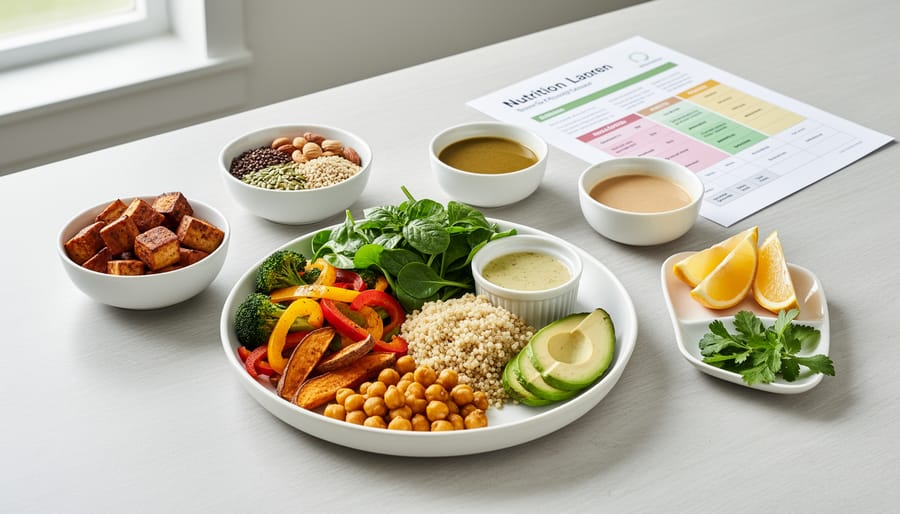
Start by identifying 5-10 meals you already enjoy and feel good eating. These become your foundation. Maybe it’s a hearty grain bowl, a comforting soup, or a simple stir-fry. The magic happens when you learn to adapt these templates. A Buddha bowl, for instance, follows a simple formula: grain base, protein source, vegetables, sauce, and toppings. One night it might be quinoa with chickpeas, roasted sweet potato, tahini dressing, and pumpkin seeds. The next week, it’s brown rice with black beans, sautéed peppers, avocado-lime dressing, and cilantro. Same template, completely different experience.
Batch cooking becomes less overwhelming when you’re preparing components rather than complete meals. Roast a big batch of vegetables on Sunday, you might use them in grain bowls, toss them into soups, blend them into pasta sauce, or wrap them in a tortilla throughout the week. Cook a pot of lentils or beans that can become soup one day, burger patties another, or a simple side dish. This approach gives you flexibility without decision fatigue.
For inspiration that actually fits your needs, look beyond generic recipe websites. Notice what you’re drawn to when eating out or at friends’ homes, then figure out how to recreate those flavors with ingredients that support your goals. If you’re incorporating more plant-based meals, understanding yams nutrition and similar whole foods helps you make informed swaps that maintain both satisfaction and nourishment.
Here are three flexible templates I rely on constantly. The first is my adaptable breakfast bowl: Start with a base of cooked oats or quinoa (about 1 cup cooked). Add a tablespoon of nut butter or seeds, fresh or frozen fruit, a sprinkle of cinnamon, and a drizzle of maple syrup if desired. You can make it tropical with mango and coconut, berry-forward with mixed berries and almonds, or apple-pie-inspired with sautéed apples and pecans.
My go-to customizable soup follows a simple ratio: sauté aromatics (onion, garlic, ginger), add 4 cups liquid (broth or water), 2 cups chopped vegetables, 1 cup protein (beans, lentils, tofu), and seasonings. Simmer until tender. This becomes minestrone with tomatoes and white beans, Thai-inspired with coconut milk and chickpeas, or a hearty lentil soup with carrots and cumin.
The flexible dinner bowl is perhaps the most versatile: Choose your grain (rice, quinoa, farro), add roasted or sautéed vegetables (whatever needs using), include a protein (beans, tofu, tempeh), drizzle with sauce (tahini-lemon, peanut, chimichurri), and top with something crunchy (nuts, seeds, crispy chickpeas). The combinations are endless, and you’ll never get bored.
Keep notes on what works. I use my phone to jot down successful combinations, timing adjustments, or flavor tweaks. This personal recipe journal becomes invaluable over time, capturing not just ingredients but also context, what you made when you were rushed, what satisfied you after a workout, what felt comforting when you needed it.
Your relationship with food isn’t something to fix overnight, and that’s actually the beautiful part. A personalized nutrition program works best when you view it as an ongoing conversation with your body rather than a rulebook to follow perfectly. Some days you’ll feel completely in sync with your choices, while others might leave you wondering what happened. Both are normal, and both teach you something valuable.
I’ve watched hundreds of people transform their health not through dramatic overhauls, but through small, consistent adjustments that actually fit their lives. The person who adds one plant-based meal per week and sticks with it makes more progress than someone who commits to an all-or-nothing plan they abandon by March. Your program should energize you, not drain you.
Give yourself permission to experiment, adjust, and even mess up. The metrics that matter most aren’t the ones you track on an app, they’re how you feel when you wake up, the clarity you experience throughout your day, and the peace you’ve made with food choices that once caused anxiety.
You don’t need to have everything figured out right now. Pick one thing from this article that resonated with you. Maybe it’s scheduling a consultation with a registered dietitian, maybe it’s simply paying attention to your hunger cues for the next week. Whatever it is, start there. Your Personal Nutrition Journey begins with that single, imperfect step.