

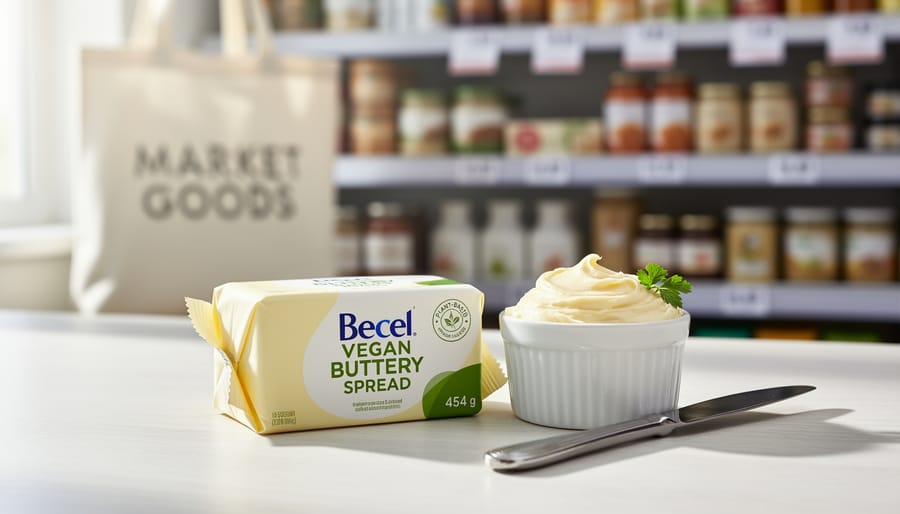
Becel vegan butter typically costs between $5.49 and $5.99 for a 454g block at major Canadian retailers in 2026, putting it right in line with conventional butter and slightly above some dairy options. If you’re ready to start plant-based diet changes in your kitchen, this dairy-free spread is one of the most accessible swaps you’ll make.
The price you pay depends mainly on where you shop and whether you catch a sale. Voila offers the salted sticks at $5.99, while Safeway has listed the unsalted brick at $5.49. You’ll find Becel’s plant-based bricks at Walmart and Save-on-Foods too, though exact pricing can shift with weekly promotions. Understanding plant-based diet basics means knowing that vegan butter has come a long way from the hard, flavourless blocks of years past.
What makes Becel stand out is its 1:1 substitution ratio. You don’t need to guess or convert measurements when baking or cooking. The brand offers both salted and unsalted versions in 454g bricks, and both are completely vegan and dairy-free. That simplicity matters when you’re learning to navigate plant-based cooking and don’t want another variable to manage.
The catch? Wholesale options through Becel and Vegan Supply have shown sold-out status recently, suggesting strong demand. For most home cooks, though, retail availability at major grocery chains means you won’t struggle to find it. The real question becomes whether buying ready-made Becel fits your budget and lifestyle better than making your own plant-based butter, and how its cost compares across different stores in your area.
Becel Vegan Butter Pricing: What You’ll Pay at Canadian Stores
When you’re standing in the dairy aisle wondering what to expect, here’s the reality: Becel vegan butter typically costs between $5.49 and $5.99 for a standard 454g block across Canadian stores. At Safeway, you’ll find the Becel Plant-Based Unsalted Brick priced at $5.49 per 8.8 oz block, while Voila’s online delivery service lists the Becel Lactose-Free Plant Butter Sticks Salted at $5.99. Both options give you the same 454g of product, so you’re looking at roughly a 50-cent price difference depending on where you shop.
Understanding unit pricing helps you compare value across different package sizes and formats. Voila calculates their Becel product at $1.32 per 100g, which translates to about 60 cents per ounce. This baseline is helpful when you’re evaluating whether a sale price is genuinely worth stocking up on or when comparing Becel against other plant-based butter alternatives.
The pricing stays fairly consistent whether you choose salted or unsalted variants, and both brick and stick formats clock in at the same 454g weight. When I switched to plant-based eating, I appreciated that Becel kept their pricing straightforward across product types, because figuring out which version to buy was already overwhelming enough without wildly different price points to juggle.
Major retailers carrying Becel include Walmart and Save-on-Foods according to Becel’s Canadian website, plus Safeway and online through Voila delivery. The price range is tight enough that convenience and your preferred shopping location matter more than hunting for the absolute lowest price.
Price Breakdown by Store and Product Variant
Salted vs. Unsalted: Does It Affect the Price?
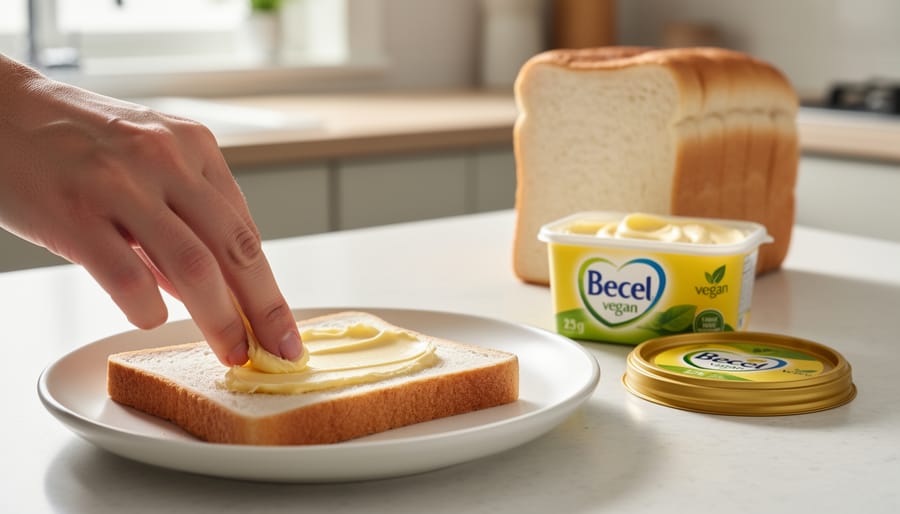
Good news: whether you reach for salted or unsalted Becel plant-based butter, you’ll pay the same price at Canadian stores. Both variants retail for $5.49 to $5.99 per 454g block, with no premium for choosing one over the other. This makes your decision purely about how you’ll use it in your kitchen, not your budget.
For most people transitioning to plant-based eating, the salted brick is the more versatile starting point. It works beautifully spread on toast, melted over vegetables, or stirred into pasta, giving you that familiar buttery flavor without any cooking adjustments. The unsalted version shines in baking, where recipes often call for unsalted butter so you can control the sodium level precisely. If you’re experimenting with plant-based desserts or want to avoid excess salt in everyday cooking, unsalted is your friend.
Since the price is identical, I keep one of each in my fridge. The salted brick handles my daily toast and sautéing needs, while the unsalted sits ready when I’m testing new muffin recipes or making frosting. Both variants substitute 1:1 for dairy butter in any recipe, so you can swap freely without recalculating measurements or worrying about texture changes.
Wholesale Pricing and Bulk Options
If you’re committed to a fully plant-based kitchen or run a vegan café, buying Becel in bulk might sound like the economical move. Both Becel Wholesale and Vegan Supply Wholesale list cases of 12 x 454g bricks, salted and unsalted, but here’s the catch: they’re currently sold out. That tells us two things. First, demand for quality plant-based butter is strong enough that wholesale suppliers can’t keep it on shelves. Second, unless you have a verified account and patience to wait for restocks, bulk buying isn’t a realistic option right now.
Even when available, wholesale cases require upfront investment and significant freezer space. You’re committing to roughly 5.5 kilograms of vegan butter at once, which makes sense if you’re baking in volume or feeding a household that goes through multiple blocks monthly. For most people just starting a plant-based diet, though, that’s overkill. A single block from Safeway or Walmart costs around $5.49 to $5.99 and fits neatly in your fridge without monopolizing space or forcing you to eat the same product for months.
The real value in bulk purchasing depends on your usage rate and storage capacity. If wholesale restocks and you genuinely use that much butter, you might save a couple dollars per block. But for beginners or moderate users, buying single blocks as needed keeps things simple, fresh, and flexible.
Where to Buy Becel Vegan Butter in Canada
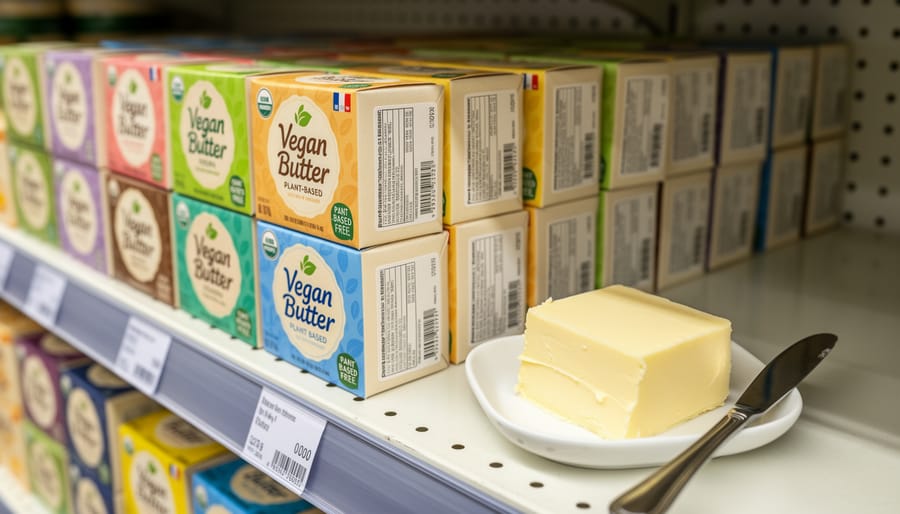
Finding Becel plant-based butter at Canadian stores is easier than you might expect. While availability has grown significantly as plant-based eating becomes more mainstream, knowing where to look saves time and potential frustration during your shopping trip.
Becel’s official website confirms that their Dairy Free Plant Butter is available at Walmart and Save-on-Foods locations across Canada. These two chains have become reliable sources for the product, making it accessible whether you’re shopping in a major city or a smaller community. Safeway Canada also carries Becel Plant Based Butter Unsalted in the 454g brick format, and their website confirms it works as a 1:1 swap for traditional butter in recipes.
For online shopping, Voila (Sobeys’ delivery service) lists Becel Lactose-Free Plant Butter Sticks Salted in the 454g size at $5.99, which works out to $1.32 per 100g. This option is particularly helpful if you prefer home delivery or live in an area where Voila operates.
Here’s what you’ll find at each major retailer:
- Walmart, Becel Dairy Free Plant Butter (general availability confirmed)
- Save-on-Foods, Becel Dairy Free Plant Butter (general availability confirmed)
- Safeway, Becel Plant Based Butter Unsalted 454g brick format
- Voila delivery, Becel Lactose-Free Plant Butter Sticks Salted 454g at $5.99
If you’re considering bulk purchasing, both Becel Wholesale and Vegan Supply Wholesale typically offer 12 x 454g cases in salted and unsalted brick formats, though these are currently showing as sold out and require verified wholesale accounts to see pricing. That sold-out status actually signals strong demand, which helps explain why the product has secured shelf space at major grocery chains nationwide.
When you’re at the store, look in the refrigerated butter section rather than with specialty or health foods, most retailers stock Becel plant-based butter alongside conventional butter options.
What Affects the Price of Becel Vegan Butter?
Package Size and Format
Becel vegan butter comes in two main formats at the standard 454g size, and understanding the difference helps you get better value. The brick format (what you’ll find at Safeway and most grocery stores) works like traditional butter blocks, great for spreading, baking, and general cooking. Voila carries stick format at $5.99, which translates to $1.32 per 100g. Sticks offer pre-measured convenience if you bake often, since each stick typically equals a half-cup, saving you from pulling out measuring cups mid-recipe. The brick versus stick choice doesn’t usually create major price differences at the same retailer, but it’s worth checking unit pricing on the shelf tag. Either format gives you the same 454g total, so pick based on how you’ll actually use it rather than assuming one costs less.
Retail Location and Seasonal Sales
Retail pricing for Becel vegan butter stays fairly consistent across major Canadian grocery chains, you’ll typically see the 454g brick hovering between $5.49 and $5.99 whether you’re shopping at Safeway, Walmart, or Save-on-Foods. The bigger opportunity to save comes from watching for promotional cycles at your regular store. Most chains rotate plant-based products through sales every 6-8 weeks, often timing discounts around New Year (when plant-based interest peaks) and late spring. I’ve noticed Safeway and Voila sometimes bundle dairy-free products together for percentage-off deals, while Walmart tends to drop individual item prices by a dollar or so. If you’re committed to using Becel regularly, stock up during these sales, the brick format freezes beautifully for up to six months, so grabbing three or four during a promotion stretches your budget without sacrificing the convenience of having quality vegan butter on hand.
Supply and Demand Considerations
The consistent sold-out status across both Becel Wholesale and Vegan Supply Wholesale tells an interesting story about demand for plant-based butter in Canada. When you see wholesale cases unavailable for extended periods, it usually means retail demand is outpacing the wholesale supply chain, retailers are buying enough through their direct distribution agreements that there isn’t surplus inventory for smaller wholesale buyers.
This strong demand creates a stable floor under retail pricing. You’re unlikely to see deep clearance sales on Becel when stores can reliably sell through their inventory at regular price points. The flip side is that this popularity validates your choice: the product clearly resonates with enough Canadians that it commands shelf space and consistent restocking.
For your shopping strategy, this means watch for standard promotional cycles rather than waiting for desperate clearance pricing. The sold-out wholesale status suggests Becel has found its market fit, which is actually reassuring when you’re making the switch to plant-based staples, you’re choosing something with staying power.
Making Your Own Plant-Based Butter vs. Buying Becel
Cost Analysis: Homemade vs. Store-Bought
Making your own vegan butter requires just a few ingredients, but the math might surprise you. A basic recipe calls for refined coconut oil (about $8 for 500ml), unsweetened plant milk ($4 for a carton), nutritional yeast ($6 for a small container), and apple cider vinegar (roughly $4). You’ll also need salt and an emulsifier like liquid sunflower lecithin ($12-15 for a bottle that lasts multiple batches).
For your first attempt, you’re looking at around $30-35 in upfront ingredient costs, though most of these will make several batches. Once you’ve stocked your pantry, each subsequent 454g batch costs approximately $3-4 in ingredients alone, compared to Becel’s $5.49-$5.99 retail price.
Here’s what those numbers don’t show: the time spent researching recipes, shopping for specialty ingredients like lecithin, and the reality that your first batch probably won’t nail the texture. I wasted two attempts before getting a spreadable consistency I actually liked. When you factor in the learning curve and your time, that initial savings shrinks quickly. If you’re just starting out with plant-based cooking, spending an extra two dollars for consistent results makes a lot of sense.
When DIY Makes Sense for Your Plant-Based Kitchen
DIY vegan butter makes the most sense when you have specific dietary needs that Becel doesn’t address, like needing a nut-based spread, avoiding certain oils, or creating a lower-sodium option. If you’re managing multiple food sensitivities or following a stricter whole-foods approach, controlling every ingredient gives you peace of mind.
Making your own also pays off when you’re cooking in volume. If you regularly bake dozens of muffins for meal prep or host frequent plant-based gatherings, batch-making butter can stretch your dollar further and let you customize flavors with garlic, herbs, or nutritional yeast.
That said, Becel is the smarter choice for most beginners and busy households. When you’re just starting a plant-based diet, simplifying your kitchen routine matters more than saving a few dollars. Grabbing a reliable, ready-to-use product at Walmart or Save-on-Foods removes one more barrier to success. You can always experiment with homemade versions later, once you’ve found your footing and know what flavors you actually prefer. There’s no shame in convenience, especially when it keeps you consistent with your new eating pattern.
How to Use Becel Vegan Butter in Your Plant-Based Cooking
Becel’s plant-based butter works as a true 1:1 swap for dairy butter in almost every application, which makes your transition to plant-based cooking remarkably simple. When I first switched, I worried about ruining recipes, but Becel performed just as reliably as the butter I’d used for years.
- Measure exactly as you would dairy butter: one cup of Becel equals one cup in your recipe, whether you’re working with the brick format or the convenient pre-measured sticks.
- Let it soften at room temperature for 15-20 minutes before creaming with sugar for baked goods; this creates the same fluffy texture traditional recipes call for.
- Use unsalted Becel when baking or when a recipe already specifies salt amounts, so you control the sodium level precisely.
- Choose salted Becel for spreading on toast, finishing vegetables, or pan-frying, where that built-in seasoning enhances flavor without extra steps.
- Melt it gently over medium-low heat for sautéing; high heat can cause any plant-based butter to brown faster than dairy, though the nutty flavor is often a welcome bonus.
For those exploring vegan cooking ideas Becel handles everything from flaky pie crusts to silky pasta sauces without special adjustments. Store opened packages tightly wrapped in the refrigerator for up to three months, or freeze for six months if you stock up during a sale. I keep one brick in the fridge and one in the freezer at all times.
The salted versus unsalted decision matters most in baking, where precision counts. For everyday cooking, salted works beautifully and saves you a step. Either way, you’re getting consistent results that make plant-based eating feel effortless rather than experimental.
DIY vs Hiring a Pro

Making your own vegan butter isn’t as simple as whipping up a batch and calling yourself a pro. This comparison is about whether you should experiment with DIY recipes or stick with store-bought Becel for your plant-based kitchen.
DIY Approach: $3-4 per batch, 45-60 minutes active time
Making vegan butter at home requires coconut oil, plant milk, nutritional yeast, and an emulsifier like liquid lecithin or xanthan gum. You’ll spend less per batch than buying Becel, but the learning curve is real. Your first three attempts might not taste right or have the wrong texture. The time investment adds up, especially when you’re just starting your plant-based journey and still learning to read vegan labels on other products.
Store-Bought Becel: $5.49-5.99, zero effort
Walking into Walmart or Safeway and grabbing a block takes five minutes. You know exactly what you’re getting, and the 1:1 swap ratio makes cooking predictable. This matters when you’re still figuring out plant-based substitutions and need one less variable to worry about. For guidance on choosing quality options, check out our vegan buying guide approach.
Choose DIY if you love kitchen experiments and use butter heavily. Choose Becel if your time is limited or you’re still finding your footing with plant-based cooking.
Frequently Asked Questions About Becel Vegan Butter Pricing and Availability
I hear these questions all the time from readers making the switch to plant-based alternatives, and they’re exactly what I wondered when I started looking for dairy-free butter options myself. The biggest concern usually comes down to whether this is going to break the budget or be impossible to find consistently.
Is Becel vegan butter cheaper than regular dairy butter?
Becel plant-based butter typically costs slightly more than conventional dairy butter, around $5.49-$5.99 for a 454g block compared to $4-$5 for dairy butter. The price gap has narrowed considerably as plant-based products have become more mainstream, making it a reasonable swap for most households.
Can I buy Becel vegan butter online in Canada?
Yes, Voila delivery service carries Becel plant-based butter and will deliver it with your grocery order. You can also find it at Walmart and Save-on-Foods locations across Canada, though availability may vary by region.
Why are wholesale options always sold out?
The consistent sold-out status at Becel Wholesale and Vegan Supply Wholesale actually signals strong demand for the product. This means it’s a popular choice, but unfortunately makes bulk purchasing difficult for regular buyers who want to save money.
Does Becel vegan butter work the same as regular butter in baking?
Yes, Becel Plant-Based Bricks are formulated as a 1:1 replacement for dairy butter in recipes. Choose unsalted for baking when you want to control salt levels, and salted for spreading or general cooking, it performs identically to conventional butter in most applications.
Another common question I get is whether wholesale accounts are worth pursuing if you use a lot of plant-based butter. Honestly, given the current sold-out situation at both major wholesale suppliers, it’s not a practical option for most home cooks right now. You’d need a verified wholesale account just to see pricing, and then you’d be competing for limited stock with restaurants and food service businesses that buy in much larger volumes.
The better strategy for regular buyers is watching for sales at your local Safeway, Walmart, or Save-on-Foods and stocking up when the price drops. I’ve seen it go on promotion periodically, and since it keeps well in the freezer, buying three or four blocks during a sale stretches your dollar further than trying to navigate wholesale channels that aren’t designed for household purchasing anyway.
Finding affordable plant-based alternatives used to feel like solving a puzzle, but today stores across Canada stock Becel vegan butter at predictable prices that won’t shock your grocery budget. Whether you shop at Walmart, Save-on-Foods, Safeway, or order through Voila, you now know exactly what to expect: around $5.49 to $5.99 for a 454g brick that replaces butter one-to-one in any recipe.
When I started my own plant-based journey, I worried that eating this way meant spending twice as much on everything. What I discovered instead was that swapping just a few staples, like choosing Becel over dairy butter, felt manageable and actually empowering. Each small change built my confidence that this lifestyle was sustainable, not just ethically but practically. You’re not overhauling everything overnight; you’re making one choice at a time.
The fact that mainstream grocery stores carry quality vegan butter alongside conventional options signals real progress. You don’t need specialty accounts or wholesale memberships to access what you need. Plant-based eating is becoming genuinely accessible, and that matters. Your choice to explore alternatives like Becel contributes to that momentum, making it easier for the next person who walks down that dairy aisle wondering where to start. You’ve got this, and your kitchen is already better equipped than you think.