

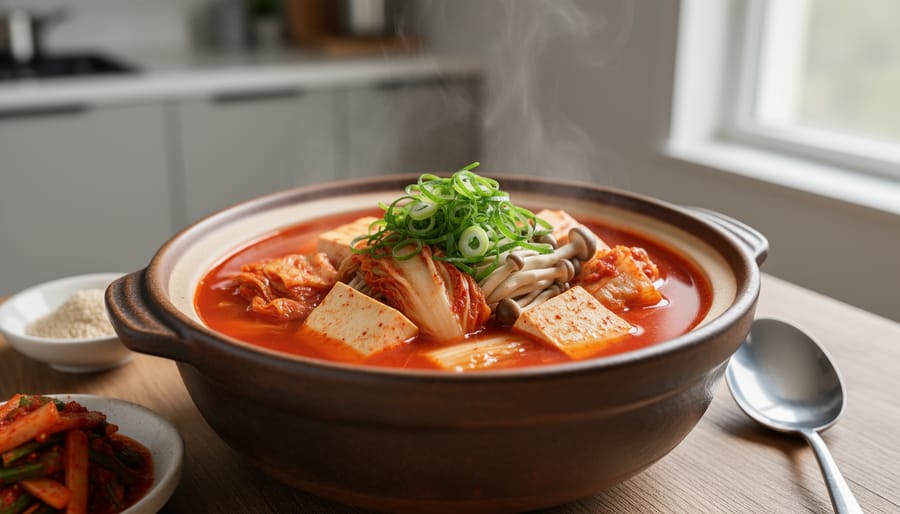
A good tofu stew takes about 20 minutes, needs one pot, and works with whatever heat level feels right for you. The method is simple: soften garlic and spring onion in a little oil, stir in chilli and soy sauce, pour in your broth, then slide in soft tofu and let it simmer gently until it’s silky and hot through. Finish with an egg or a handful of greens if you like.
That’s the heart of Korean-style sundubu-jjigae, the spicy soft tofu stew that has so many delicious variations. Some versions bring in clams, minced meat, enoki mushrooms, and zucchini. The plant-based ones are just as satisfying, especially a kimchi and shiitake stew with a deeply savoury broth, or a tofu and vegetable stew that makes a cozy vegan one-pot dinner.
This is the kind of meal I turn to when I want real comfort without a lot of fuss. A bowl of kimchi tofu stew is spicy, warming, and loaded with plant-based goodness, which is why so many people reach for it on days they’re feeling run down. You don’t need special skills. You just need a few pantry staples and a little patience at the stove.
Below, you’ll find the tofu type that gives the creamiest texture, the ingredients worth having on hand, how to adjust the spice to your comfort level, and a step-by-step method you can make your own. Start mild, taste as you go, and adjust freely. There’s no wrong way to make it yours.
Why Tofu Stew Is Having a Moment (and Why It Fits a Plant-Based Kitchen)
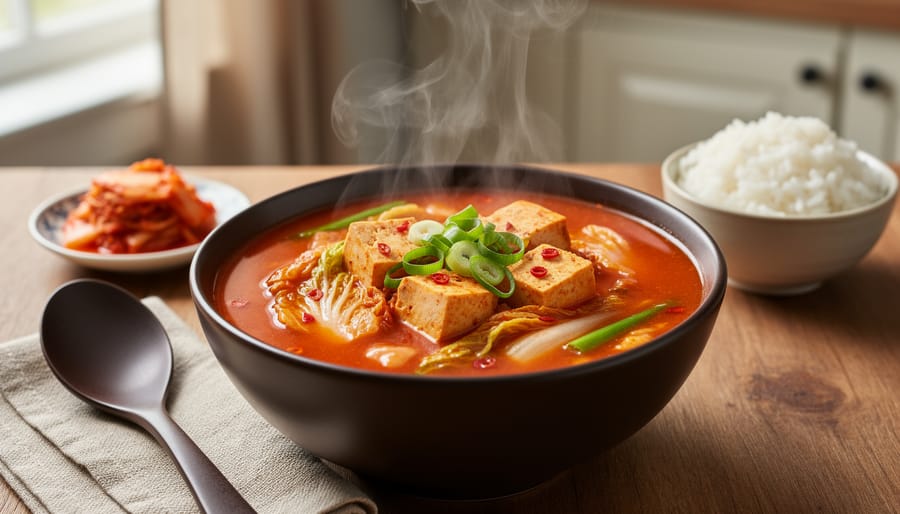
A Personal Note: The Bowl I Reach for When I’m Run Down
Some weeks, my body tells me to slow down before my calendar does. When I’m run down, or just overwhelmed, I don’t want a complicated meal. I want something warm, a little spicy, and deeply savory that I can eat out of a bowl on the couch.
That’s when I make a kimchi tofu stew. It’s a comfort food people often make for sick days, and I get why. The heat from the kimchi wakes up my appetite, the broth feels soothing, and the soft tofu is easy to eat when I don’t have much energy. It’s also a gentle way to get some plant-based protein into a day when cooking feels like too much.
I used to think nourishing myself meant doing it perfectly, with the ideal ingredients and a spotless kitchen. It doesn’t. A pot, a few simple ingredients, and a little patience are enough. If you’re still finding your footing, my plant-based basics guide is a good place to start.

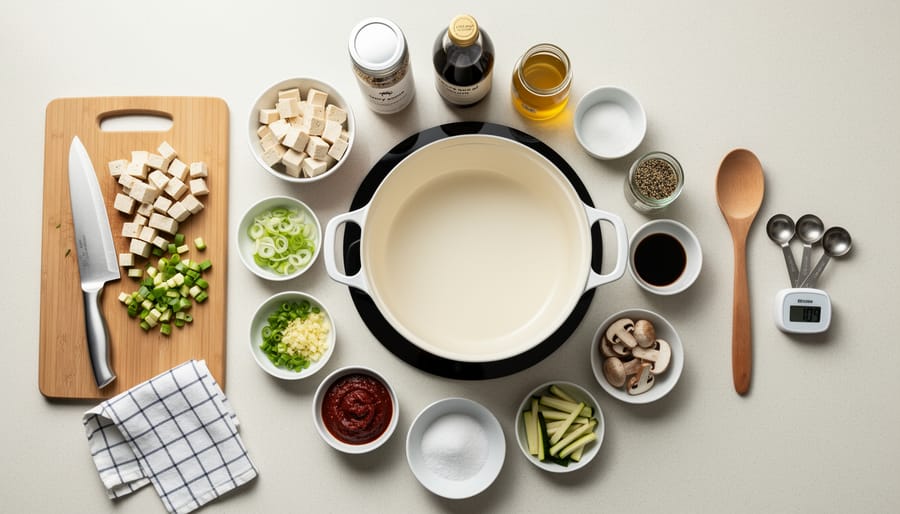
Tools and Ingredients You’ll Need for a Simple Tofu Stew
Choosing Your Tofu: Soft, Silken, or Firm?
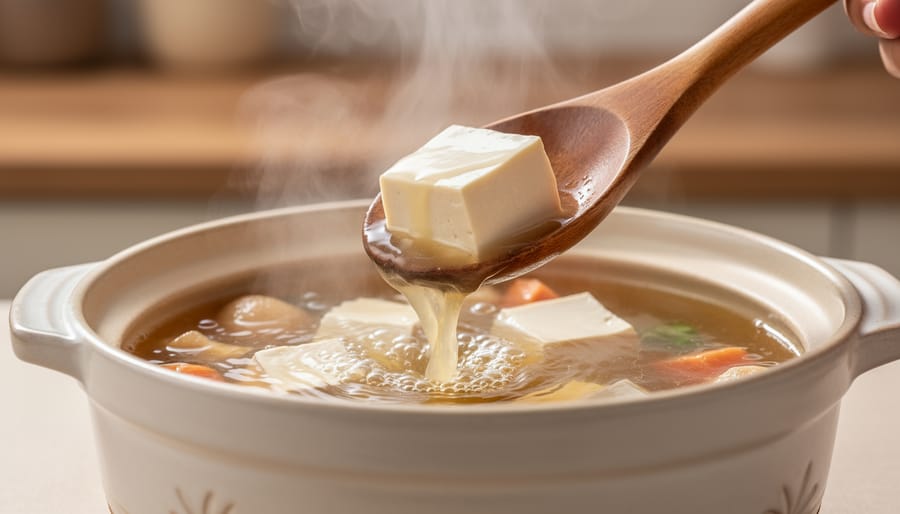
Tofu comes in a few textures, and each one changes how your stew feels in the bowl. Soft or silken tofu is the sundubu-jjigae choice: it turns spoonable and custardy, and it soaks up the broth beautifully. Firm tofu holds its shape and gives you a little more chew, which is lovely if you want something hearty. Neither is wrong. Use what’s in your fridge and what you enjoy eating.
If you’re newer to cooking with it, these perfect tofu tips are a friendly place to start. And if you’re deciding between stock options, this broth buying guide can help you pick a base that suits you.
Here’s a simple checklist to shop from, with easy swaps:
- Aromatics: garlic, spring onion, or regular onion (use whichever you have).
- Broth and seasonings: vegetable or mushroom broth, soy sauce, and chilli flakes (start small, add more later).
- Tofu: soft or silken for creamy, firm for bite.
- Vegetables: kimchi, shiitake or enoki mushrooms, and zucchini (swap in any tender veggie).
- Optional finishers: a scallion garnish, or an egg yolk if you’re not keeping it vegan.
Kitchen Safety Notes Before You Start
A little prep keeps this cozy, easy, and worry-free. Hot broth is the main thing to respect. Keep the heat at a gentle simmer, and use a ladle rather than pouring from the pot. Soft or silken tofu is delicate, so slide it in gently along the side of the pot instead of dropping it from above. That keeps the splashes down and the tofu in nice pieces.
Spice is personal, so start small. Add a little chilli powder or flakes, taste, and build from there. You can always add heat, but it’s hard to take it back out.
It’s also worth reading labels. Tofu is made from soy, and major allergens include soy along with shellfish and fish. Some traditional sundubu-jjigae versions use clam or anchovy stock powder, so check any stock powders and pastes before you cook.
If you’re adding an egg or a non-vegan protein, make sure the egg is pasteurized or fully cooked, and that any meat or seafood is heated all the way through before you eat.
Step-by-Step: How to Cook a Quick Kimchi and Mushroom Tofu Stew
Make It Your Own: Easy Swaps and Variations
Once you’ve made the base stew a couple of times, it starts to feel like a template rather than a strict recipe. That’s the beauty of it. Here’s the flexible sequence I follow, and you can swap in whatever fits your pantry and your mood:
- Prep your ingredients first: slice the kimchi, mushrooms, zucchini, and scallions, and have your tofu ready.
- Sauté garlic and aromatics in a little oil until fragrant.
- Bloom the chilli powder or flakes with your seasonings, like soy sauce, for just a moment so the flavor deepens.
- Pour in your broth and add the kimchi.
- Simmer the mushrooms and vegetables until they’re tender.
- Gently slide in the soft tofu, breaking it into big, spoonable pieces.
- Finish with a scallion garnish or, if you eat eggs, an egg yolk.
- Taste and adjust the salt, spice, or broth until it feels right to you.
From there, you can take it in a few directions. For a vegan one-pot dinner, keep the tofu and vegetables front and center and let a flavorful vegetable or mushroom broth do the heavy lifting. If you love the spicy sundubu-jjigae style, lean into soft tofu with enoki mushrooms and zucchini, and don’t be shy with the chilli if your heat tolerance allows.
Traditional versions often include minced meat, clam, or an egg yolk stirred in at the end, plus anchovy stock powder in the broth. If you’d rather keep things plant-based, you could try crumbled firm tofu or extra shiitake for that savory depth, and a kelp or mushroom-based broth in place of anchovy. These are just ideas, not rules.
Make it spicier, milder, heartier, or lighter. Your bowl, your way.
How to Tell Your Stew Turned Out Well (and What to Do Next)
Before you ladle anything into a bowl, take a spoonful and taste it. A stew that turned out well hits a few notes at once: savory from the broth, gently spicy from the chilli or kimchi, and rich enough that you’d happily take a second sip. The tofu should be heated through but still in soft, intact pieces, and the vegetables should be tender without turning to mush.
If something’s off, it’s usually an easy fix. Flat? Stir in a small splash of soy sauce or a spoonful of kimchi brine, which adds both salt and a little tang. Too salty? Pour in some more broth or water and add a few extra vegetables or another handful of tofu to soak it up. Too spicy? The same trick works, and a bit more tofu or a spoonful of rice on the side will cool things down. Add changes a little at a time and taste again, so you don’t overshoot.
Leftovers keep well in a covered container in the fridge, and gentle reheating on the stove helps the tofu stay in one piece. Serve your stew over warm rice or with a side of sautéed greens for a fuller meal. Jot down what you changed this time, because next time you’ll know exactly how you like it.
Tofu Stew Recipe FAQs
Can I make tofu stew vegan?
Absolutely. A tofu and vegetable stew works beautifully as a vegan one-pot dinner, and kimchi, mushrooms, and a flavorful vegetable broth give it plenty of depth. Just skip the egg and any anchovy stock powder.
What kind of tofu is best for stew?
Soft or silken tofu gives you that smooth, spoonable texture that soaks up flavor, which is the classic choice for sundubu-jjigae-style stew. Prefer more bite? Firmer tofu holds its shape well too.
How spicy is Korean tofu stew, and can I tone it down?
Korean spicy soft tofu stew gets its heat from chilli powder and chilli flakes. You’re in charge here: start with a small spoonful and add more at the end, or leave them out for a milder bowl.
How long does tofu stew take to make?
A quick Korean-inspired version can be on the table in about 20 minutes. Chopping everything before you start keeps it feeling easy.
Two more questions come up often: kimchi and extra proteins. Kimchi is a lovely addition, and many kimchi tofu stews pair it with shiitake mushrooms for a spicy, savoury, plant-based bowl. If you’d like to add something else, traditional versions use minced meat, clam, or an egg yolk stirred in at the end, so you can add those if they suit you, or keep it plant-based. There’s no single right way, so make it the way that nourishes you.
Whether you go spicy and kimchi-packed or mild and veggie-loaded, tofu stew is one of those meals that meets you where you are. It can come together in about 20 minutes, it’s built for swapping in whatever you have, and it gives you something warm and nourishing in a single pot.
I’ve learned that taking care of yourself doesn’t have to be a big production. Some weeks, it’s a bowl of something simple that you made without overthinking it. That counts. Really.
So here’s my invitation: pick one version this week. Maybe it’s the kimchi and shiitake stew when you want a little heat, or a gentle vegetable-and-soft-tofu pot when your body is asking for something soothing. Start with the method, then adjust the spice, the broth, and the veggies until it tastes like yours. There’s no wrong bowl, only the one that feels good to you.