

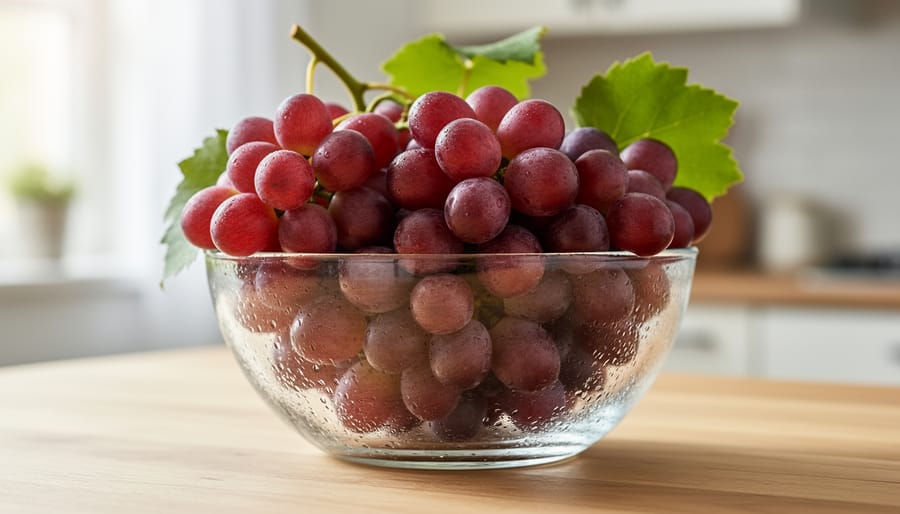
A cup of red grapes (151 grams) gives you 104 calories, 27 grams of carbohydrates, 1.4 grams of fibre, 1 gram of protein and just 0.2 grams of fat. It also delivers 21% of your daily value for copper, 18% for vitamin K and 9% for thiamine (vitamin B1). That’s a small, sweet, easy-to-eat package with real nutritional substance.
Whether grapes fit your plate depends on you. Some people want a quick natural sweetener after dinner. Others are watching carbs, building a plant-based routine, or simply wondering if fruit this sugary deserves a spot in their week. All of those are fair questions, and the answer isn’t the same for everyone.
That’s the spirit we bring to nutrition here: curiosity first, personalization always. Instead of sorting foods into “good” and “bad,” we look at what a food actually offers and how it might support the way you like to eat.
Below, you’ll find the per-cup numbers at a glance, context on fibre and natural sugar, the vitamins and minerals worth knowing about, and an honest look at what we do and don’t know about grape antioxidants. We’ll finish with a few plant-based ideas and a simple recipe to try at home.
Red Grapes Nutrition Facts: What’s in One Cup
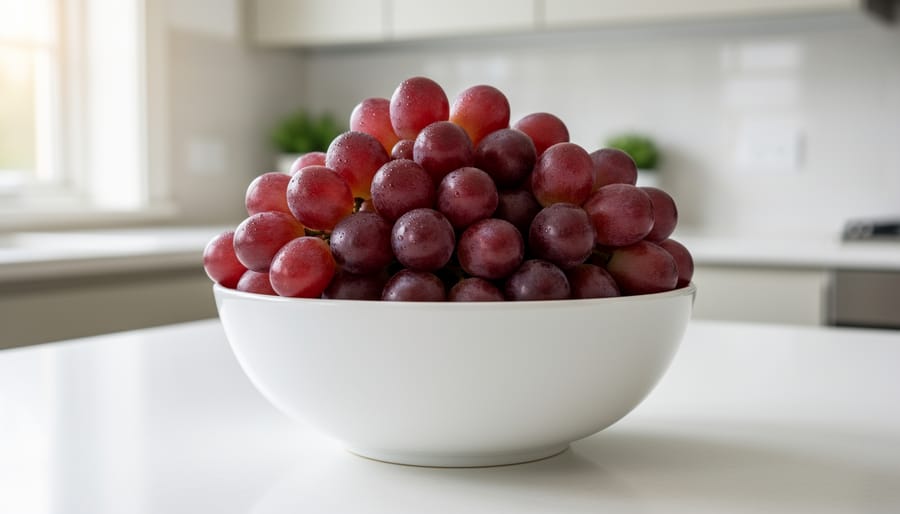
Let’s start with the basics. One cup of red or green grapes weighs about 151 grams. In everyday terms, that’s a generous handful or two, roughly what you’d pop into a lunchbox or nibble while chatting in the kitchen. The numbers below apply to both red and green grapes, so you can use them whichever colour is in your bowl.
| Nutrient (per 1 cup, 151 g) | Amount | What this means |
|---|---|---|
| Calories | 104 | A light, naturally sweet snack that adds up gently |
| Carbohydrates | 27 g | Grapes are mostly carbohydrate, which is your body’s go-to energy source |
| Protein | 1 g | A small amount, so pairing with nuts or yoghurt can round things out |
| Fat | 0.2 g | Very low, as you’d expect from a fresh fruit |
| Fibre | 1.4 g | A modest contribution toward your day’s fibre |
Seeing it laid out like this, the picture is pretty simple. Grapes are a carbohydrate-forward fruit with very little fat and just a touch of protein. That’s not a good or bad thing, it’s simply what this food is, and knowing it helps you decide how you’d like to enjoy it.
You’ll also see the phrase “daily value” on food labels and nutrition sites, and it’s easier than it sounds. It’s a reference amount of a nutrient that many people aim for in a day, and the percentage tells you how much of that reference one serving covers. So when a cup of grapes provides 21% of the daily value for copper, it means that single cup gets you about a fifth of the way there. We’ll look at those vitamins and minerals a little later.
For now, the takeaway is reassuringly straightforward: a cup of grapes is a light, hydrating, lightly nutritious bite that fits easily into many ways of eating.
Fibre, Natural Sugars and Staying Satisfied
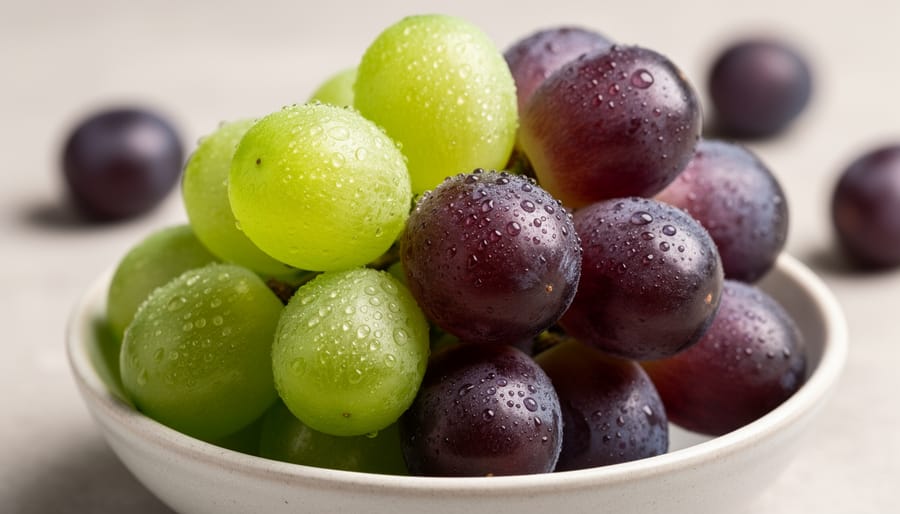
Here’s the part of the grape story that sometimes makes people nervous: of the 27 grams of carbohydrates in a cup, most comes from natural fruit sugar. Grapes are mostly carbohydrate and water, with only about 1 gram of protein and 0.2 grams of fat. That doesn’t make them a “bad” choice. It simply tells you what kind of food they are: bright, juicy and quick to enjoy.
Fibre is where the picture gets a little more nuanced. A cup brings 1.4 grams, which is a modest amount. So if you’re hoping for a snack that keeps you full for hours, grapes on their own may not do all the work, and that’s perfectly okay. Different bodies and different days call for different things.
One flexible option is to pair them with something that adds staying power. Try a handful of grapes with a few walnuts, a spoonful of pumpkin seeds, or a small bowl of unsweetened yoghurt. If you’re building more plant-based meals, our guide to plant-based protein sources has plenty of ideas that go beautifully with fruit. Protein and healthy fats can make a snack feel more rounded, and the combination also tastes wonderful.
None of this is a rule. Some people love grapes solo, and that’s a valid way to eat them. If you manage your blood sugar for any reason, it’s worth chatting with your healthcare provider or a registered dietitian about how fruit fits into your own plan. Your needs are yours, and the best approach is the one that feels sustainable and kind to you.
Vitamins and Minerals: Copper, Vitamin K and Thiamine
Beyond the basics of calories and carbs, grapes quietly contribute a few vitamins and minerals worth knowing about. In one cup (151 grams), you get about 21% of the daily value for copper, 18% for vitamin K, and 9% for thiamine, also called vitamin B1. “Daily value” is simply a yardstick that shows how much a serving contributes toward what most people need in a day.
Here’s what each one is generally known for:
– Copper plays a part in everyday body processes, including how your body works with iron and supports your energy systems.
– Vitamin K is best known for its role in normal blood clotting.
– Thiamine helps your body turn the food you eat into usable energy.
None of these makes grapes a miracle food, and that’s okay. Think of them as small, steady contributions that add up alongside everything else on your plate.
I’ll admit something here. There was a stretch when I felt completely buried under nutrition advice. Every article told me to track this, avoid that, and add some new powder to my morning routine. I was so caught up in the complicated stuff that I stopped enjoying food at all. One afternoon I grabbed a bowl of cold red grapes, sat on the back step, and just ate them. No label reading, no rules. It felt like a small act of coming home. That moment reminded me that nourishing ourselves doesn’t always have to be complicated, and that simple, familiar fruits can be part of a personalized, plant-based way of eating.
One gentle note: because grapes contain vitamin K, anyone taking blood-thinning medication should talk with their healthcare provider about how much vitamin K fits into their eating pattern. Consistency often matters in these situations, so a quick conversation can give you personalized guidance and peace of mind.
What About the Antioxidants in Red Grapes?
If you’ve ever searched for red grapes nutrition, chances are you’ve seen the word “antioxidants” come up. It’s a fair thing to be curious about, so let’s talk about it honestly.
In simple terms, antioxidants are a broad group of natural compounds found in plants. Red and purple fruits are often discussed for these plant compounds, and that’s a big part of why grapes get so much attention. But I want to be upfront with you: this article sticks to the nutrients we can verify for a one-cup serving, and we won’t quote specific compound amounts, because we can’t confirm them here. I’d rather be clear about what we know than hand you numbers that sound impressive but aren’t solid.
What we can say is this. Red grapes are one colourful piece of a bigger picture, not a single “superfood” that does the heavy lifting on its own. No one fruit has to carry your whole way of eating, which is a relief, really.
So rather than asking whether grapes are “the best” source of anything, try asking how they fit alongside other plants you enjoy. Berries, leafy greens, beans, nuts and seeds all bring something different. Variety is simple, and it’s kind to your taste buds too.
Simple Plant-Based Ways to Enjoy Red Grapes
Red grapes are one of those fruits that quietly work in more places than you’d expect. Here are a few ways to enjoy them, and none of them need special equipment or a rigid plan.
Easy ideas to try
– Frozen grapes: Rinse, pat dry, and freeze on a tray. They turn into little sorbet-like bites, which is lovely on a warm afternoon.
– Grape and cucumber salad: Toss halved grapes with sliced cucumber, fresh mint or dill, lemon juice, and a drizzle of olive oil.
– Grain bowl: Add grapes to quinoa or brown rice with chickpeas, greens, and a tahini dressing for a sweet, savoury contrast.
– Grape and walnut oat bowl: Stir grapes and chopped walnuts into overnight oats or warm porridge.
– Roasted grapes: Roast them until they soften and burst, then spoon over dairy-free yoghurt.
Prefer a different crunch? Swap walnuts for pumpkin seeds. Not a fan of chickpeas? White beans or lentils work just as well. Use whatever fits your routine, because there’s no single right way to do this.
Quick Grape and Walnut Oat Bowl
Ingredients (serves 1, approximate):
– Half a cup of rolled oats
– 1 cup of plant milk
– A generous handful of red grapes, halved
– A small handful of walnuts, roughly chopped
– A pinch of cinnamon
– A drizzle of maple syrup, if you like
Steps:
1. Combine oats, plant milk, and cinnamon in a small pot over medium heat.
2. Stir for about 5 minutes until creamy and thick.
3. Spoon into a bowl and top with the grapes and walnuts.
4. Finish with a little maple syrup if you’d like extra sweetness.
Make it your own, whether that means more nuts, fewer oats, or cold overnight oats instead of warm.
Red Grapes Nutrition: Common Questions
If you’re still wondering about a few things, you’re in good company. These are the questions people ask most about grapes, answered with the verified numbers and a little encouragement.
Are red and green grapes nutritionally similar?
Going by the shared per-cup figures, yes. A cup (151 grams) of red or green grapes provides 104 calories, 27 grams of carbohydrates, and 1.4 grams of fibre, so choose whichever colour you enjoy most.
Can grapes fit into a balanced plant-based day?
They can. Grapes are a simple, naturally sweet fruit that pairs easily with nuts, seeds, or dairy-free yoghurt, and our plant-based diet basics guide shows how fruit fits into a varied plate.
Should I worry about the sugar?
Most of a cup’s 27 grams of carbohydrates comes from natural fruit sugars, alongside 1.4 grams of fibre. Needs differ from person to person, so if you manage blood sugar, check in with your healthcare provider or a dietitian about what portion suits you.
Is it okay to eat grapes every day?
For many people, a portion of grapes can be one colourful part of a varied day of eating. What feels right depends on your goals, preferences, and health, and personalized nutrition guidance can help you find your own rhythm.
As for how many grapes make up a cup, it varies with their size, so a precise count would be a guess. A cup is simply a generous handful or two, and that’s the portion all the numbers above describe.
So here’s the short version: one cup of red grapes gives you roughly 104 calories, 1.4 grams of fibre, and a nice share of copper and vitamin K, all wrapped in natural sweetness. Nothing complicated about it.
What I hope you take away is less about the numbers and more about the way of looking. When we meet an everyday food with curiosity and kindness, instead of a list of rules, it stops feeling like a test we might fail. A grape becomes what it really is: a small, juicy, colourful part of a varied plant-based pattern that can look different for every person.
So here’s a gentle nudge. This week, try one new way of enjoying grapes. Freeze a handful, toss some into a grain bowl, or roast them over dairy-free yoghurt. Notice how it feels, and keep what works for you. Sustainable habits are the personal ones, built one small, tasty step at a time.