

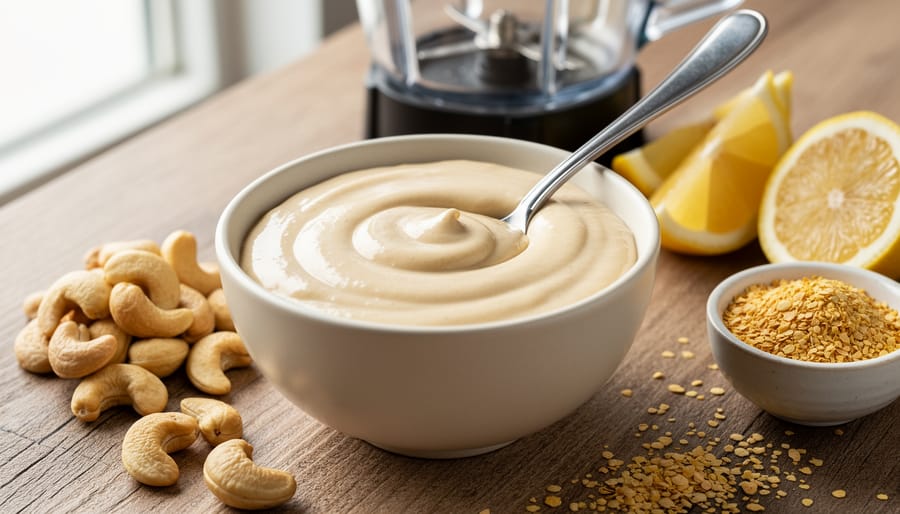
Vegan cashew cheese sauce takes about 10 minutes of hands-on time and one blender. Soak raw cashews until they’re soft (a few hours does it), then blend them with non-dairy milk, nutritional yeast, lemon juice, and a pinch of salt until the sauce turns silky and pourable. That’s the whole idea. Everything else is flavor you get to play with.
Here’s why it works. Cashews are mild and naturally creamy, so once they’re softened and blended they behave a lot like a dairy base. Nutritional yeast brings the savory, cheesy depth, and lemon juice adds the little tang that makes it taste like cheese instead of just cashew cream. From there, you can take it in any direction: a pinch of turmeric for color, smoked paprika for warmth, a spoonful of tahini for body, or tomato paste and chipotle for a bolder, nacho-style version.
When I first started cooking more plants, I assumed a good cheese sauce would be complicated and full of hard-to-find ingredients. It wasn’t. If you can run a blender, you can make this, and if the first batch isn’t quite right, it’s easy to fix.
In this guide, you’ll find what you need, how to make it step by step, and how to adjust the texture and flavor so it suits you.
What You’ll Need: Ingredients, Tools, and Easy Swaps
Why Cashews Make Such a Creamy Base
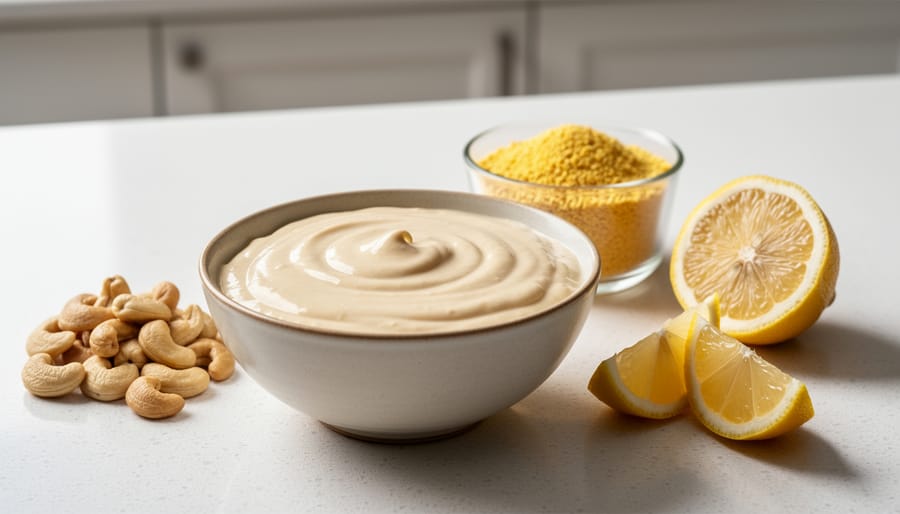
Cashews are a little bit magic in the kitchen. They’re naturally mild and rich, so when you soak them and blend them with a bit of liquid, they turn into a silky, creamy base that feels a lot like a dairy sauce. No dairy needed. If you’re newer to eating this way, our guide to plant-based diet basics is a gentle place to start.
The best part is how little it takes. Cashews plus a few simple ingredients are all you need, and you can pick and choose from this list:
- Soaked cashews, the creamy foundation
- Nutritional yeast, for a cheesy flavor
- Lemon juice, for a bright tang
- Garlic, salt, and mustard, for savory depth
- Tahini, for extra richness
- Unsweetened oat milk, other non-dairy milk, or water, to thin the sauce
- Turmeric and sweet or smoked paprika, for golden color and warmth
- Bell pepper or tomato paste, for a veggie-forward or tangy twist
- Chili powder and chipotle peppers, for a little heat
- Optional vegan feta, for a salty finish
- A blender or food processor, to bring it all together
You won’t need everything at once. Start with what’s in your pantry and build from there.
Flavor Variations to Match Your Mood
Think of these as flavor directions rather than rules. Your pantry, your mood, and the meal you’re building all get a vote.
The bright, golden version. This is the classic starting point: cashews, lemon juice, nutritional yeast, sweet paprika, and turmeric. The lemon adds tang, the nutritional yeast brings that cheesy depth, and the paprika and turmeric give it a sunny color that looks as cheerful as it tastes.
The savory version. If you want something richer and more rounded, blend cashews with garlic, nutritional yeast, lemon juice, tahini, unsweetened oat milk, turmeric, and smoked paprika. Crumbling in a little vegan feta is optional, but it adds a salty, tangy note if you like that. Tahini is a seed, so skip it if seed allergies are a concern, and you can simply leave it out.
The veggie-forward version. For a lighter, slightly sweet take, blend soaked cashews with non-dairy milk, nutritional yeast, bell pepper, lemon juice, mustard, and salt. The bell pepper adds a gentle sweetness and color, while the mustard gives it a little tang. It’s a lovely way to sneak extra vegetables into a comforting sauce.
The smoky, spicy version. Soak your cashews for about three hours, then blend them with tomato paste, nutritional yeast, smoked paprika, chili powder, and chipotle peppers. The result is bold and warming. Start with less of the chili and chipotle, taste, and build the heat up slowly.
Not sure where to begin? Pick the one that sounds most like what you’re craving tonight. You can always blend a different one next time.
Before You Blend: Safety Notes and Common Stumbling Blocks
A little prep saves a lot of frustration, so let’s walk through the few things worth knowing before you blend. None of it is complicated, and it all helps the process feel calm and doable.
Start with the blender itself. Don’t fill the jar past the max line, because thick, creamy mixtures need room to move. If you’re blending anything warm, vent the lid or leave the center cap slightly open and cover it with a towel, since steam builds pressure fast. Start on low and ramp up, and always let the blades stop fully before you lift the lid.
If you’re serving guests or family, it’s worth knowing that sesame is now recognized as a major allergen, as outlined in this FDA on sesame allergen overview. When in doubt, ask before you serve.
Labels matter too. Check nutritional yeast, non-dairy milk, and any vegan feta for added ingredients that might not fit your needs or the needs of the people you’re cooking for. Brands vary, and a quick glance can prevent a surprise.
If you’re making the smoky, spicy version, treat chipotle peppers and chili powder with respect. Wash your hands after handling them, and keep them away from your eyes. Add heat a little at a time, tasting as you go. You can always stir in more, but you can’t take it out.
Finally, for leftovers, follow the general food safety habits you’d use for any fresh, homemade food: keep it clean, cool it promptly, and use your best judgment.
How to Make Vegan Cashew Cheese Sauce: Step-by-Step
Founder’s Kitchen Story: Learning to Love the Blender Method
I’ll be honest: when I first went plant-based, I assumed “cheese” was something I’d simply have to let go of. Then I tried blending cashews with a few pantry staples, and I was surprised at how forgiving the whole thing was. My first batch wasn’t perfect, a little thick and a bit too lemony. But it was creamy and cheesy enough to make me smile, and that taught me something I still lean on: you don’t need to get it right the first time, you just need to keep showing up in your kitchen with a little patience.
Here’s the simple rhythm I come back to every time:
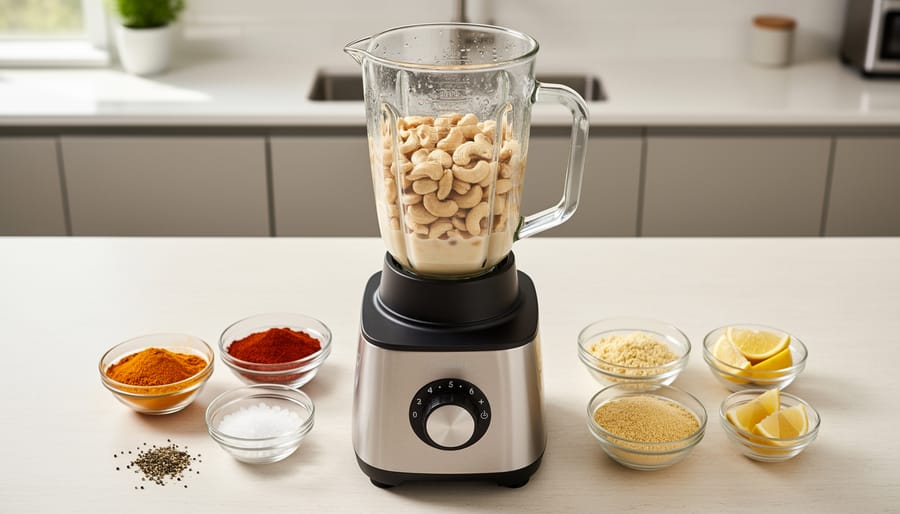
- Soak your cashews until they’re soft (about three hours works for one version).
- Add the cashews and your other ingredients to a blender or food processor.
- Blend until completely smooth and creamy.
- Taste, then adjust the salt, lemon, or spices to suit you.
- Warm it gently on the stove if you’d like it hot.
- Serve it up and enjoy.
That’s really all it takes, and every batch teaches you something new.
Is It Ready? How to Check Texture and Flavor, and Adjust
Give your sauce a good stir and taste it before you reach for anything else. Your own spoon is the best tool you have here, and a quick check of texture and flavor will tell you almost everything.
Start with texture. A well-blended sauce feels smooth and creamy, coating the back of a spoon without any sandy bits. If it feels gritty, the cashews likely need more time in the blender, so give it another minute or two. If it’s thicker than you’d like, whisk in a small splash of non-dairy milk or water, a tablespoon at a time. If it’s runnier than you hoped, remember it often thickens a little as it sits or warms, so give it a moment before adjusting.
Now taste. If it seems flat or bland, a pinch of salt usually rounds everything out. If it needs more brightness, add a little lemon juice. If it’s missing that cheesy depth, stir in more nutritional yeast. And if one flavor is shouting over the others, balance it with a touch more of what’s quiet rather than starting over. Understanding how vegan cheese works helps here: tang, salt, and savory depth all play together.
Go gently with yourself, too. Tweaking as you go is part of cooking, not a sign you did something wrong, and that kind of patient practice builds healthy consistency in the kitchen. Every batch teaches you something about what you love.
Ways to Enjoy Your Cashew Cheese Sauce
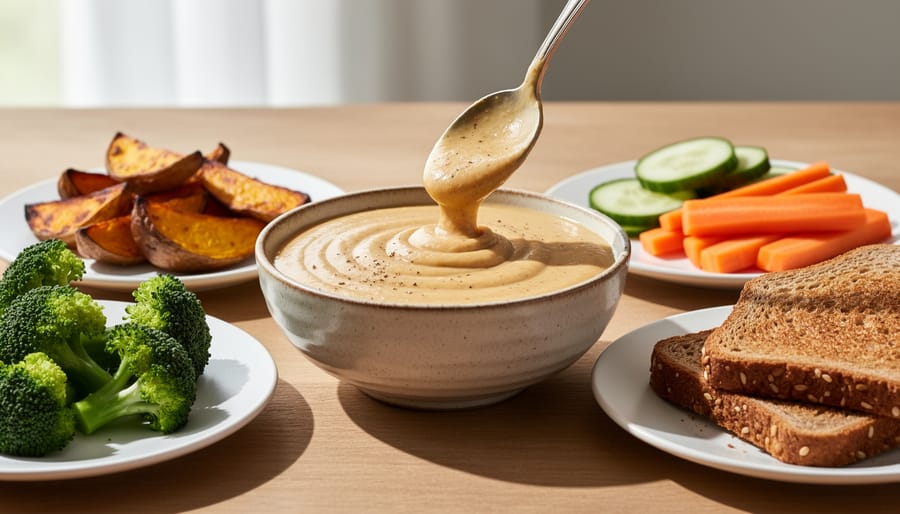
Once your sauce is smooth and warm, the fun part begins. Pour it over pasta for a quick, creamy dinner, or toss it with your favorite shape and add a handful of greens right at the end. It also makes a wonderfully cozy topping for nachos, so pile on beans, salsa, and whatever fresh toppings you love.
Vegetables are another easy win. Spoon the sauce over steamed broccoli, roasted cauliflower, or sautéed kale, and suddenly a simple side feels like a treat. Baked or roasted potatoes are just as happy under a generous drizzle, especially when you add a few vegetables on the side.
If you like building balanced plates, try pairing the sauce with whole grains like brown rice or quinoa and a colorful mix of veggies. There’s no right formula here. Think of it as a flavorful starting point, and let your appetite and your week guide how you serve it.
Frequently Asked Questions About Vegan Cashew Cheese Sauce
Do I have to soak the cashews?
Soaking helps cashews blend into a silky sauce, and one of the versions we looked at soaks them for three hours. If your recipe doesn’t call for it, check the texture after blending and keep going until it feels smooth.
What can I use instead of a blender?
A food processor works well too. Put everything in and process until smooth, scraping down the sides as you go.
How do I make it cheesier or tangier?
A little more nutritional yeast deepens the cheesy flavor, and a squeeze of lemon juice brightens things up. Add either a bit at a time and taste as you go.
Can I make it without nuts?
Cashews are the base of this sauce, so this recipe isn’t a fit for anyone with a tree nut allergy. Tahini is a seed, so it’s worth checking if that applies to you as well.
A few other questions come up often. Nutritional yeast gives the sauce its cheesy, savory character, so I’d call it a key ingredient rather than an optional one. If you’d like it warm, you can gently heat it on the stove while stirring, which also suits versions that include cooking. Just keep the heat modest and stir often so it stays smooth.
Once you’ve got a batch you love, think beyond the usual pasta night. It makes a lovely dip or drizzle, and it fits right in with vegan appetizers when you’re feeding friends. And remember, there’s no single right way to make it. Your pantry, your taste buds, and your mood all get a vote.
Making vegan cashew cheese sauce really can be this simple: a blender, some cashews, and a handful of pantry-friendly ingredients like nutritional yeast and lemon juice. No fancy equipment, no complicated steps.
So here’s my encouragement to you. Start with the version that sounds most like your kind of comfort, whether that’s bright and golden, savory with garlic and tahini, or smoky with a little heat. Then play. Add a bit more lemon, a pinch more salt, a sprinkle of paprika. Every batch teaches you something about your own taste.
And if one try comes out thicker, thinner, or tangier than you pictured, that’s not a failure. It’s just part of learning what you love. Be patient with yourself, the same way you would with any new habit on your wellness path.
Once you land on a combination that makes you smile, I’d love for you to share it. Your favorite twist might be exactly what someone else needs to feel nourished and satisfied.