

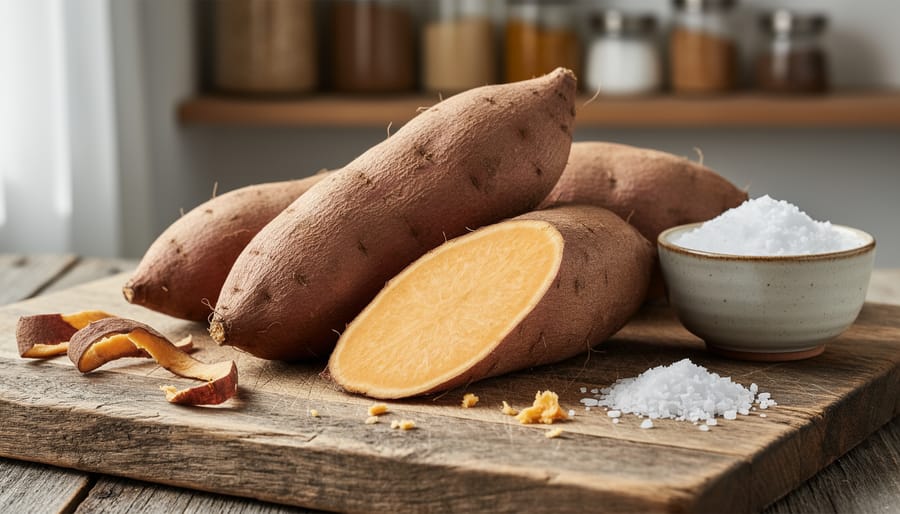
One medium yam (about 136 grams) delivers 158 calories, 37 grams of carbohydrates, 5 grams of fiber, and virtually no fat. You’ll also get an impressive 670 milligrams of potassium (19% of your daily needs), 28% of your daily manganese, and meaningful amounts of vitamin C, B6, and copper. These starchy tubers pack a nutritional punch that goes far beyond basic energy.
I first discovered yams while working with clients transitioning to more plant-based eating patterns in 2024. Many were surprised to learn that what they’d been calling “yams” at holiday dinners were actually sweet potatoes. True yams, common in African, Caribbean, and Asian cuisines, are brown-skinned tubers with a starchy, slightly earthy flavor. They’re nutritionally distinct too.
What makes yams particularly valuable is their resistant starch content, which increases when you cook and cool them. This type of starch feeds beneficial gut bacteria and may improve blood sugar control. The fiber content supports digestive health, while that potassium helps regulate blood pressure and counteracts sodium’s effects.
The manganese in yams plays a crucial role in bone health and metabolism. Vitamin B6 supports brain function and helps your body produce neurotransmitters. These aren’t flashy nutrients, but they’re foundational to feeling good every day.
Whether you’re comparing yams to other root vegetables or planning meals around whole food sources of complex carbohydrates, understanding these nutrition facts helps you make informed choices. The numbers tell only part of the story. How you prepare and combine yams with other nutrient-dense foods determines their real impact on your health.
Yam Nutrition Facts at a Glance
Let me present the numbers that matter when you’re deciding whether to add yams to your plate.
Here’s what you get in a 100-gram serving of raw yam, which is roughly the size of a small fist or about two-thirds of a cup once diced:
| Nutrient | Amount per 100g | % Daily Value |
|---|---|---|
| Calories | 116 | |
| Net Carbohydrates | 23.58g | |
| Protein | 2g | |
| Fiber | 6g | |
| Potassium | 670mg | 20% |
| Vitamin C | 12mg | 13% |
A typical serving size you’d actually eat is closer to 150-200 grams, so multiply these numbers by 1.5 to 2 for a more realistic picture of what lands on your dinner plate.
The Daily Value percentages follow Health Canada’s Nutrition Facts table standards, which help you understand how much of a nutrient one serving contributes to your recommended daily intake. That 20% potassium figure means a single serving gets you a fifth of the way to your daily target.
These numbers represent raw yams. Cooking doesn’t dramatically change the nutritional content, though it does affect how your body absorbs certain nutrients. The Daily Value guidance is based on a 2,000-calorie diet, which serves as a general reference point regardless of your specific caloric needs.
What strikes me about this profile is the balance. You’re not getting a massive calorie load, but you are getting substantial fiber and potassium alongside those complex carbs. That combination makes yams genuinely filling without being heavy, which is why I keep coming back to them when I need sustained energy that doesn’t crash an hour later.

The Powerhouse Nutrients in Every Bite
Complex Carbohydrates That Actually Sustain You
Those 23.58 grams of net carbs in a 100-gram serving of yam aren’t the kind that spike your blood sugar and leave you crashing an hour later. They’re complex carbohydrates, long chains of glucose molecules that your body breaks down gradually, releasing energy steadily over time rather than all at once.
Here’s why that matters: when you eat simple carbs (think white bread or candy), your blood sugar shoots up quickly, triggering a surge of insulin. You get a burst of energy followed by a slump. Complex carbs from yams work differently. They digest slowly, providing sustained fuel that keeps your energy levels more stable throughout the morning or afternoon.
For anyone living an active lifestyle, whether you’re training for a race, chasing kids around, or just trying to stay focused through long workdays, that steady energy release is invaluable. Your muscles get a reliable fuel source without the roller coaster. Plus, because complex carbs take longer to digest, you feel satisfied longer, which naturally supports healthy eating patterns without constant hunger pangs.
If you’re managing blood sugar levels, yams offer a gentler option compared to refined carbohydrates, though portion awareness still matters as part of your overall carb intake.
Fiber: Your Digestive System’s Best Friend
Six grams of fiber per serving might not sound like much, but it’s a meaningful chunk, about 24% of the daily fiber target for most adults. Think of it as your digestive system’s maintenance crew, keeping everything moving smoothly and predictably.
This fiber does double duty. First, it feeds the beneficial bacteria in your gut, the ones responsible for producing compounds that reduce inflammation and support immune function. When you eat fiber-rich whole foods like yams regularly, you’re essentially cultivating a healthier internal ecosystem. Second, it slows digestion, which means yams keep you satisfied longer than low-fiber carbs would. That sustained fullness isn’t just pleasant; it helps prevent the energy crashes and cravings that derail your eating intentions.
For those of us building plant-based eating patterns, yams offer a fiber advantage that complements other whole foods beautifully. While animal products contain zero fiber, a single serving of yams gets you nearly a quarter of the way to your daily goal. Pair them with leafy greens, beans, or whole grains, and you’ve built a meal that genuinely supports digestive wellness without overthinking it.
The practical takeaway? If you’re aiming for the recommended 25-38 grams of fiber daily and struggling to get there, yams are an accessible, versatile option that makes the goal feel achievable.
Potassium Power for Heart and Muscle Health
That 670mg of potassium per 100g serving isn’t just an impressive number on paper, it’s 20% of your daily value in a single portion, making yams one of the most potassium-rich whole foods you can easily incorporate into your meals. If you’ve ever wondered why your legs cramp during a workout or felt your energy crash mid-afternoon, potassium deficiency might be playing a bigger role than you think.
Potassium acts as a natural counterbalance to sodium, helping regulate blood pressure by easing tension in blood vessel walls. For anyone managing cardiovascular health or simply trying to support their heart through food choices, this mineral is genuinely protective. It’s the kind of nutrient your body uses constantly but quietly, which is why so many of us fall short without realizing it.
For those who exercise regularly, potassium becomes even more critical. It supports proper muscle contraction and recovery, helps maintain fluid balance during sweaty workouts, and prevents those frustrating cramps that can derail your training. Think of it as your muscles’ communication system, without adequate potassium, the signals get crossed and performance suffers.
The beauty of getting potassium from yams rather than supplements is that you’re also getting fiber, complex carbs, and other nutrients working together as nature designed them, supporting your body’s electrolyte balance in a way that feels sustainable and nourishing.
Vitamin C and Other Micronutrient Gems
That 12mg of vitamin C per serving might not sound flashy compared to an orange, but think of it as a bonus layer of immune support in a food you’re eating for its complex carbs and fiber. At 13% of your daily value, it’s a meaningful contribution, especially when you’re building meals around whole plant foods where nutrients add up across the day. Vitamin C acts as an antioxidant, helping protect your cells from oxidative stress while supporting collagen production for healthy skin and joints.
Beyond vitamin C, yams deliver smaller amounts of B vitamins like B6 and folate, which play quiet but essential roles in energy metabolism and nervous system health. You’ll also find trace minerals including manganese and copper. These micronutrients work synergistically with the potassium and fiber we’ve already talked about, creating a nutrient package that supports your body holistically rather than targeting just one function. The beauty of yams is that they deliver nutrition in the form nature intended, no isolated supplements needed.
How Yams Fit Into Innovative Nutrition Approaches
Here’s how this humble root vegetable fits into what’s happening in nutrition science right now. If you’re looking to start a plant-based diet yams offer exactly the kind of nutrient density you need without relying on processed alternatives. They deliver complex carbohydrates that fuel your day, plus a spectrum of minerals that support everything from muscle recovery to immune function.
The beauty of yams is their versatility across multiple wellness frameworks:
- Whole food nutrition, no ingredients list needed, just the food itself
- Anti-inflammatory eating, rich in antioxidants and free from common inflammatory triggers
- Low-glycemic approaches, their fiber content helps moderate blood sugar responses
- Personalized macro tracking, easily portioned and paired with plant-based protein sources to hit your targets
- Gut health optimization, that 6g of fiber feeds beneficial bacteria
What makes yams particularly relevant in 2026 is how they bridge traditional eating patterns with current nutritional science. They’re not a trendy superfood that appeared overnight. They’ve sustained populations for millennia, and modern research keeps validating why. Their potassium content supports the cardiovascular benefits that whole-food, plant-forward eating patterns are known for. The resistant starch that forms when they’re cooked and cooled acts as a prebiotic, fitting perfectly into microbiome-focused nutrition strategies.
For those following personalized nutrition plans, yams are beautifully adaptable. You can adjust portion sizes based on your activity level and carbohydrate needs. Pair them with leafy greens and legumes for a complete nutrient profile, or use them as a post-workout carb source. They work whether you’re eating intuitively or tracking macros precisely. The point is this: yams aren’t just nutritious in isolation. They’re a cornerstone ingredient that makes modern, evidence-based eating patterns actually work in real kitchens.
Yams vs. Sweet Potatoes: Clearing Up the Confusion
I used to stand in the grocery store staring at orange-fleshed tubers labeled “yams” and wondering why they looked exactly like sweet potatoes. Turns out, I wasn’t confused, the labeling was.
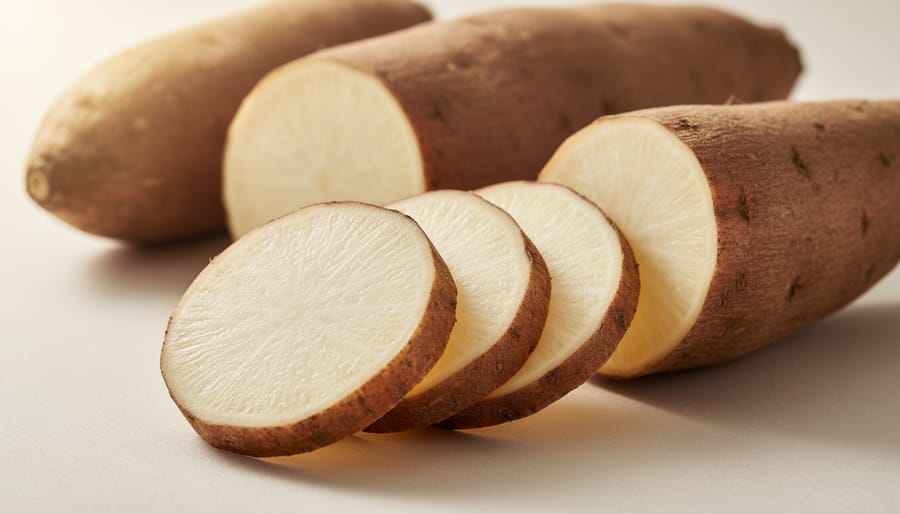
In North America, what most stores call “yams” are actually sweet potatoes. True yams are completely different vegetables. They’re starchy tubers from the Dioscorea family, typically grown in Africa, Asia, and the Caribbean. While sweet potatoes have smooth, thin skin and sweet, moist flesh (usually orange or white), real yams have rough, bark-like skin and white, purple, or reddish flesh that’s drier and less sweet.
The mix-up started decades ago when producers wanted to distinguish orange-fleshed sweet potatoes from the pale varieties, borrowing the West African word “nyami.” The name stuck, even though it’s botanically incorrect.
Nutritionally, both deserve recognition. The yam nutrition facts we’ve covered in this article, 116 calories, 6g fiber, and 670mg potassium per 100g, reflect true yams. Sweet potatoes offer similar benefits with slightly fewer calories (around 86 per 100g) and more vitamin A, while yams edge ahead in potassium and fiber.
For Canadian shoppers, if it’s orange and labeled “yam” at your local grocery store, you’re almost certainly looking at a sweet potato. Authentic yams require specialty or international markets. Both support your wellness goals beautifully, so there’s no wrong choice, just know what you’re actually eating.
Making Yams Work in Your Real Life
Finding yams in Canada can be a bit of a treasure hunt, but it’s worth the effort. Look for true yams in Caribbean or African grocery stores rather than mainstream supermarkets, where what’s labelled “yam” is usually a sweet potato. True yams have rough, bark-like skin and white, yellow, or purple flesh. Choose firm tubers without soft spots, and don’t worry if they’re oddly shaped, that’s normal. They store well in a cool, dark place for several weeks, making them practical for meal planning.
Preparing yams is straightforward once you get past the thick skin. Peel them thoroughly (the skin can irritate sensitive skin due to natural compounds), then boil, steam, roast, or mash them just like potatoes. Boiling takes 20-30 minutes depending on cube size, while roasting at 400°F brings out natural sweetness in about 40 minutes. I personally love them cubed and roasted with a bit of coconut oil and sea salt.
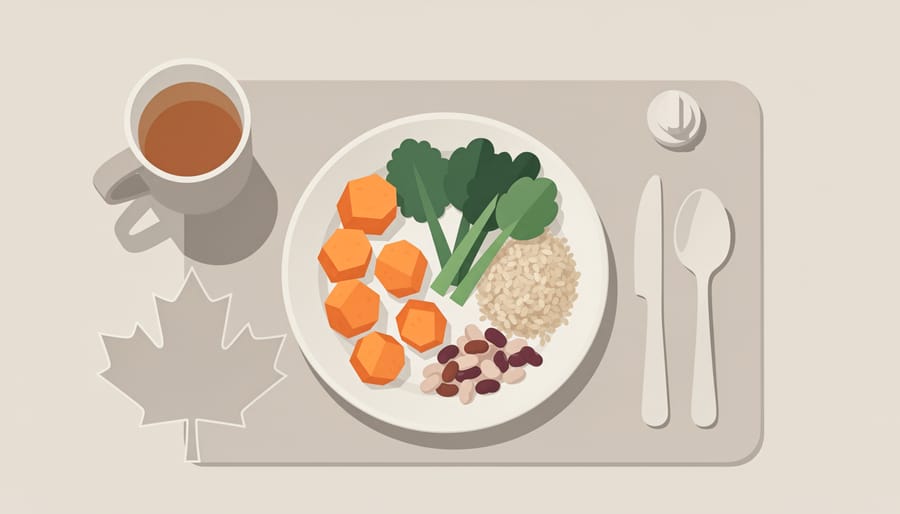
For portion sizes, think of a medium yam (about 200g cooked) as a satisfying carb base for a meal, similar to how you’d use quinoa or brown rice in your plant-based diet guide. That gives you around 230 calories and 12g of fiber, which works beautifully alongside roasted vegetables and a protein source. Balance is personal, so adjust based on your activity level and hunger cues rather than rigid rules.
Now that you understand the nutritional foundation of yams, 116 calories, 6g of fiber, 670mg of potassium, and more per 100g serving, you have the facts. But here’s what truly matters: how yams make you feel when you eat them. Nutrition data gives you a starting point, yet your personalized wellness journey depends on listening to your body’s unique responses. Do yams give you sustained energy? Help you stay consistent with balanced eating? Support your fitness goals? These are the questions that transform knowledge into nourishment.
I encourage you to experiment with yams in ways that excite you. Roast them with cinnamon, mash them into Buddha bowls, or try them in warming soups. There’s no single right way, just your way. And if you’re looking for inspiration to get started, I’ll be sharing some of my favorite plant-based yam recipes soon. They’re designed to help you enjoy this ancient root in thoroughly modern, delicious ways that honor both tradition and your individual path to wellness.