

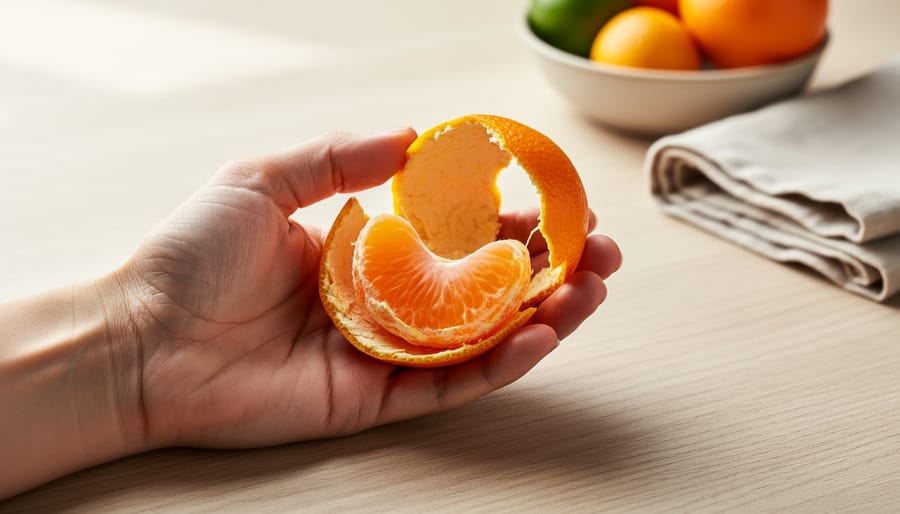
A mandarin orange is a small, loose-skinned citrus fruit that peels easily and splits into sweet, juicy segments. It’s also a lighter, lower-calorie snack than its size might suggest: a medium mandarin has about 47 calories and supplies about 23 mg of vitamin C. Per 100 g, you get roughly 53 calories, 1.8 g of fiber, and 10.6 g of natural sugar.
Those numbers matter because most of us want food that feels good to eat and fits into our days without a spreadsheet. A mandarin is about as simple as it gets. No prep, no mess, no special equipment, just a fruit that travels in a coat pocket and tastes like a small win at 3 p.m. If you’re building a more plant-based routine, it’s an easy place to start, since it works as a snack, a salad topper, or the brightest part of a simple dessert.
Below, we’ll look at what’s actually in a mandarin, how those nutrients show up when you eat one, and a few easy ways to enjoy them.
What a Mandarin Orange Is, in Plain Language
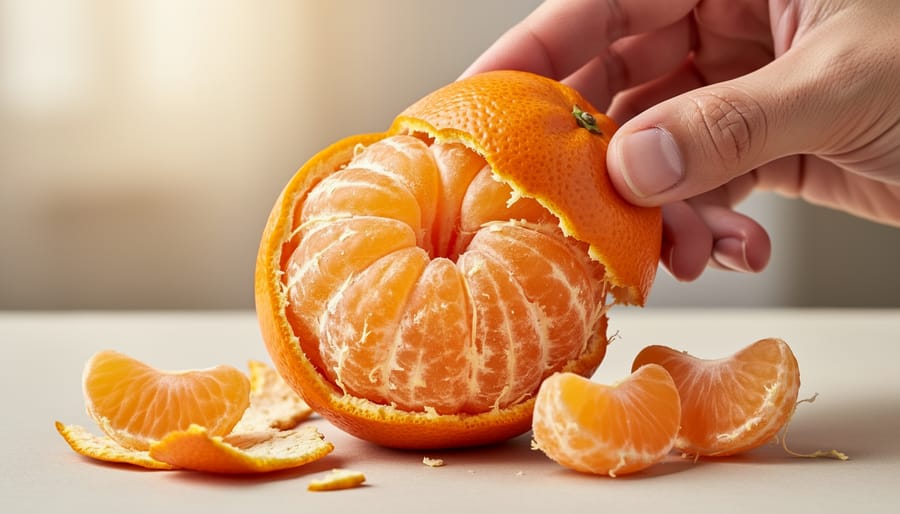
A mandarin orange is a small, sweet citrus fruit that peels easily and pulls apart into neat segments. Compared with larger oranges, mandarins are smaller, have a looser peel, and are usually easier to eat in a few minutes without a knife or mess. That’s a big part of why many people think of them as a handy, portable fruit you can toss in a bag and enjoy anywhere.
Everything in this article refers to the fresh, whole fruit, not juice, canned segments, or dried versions, since those can look quite different on a label.
You might run into a few terms while reading nutrition information, so here’s a quick glossary:
- Mandarin
- A small, sweet citrus fruit with a loose peel and easy-to-separate segments.
- Calorie
- A unit that measures the energy food gives your body.
- Vitamin C
- A nutrient found naturally in citrus fruits that your body needs but can’t make on its own.
- Dietary fiber
- The part of plant foods your body doesn’t fully digest, which is why whole fruit tends to be more filling than juice.
- Natural sugar
- The sugar that occurs naturally in fruit, found alongside fiber and water in the whole fruit.
Two more label words are worth knowing. A “serving” is simply the amount used to calculate the numbers, and “medium-sized” means an average fruit, roughly 88 grams in this case. Sizes vary, so think of the figures ahead as friendly ballparks.
Mandarin Orange Nutrition: The Numbers at a Glance
Let’s start with the quick version. A medium mandarin weighs about 88 g and comes in at roughly 47 calories, according to the figures reported for medium mandarin calories. If you prefer to think in grams, 100 g of mandarin has about 53 calories. That’s a small number for a fruit that feels like a real snack.
Here’s the snapshot, so you can scan it fast:
- Calories: about 47 in one medium mandarin (around 88 g)
- Calories per 100 g: about 53
- Vitamin C: about 23 mg in one medium mandarin
- Fiber: about 1.8 g per 100 g
- Sugar: about 10.6 g per 100 g
The vitamin C is the standout for many people. The amount of vitamin C per medium mandarin is about 23 mg, which is a nice little contribution from one easy-to-peel fruit. The fiber and sugar per 100 g give you a sense of the fruit’s natural balance: a bit of fiber alongside naturally occurring sugar.
A quick note on these numbers: they shift a little depending on the source and on how big your particular mandarin is. You might see 46.6 calories in one place and 50 in another, and that’s perfectly normal. Think of these as helpful ballparks, not exact targets you need to hit. There’s no good or bad here, just a clear picture of what’s in the fruit so you can decide how it fits into your day.
How Those Nutrients Show Up in Everyday Eating
Here’s where the numbers start to matter in real life. Vitamin C is found naturally in citrus, and one medium mandarin supplies about 23 mg. It’s a small, steady contribution, the kind that adds up when fruit shows up in your day regularly.
Fiber is where whole fruit really separates itself from juice. Mandarins have about 1.8 g of fiber per 100 g, and that fiber stays right there in the segments you’re chewing. It’s part of why a whole mandarin tends to feel more satisfying than a glass of juice, even though both come from the same fruit.
Then there’s the sugar, which I know can be a worry for a lot of people. Mandarins have about 10.6 g of sugar per 100 g, and it’s natural sugar that comes packaged with fiber and water. That combination is very different from sugar stirred into a drink or a dessert. Nothing about that number needs to feel scary. It simply describes a sweet, juicy fruit doing what fruit does.
As a dietitian, I tend to approach fruit with my clients the way I’d want someone to approach it with me: with curiosity instead of rules. In my experience, most people feel much better when fruit is treated as real food to enjoy, not a number to police. So if a mandarin makes your snack time a little brighter, that’s a perfectly good reason to peel one.
Simple Ways to Enjoy Mandarins in Plant-Based Eating
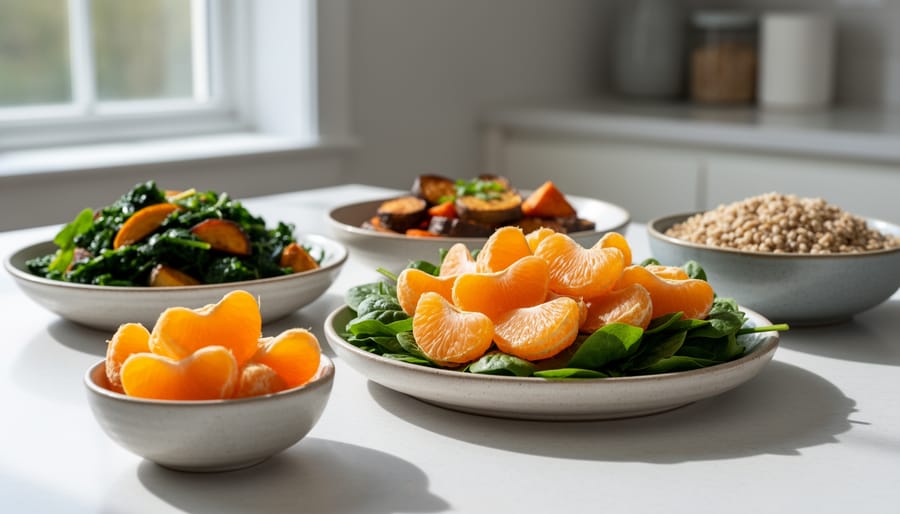
Mandarins are one of the easiest fruits to work into a plant-based diet, mostly because there’s no prep involved. Peel, pull apart, done. At about 47 calories for a medium fruit, they slot into meals and snacks without crowding anything else out.
Here are a few easy ways to use them:
- Eat them fresh and whole, with a small handful of almonds for a snack that keeps you fuller longer.
- Toss segments into a leafy green salad for a pop of sweetness against bitter greens.
- Add them to a grain bowl with quinoa, chickpeas, and a drizzle of tahini.
- Stir them into overnight oats or chia pudding the night before.
- Blend a few segments into a salad dressing with olive oil and a splash of vinegar.
- Pair them with pumpkin or sunflower seeds when you want something crunchy alongside.
If you’d like something a little more complete, try this mandarin and kale salad. It’s more of a loose template than a strict recipe, so adjust to taste.
You’ll need a few big handfuls of kale, two or three mandarins, a spoonful of tahini, the juice of half a lemon, a splash of water, and a pinch of salt. A small handful of pumpkin seeds is a nice extra.
First, remove the tough stems from the kale and tear the leaves into bite-sized pieces. Massage them with a tiny drizzle of olive oil for a minute or so until they soften. Next, whisk the tahini, lemon juice, water, and salt into a creamy dressing, adding a little more water if it feels thick. Peel the mandarins, separate the segments, and toss everything together with the dressing. Top with seeds if you like.
Nothing here has to be exact. Use what’s in your kitchen and what tastes good to you.
Making Mandarins Work for You: Flexible, Judgment-Free Tips
Mandarins fit into real life easily, and that’s part of their charm. Toss one in your bag for a grab-and-go snack, tuck a couple into a work or school lunch, or keep a bowl on the counter where they’re easy to reach. If you want more staying power, pair segments with a handful of nuts or seeds, or add some plant-based protein like edamame or a spoonful of nut butter.
Everyone’s needs are different, so consider your own tastes, routine, health circumstances, and goals. If you have specific questions, a registered dietitian or healthcare provider can offer advice that’s tailored to you. And remember, it’s not about eating them perfectly. A little healthy consistency beats perfection every time.
Mandarin Orange Nutrition: Your Questions, Answered
What are mandarins?
Mandarins are small, sweet citrus fruits with a loose peel that comes off easily and segments that pull apart without a fuss. That’s what makes them such a handy, portable snack.
How many calories are in a mandarin orange?
A medium mandarin has about 47 calories, and 100 g has about 53 calories. Sizes vary a little from fruit to fruit, so think of these as friendly ballparks rather than exact targets.
How much vitamin C does a mandarin have?
One medium mandarin supplies about 23 mg of vitamin C, a nutrient found naturally in citrus. It’s a nice little contribution to your day, alongside other fruits and vegetables.
Is the sugar in a mandarin something to worry about?
Mandarins have about 10.6 g of sugar per 100 g, and it comes packaged with about 1.8 g of fiber and plenty of water in the whole fruit. For most people, that’s simply part of enjoying fruit, though if you have specific health needs, a registered dietitian or your healthcare provider can help you personalize things.
If you’re wondering about the broader nutritional value, the short version is a modest-calorie fruit with some fiber and a helpful amount of vitamin C. There’s no need to overthink it. Enjoy mandarins in whatever way feels good, whether that’s peeled at your desk or tossed into a salad, and let consistency, not perfection, guide your choices.
So there it is: a mandarin is a small, easy-to-peel citrus fruit with modest calories (about 47 in a medium one), a bit of fiber, and a helpful amount of vitamin C. Nothing complicated, and nothing you need to be perfect about.
The best way to eat a mandarin is the way you’ll actually enjoy it. Peel one at your desk, toss segments into a kale salad, or stir them into your morning oats. Whatever feels good and fits your life is the right choice.
When you’re ready for more simple, plant-based ideas, we’ve got plenty waiting for you here on the site.