

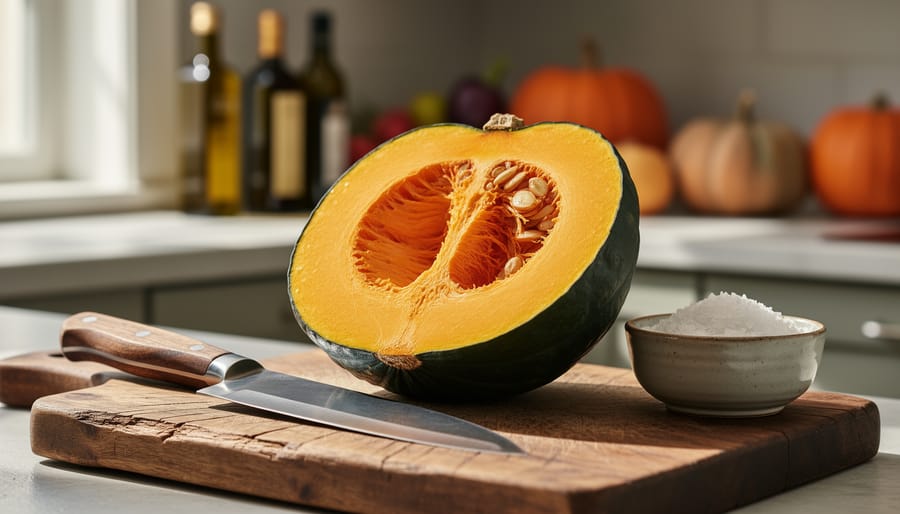
I’ll never forget the first time I sliced into a kabocha squash. The deep orange flesh practically glowed, and I remember thinking it looked almost too beautiful to eat. That was five years ago, and it’s become one of my go-to vegetables for clients looking to add more nutrient density to their plates without the fuss of complicated meal prep.
If you’re researching kabocha squash nutrition, you’re probably wondering whether this Japanese pumpkin lives up to the hype. The short answer? Absolutely. One cup of cooked kabocha delivers just 40 calories while packing in 130% of your daily vitamin A, nearly 20% of your vitamin C, and a respectable amount of fiber to keep you satisfied. Compare that to butternut squash, which has similar benefits but slightly higher calories, and you’ll see why kabocha has earned its spot in the wellness spotlight.
What makes kabocha especially compelling is how it delivers these nutrients. The beta-carotene content supports eye health and immune function, while the natural sweetness means you don’t need added sugars to make it taste incredible. You’re getting complex carbohydrates that provide steady energy rather than the blood sugar spikes that come from processed foods.
The practical beauty of kabocha is that you don’t need to be a culinary expert to enjoy its benefits. Roast it with olive oil and sea salt. Blend it into soups. Mash it as a side dish. The creamy texture and naturally sweet flavor work in both savory and sweet applications, making it one of the most versatile nutrient-dense vegetables you can add to your routine.
What Makes Kabocha Squash Nutritionally Special
Kabocha squash is a Japanese pumpkin variety that’s been quietly nourishing families across Asia for centuries, and it’s finally earning recognition in wellness circles for good reason. What sets it apart from the butternut or acorn squashes you might already know is its remarkable nutrient density packed into a deceptively low-calorie profile.
The deep orange flesh delivers a naturally sweet, almost chestnut-like flavor with a creamy texture that doesn’t need butter or cream to feel indulgent. That sweetness comes from complex carbohydrates rather than simple sugars, which matters when you’re thinking about sustained energy and blood sugar balance.
Here’s what catches the attention of nutritionists and plant-based eaters alike: kabocha manages to be filling and satisfying while keeping calories around 30 to 45 per cup. That’s not just low in calories for the sake of restriction. It’s about nutritional efficiency. You’re getting meaningful amounts of fiber, vitamin C, vitamin B6, and protective antioxidants in a food that actually tastes good and leaves you satisfied after a meal.
Health-conscious communities are gravitating toward kabocha because it represents what many of us are looking for in 2026: real food that supports wellness goals without requiring elaborate preparation or sacrificing flavor.
The Complete Nutritional Profile of Kabocha Squash
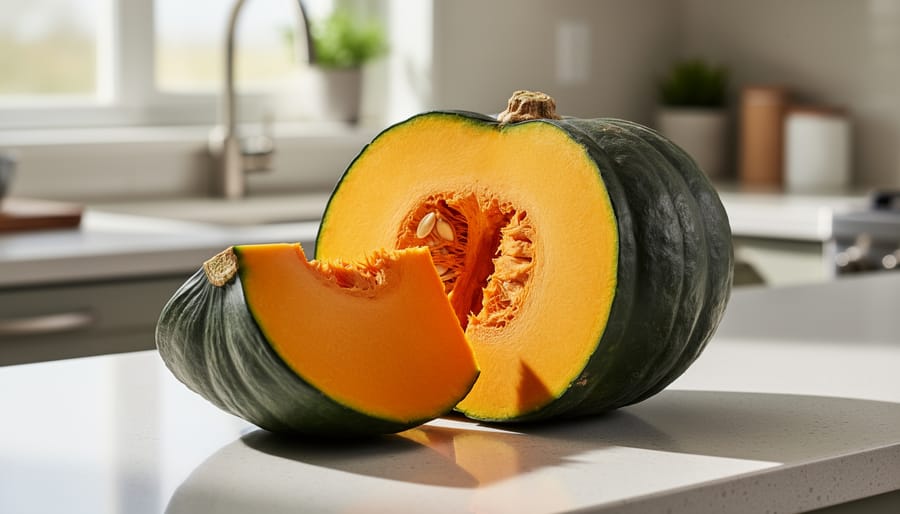
One cup of kabocha squash delivers an impressive amount of nutrition for remarkably few calories. At approximately 30-45 calories per cup, it sits at the low end of the calorie spectrum while packing in substantial vitamins and minerals, similar to what you’d find in yam nutrition facts but with an even lighter caloric footprint.
The macronutrient composition of kabocha breaks down to about 88% carbohydrates, 13% protein, and essentially zero fat. That translates to roughly 8-10 grams of carbohydrates per cup, 1-1.2 grams of protein, and 1.2-2 grams of dietary fiber. For context, 100 grams of kabocha contains approximately 39 calories, 10 grams of carbs, 1.2 grams of protein, and 2 grams of fiber.
| Nutrient | Per Cup (cooked) | Per 100g |
|---|---|---|
| Calories | 30-45 | 39 |
| Carbohydrates | 8-10g | 10g |
| Protein | 1-1.2g | 1.2g |
| Dietary Fiber | 1.2-2g | 2g |
| Fat | ~0g | 0g |
What this breakdown means for your eating style depends on your goals. The high carbohydrate percentage might raise questions if you’re monitoring carb intake, but the total grams remain modest, especially when you consider that nearly 20% of those carbs come from fiber, which doesn’t spike blood sugar the way refined carbs do. The virtually zero fat content makes kabocha an excellent choice if you’re following a lower-fat approach or simply want to allocate your fat intake to other foods like nuts, seeds, or avocado.
The protein content, while minimal, contributes to the overall nutrient density. You wouldn’t rely on kabocha as a primary protein source, but paired with legumes, tofu, or whole grains, it rounds out a balanced plate beautifully. According to kabocha squash nutrition data, this combination of low calories and high micronutrient content makes it particularly valuable for anyone prioritizing nutrient density per calorie consumed.
The fiber content deserves special attention. That 1.2-2 grams might seem modest compared to beans or lentils, but for a low-calorie vegetable, it’s substantial, and it plays a meaningful role in digestive health and satiety.
Key Vitamins and Minerals That Make Kabocha Stand Out
When you look past the calorie and carbohydrate numbers, kabocha squash reveals an impressive micronutrient lineup that makes it worth featuring in your weekly meals. The vitamin and mineral content is where this Japanese pumpkin really earns its place among nutrient-dense vegetables.
Vitamin C stands out as one of kabocha’s strongest nutritional contributions. This immune-supporting vitamin does more than help you fight off seasonal bugs. It acts as a powerful antioxidant in your body, protecting your cells from oxidative stress and supporting collagen production for healthy skin, joints, and connective tissue. Your body can’t store vitamin C, so regular sources from whole foods like kabocha help maintain consistent levels that support your immune system’s daily work.
Kabocha also delivers meaningful amounts of vitamin B6, a nutrient many people don’t think about until they learn what it does. B6 plays a crucial role in brain health and mood regulation because it helps your body produce neurotransmitters like serotonin and dopamine. It’s also essential for protein metabolism and red blood cell formation. If you’ve ever felt mentally foggy or unusually tired, inadequate B6 intake can be one contributing factor.
The antioxidant content in kabocha extends beyond vitamin C. The deep orange flesh signals the presence of carotenoids, plant compounds that your body can convert into vitamin A. These antioxidants work together to reduce inflammation at the cellular level, which matters for everything from heart health to how your body recovers from daily stress and physical activity.
What makes these micronutrients particularly valuable is that they come packaged with fiber and water rather than empty calories. You’re not just getting isolated vitamins, you’re getting them in a whole-food form that your body recognizes and can use efficiently. That combination supports not just disease prevention but the kind of daily vitality that makes wellness feel sustainable rather than complicated.
How Kabocha Squash Supports Your Wellness Goals
Blood Sugar Balance and Steady Energy
The combination of carbohydrates and fiber in kabocha squash creates what I think of as nutritional teamwork. Those 8 grams of carbs per cup provide glucose your body can use for energy, but the 1.2 grams of fiber (sometimes up to 2 grams depending on preparation) slow down how quickly that glucose enters your bloodstream. Instead of the rapid spike and crash you might get from refined carbs, kabocha delivers a gentler, more sustained release.
This matters because steady blood sugar means steady energy throughout your day. I’ve noticed this personally after having roasted kabocha for lunch, there’s no mid-afternoon slump begging for a snack fix. Your body gets what it needs without the rollercoaster.
The fiber also means your digestive system has to work a bit to break everything down, which keeps your blood sugar from jumping too high too fast. For anyone watching their glucose levels or just trying to avoid that jittery, crash-later feeling, kabocha’s natural composition does the work for you. You’re getting real food energy that your body knows how to handle, packaged exactly as nature intended.
Digestive Health and Satiety
That 1.2 to 2 grams of fiber per cup might not sound like much, but it works harder than you’d think. Because kabocha’s fiber is a mix of soluble and insoluble types, it supports gut motility while feeding the beneficial bacteria in your digestive system. This combination keeps things moving smoothly and contributes to a healthier microbiome over time.
What makes kabocha especially useful for anyone managing their appetite is how it delivers satisfaction without calorie density. At just 30 to 45 calories per cup, it provides volume and sweetness that registers as filling. The fiber slows digestion, which means you stay satisfied longer after a meal that includes kabocha compared to eating the same calories from lower-fiber foods.
I’ve noticed that when I roast kabocha until it’s creamy inside, it becomes the anchor of a meal rather than a side thought. That textural richness, combined with the gentle fiber content, means I’m not reaching for snacks an hour later. It’s a practical way to honor your hunger while supporting your digestive health without overthinking portions or restrictions.
Antioxidant Power for Overall Wellness
Kabocha’s deep orange flesh signals a rich store of antioxidants, particularly beta-carotene and vitamin C, which work quietly in your body to counter oxidative stress. These compounds help neutralize free radicals that contribute to inflammation and cellular wear over time. While we often chase the newest supplement or superfood, kabocha offers this protective support in a whole food package your body knows how to use. Regular consumption won’t transform your health overnight, but it contributes to the kind of steady, cumulative protection that matters for long-term wellness. The antioxidants in kabocha support everything from skin health to immune resilience, working alongside the fiber and vitamins we’ve already discussed to create a genuinely nourishing food rather than a single-benefit ingredient.
Fitting Kabocha Squash Into Different Eating Styles
Kabocha fits seamlessly into just about any eating style, which is part of why I keep coming back to it. If you’re exploring start plant-based eating or already committed to vegan meals, kabocha brings natural sweetness and substance to bowls, soups, and sides without any animal products. Its starchy satisfaction pairs beautifully with plant-based protein sources like lentils, chickpeas, or tofu, creating balanced plates that keep you full and energized.
For whole food enthusiasts, kabocha is as clean as it gets, no processing, just nutrient-dense vegetable goodness you roast or steam. Those following low-calorie approaches appreciate that one cup delivers only 30 to 45 calories while offering real volume and flavor, making it easy to create satisfying meals without calorie density concerns.
Now, if you’re monitoring carbohydrate intake, the 8 to 10 grams of carbs per cup might give you pause. Here’s the thing: those carbs come packaged with 1.2 to 2 grams of fiber, vitamin C, vitamin B6, and antioxidants. This isn’t empty starch. The fiber slows digestion, and the micronutrient density means you’re getting substantial nutritional value for those carbs. Many people find kabocha works well in moderate portions alongside protein and healthy fats, especially post-workout or during active days when carbs fuel performance.
For balanced eating without strict rules, kabocha simply adds variety and nutrition. It doesn’t demand dietary allegiance, it just shows up as a reliable, nourishing option that complements however you choose to eat. Listen to your body, adjust portions to your needs, and let kabocha support your wellness goals on your terms.
Simple Ways to Enjoy Kabocha Squash
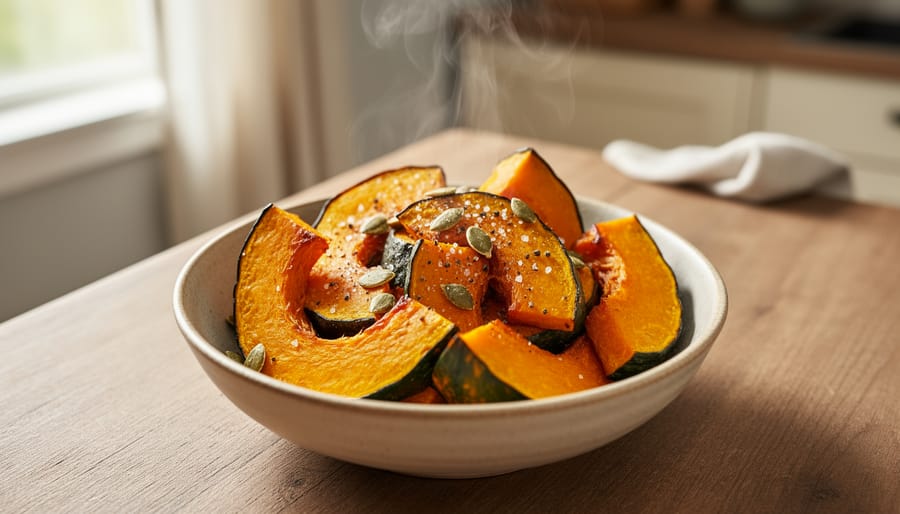
The beauty of kabocha squash is that it responds well to almost any cooking method while keeping those nutrients intact. I discovered my favorite approach entirely by accident one rushed weeknight when I simply tossed cubed kabocha with olive oil and sea salt, roasted it until the edges caramelized, and ate it straight from the pan. That simple preparation became my go-to because it lets the naturally sweet, nutty flavor shine without any fuss.
Getting started with kabocha is straightforward once you know the basics:
- Cut the squash in half using a sharp chef’s knife, then scoop out the seeds with a spoon. The skin is edible and softens during cooking, so you can leave it on.
- Cube the flesh into one-inch pieces for roasting, or cut into wedges if you prefer larger portions.
- Toss with a small amount of oil and your preferred seasonings, salt, pepper, garlic powder, or warming spices like cinnamon work beautifully.
- Roast at 400°F for 25-30 minutes until tender and golden, flipping halfway through for even browning.
Steaming is another excellent option that preserves the water-soluble vitamin C content. Cut the squash into chunks, steam for 12-15 minutes until fork-tender, and mash with a bit of coconut milk for a creamy side dish.
Kabocha also works wonderfully in soups where you can blend it into a velvety base with vegetable broth and warming spices. For grain bowls, roasted kabocha cubes add substance and a touch of sweetness that balances savory ingredients like tahini dressing or spiced chickpeas. The texture holds up well whether you’re meal-prepping for the week or assembling a quick dinner bowl with whatever vegetables you have on hand.
Adding kabocha squash to your meals isn’t about following a strict plan or ticking boxes on someone else’s nutrition checklist. It’s about discovering foods that genuinely nourish you and fit into your life in ways that feel good. With 30-45 calories per cup, impressive fiber content, and those standout vitamins and antioxidants we’ve explored, kabocha offers real nutritional value without requiring perfection or rigid rules.
Your wellness journey is yours alone. Maybe kabocha becomes a weekly staple, or perhaps it’s an occasional discovery that adds variety to your vegetable rotation. Both approaches are completely valid. The key is experimenting with how it makes you feel, how you enjoy preparing it, and whether it supports your energy and satisfaction throughout the day.
Healthy lifestyle consistency isn’t about eating the same perfect foods every single day. It’s about building a flexible foundation of nutrient-dense options that work for your body, your schedule, and your preferences. Kabocha squash can be part of that foundation if it resonates with you. Trust yourself to know what feels right, and give yourself permission to enjoy the process of nourishing your body with real, whole foods that actually taste good.