

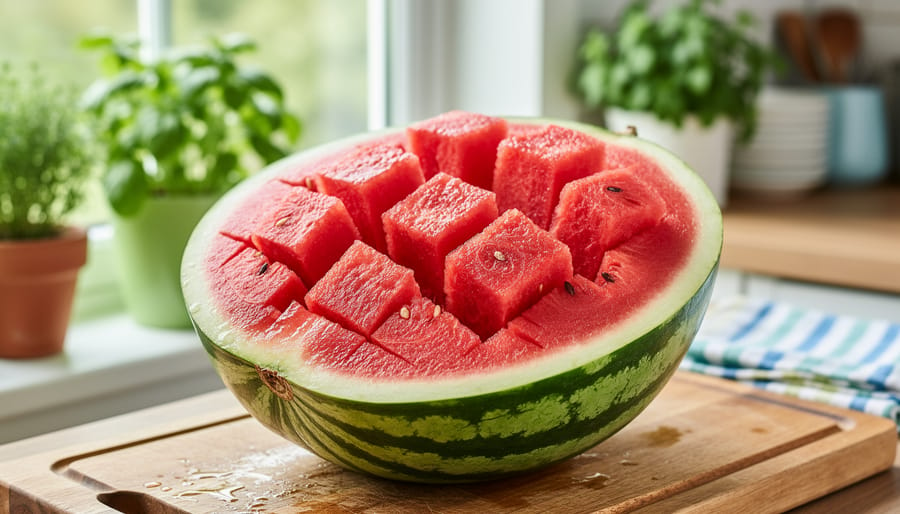
One cup of diced watermelon contains just 46 calories, making it one of the most refreshing ways to satisfy your sweet tooth while staying aligned with your wellness goals. I discovered this myself during a particularly hot summer when I was craving something sweet but didn’t want the sugar crash that usually followed my afternoon snacks. That’s when I started keeping watermelon in my fridge, and it completely changed how I thought about natural sweetness.
The nutritional profile is genuinely impressive. That same cup delivers 21% of your daily vitamin C needs, 18% of vitamin A, and a solid dose of potassium (170mg) to support heart health and hydration. But here’s what makes watermelon truly special: it contains 92% water, which means you’re getting serious hydration along with your nutrients. The natural sugar content sits at about 9 grams per cup, less than you’d find in many other fruits, and it comes packaged with fiber and phytonutrients that your body knows how to handle.
What surprised me most when I started researching for my clients was learning about lycopene, the same powerful antioxidant found in tomatoes. Watermelon actually contains higher concentrations in some cases, especially in the deep red flesh varieties. This compound has been studied for its potential to support cardiovascular health and reduce oxidative stress.
The macronutrient breakdown is straightforward: minimal protein (less than 1 gram), virtually no fat, and those 11 grams of carbohydrates that come from nature’s own design. For anyone counting macros or managing blood sugar, watermelon fits surprisingly well into most eating plans when you pay attention to portion sizes.
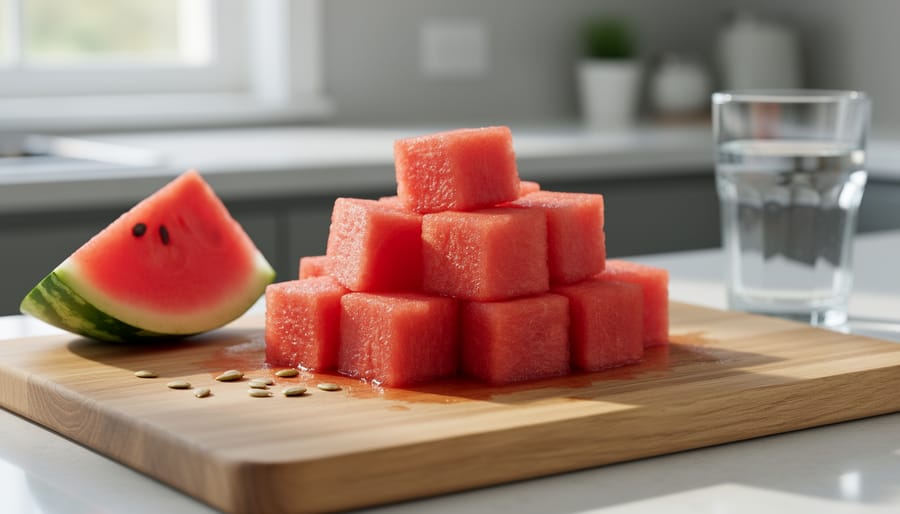
The Complete Watermelon Nutrition Breakdown
What Those Numbers Really Mean for Your Body
Those 46 calories in a cup of watermelon aren’t just a number, they represent a smart choice when you’re hungry between meals or craving something sweet after dinner. You can enjoy a generous portion without derailing your eating goals, which matters when you’re trying to honor both satisfaction and nourishment. For context, you’d need to eat nearly three cups of watermelon to match the calories in a single banana.
The vitamin C in one cup delivers about 14% of what most adults need daily. That translates to real support for your immune system, helping your body produce the white blood cells that fight off seasonal bugs. Vitamin C also helps your body absorb iron from plant foods, which is particularly helpful if you eat a lot of beans, lentils, and leafy greens.
Now, about those 9.4 grams of natural sugar. I know sugar gets a bad reputation, but context matters here. Unlike processed sweets, watermelon’s sugar comes packaged with water (it’s 92% water by weight), fiber, and beneficial plant compounds that slow absorption. Your body processes this differently than a candy bar. You get steady energy rather than a spike and crash, especially if you pair watermelon with a handful of nuts or seeds for some protein and healthy fat.
The low fat content (0.2g) and modest fiber (0.6g) mean watermelon digests quickly, making it ideal before exercise when you want fuel that won’t sit heavy in your stomach. That same quality makes it perfect for hot days when your appetite drops but your body desperately needs hydration and electrolytes.
Watermelon’s Secret Weapons: Beyond Basic Nutrition
The numbers on that nutrition label tell only part of watermelon’s story. What really sets this fruit apart are the powerful plant compounds working behind the scenes, compounds that researchers are discovering offer remarkable benefits for your heart, muscles, and overall vitality.
Let’s start with lycopene, the pigment that gives watermelon its signature red hue. This carotenoid acts as a potent antioxidant in your body, helping to neutralize free radicals that contribute to cellular damage and inflammation. Ripe watermelon contains particularly high concentrations of lycopene, even more than fresh tomatoes, surprisingly. Studies suggest that regular lycopene intake supports cardiovascular health by helping maintain healthy blood pressure and reducing oxidative stress on blood vessels.
Then there’s citrulline, an amino acid that makes watermelon truly unique among fruits. Your body converts citrulline into arginine, which plays a crucial role in nitric oxide production. This process helps relax blood vessels and improve circulation. Athletes have started paying attention because citrulline may reduce muscle soreness after intense workouts and support faster recovery. You’ll find the highest concentrations in the white rind closest to the red flesh, which is why using the whole fruit matters.
These lycopene and citrulline compounds work alongside watermelon’s other antioxidants, including vitamin C and beta-carotene, to create a synergistic effect that goes far beyond basic nutrition.
What makes this especially exciting for clean eating approaches is that you’re getting these benefits from a whole food in its natural form. No extracts, no supplements, just fresh fruit that tastes like summer and happens to deliver powerful phytonutrients your body knows exactly how to use.

How Watermelon Fits Into Your Clean Eating Lifestyle
Adding watermelon to your daily routine fits beautifully whether you follow a plant-based diet track macros for fitness goals, or simply want to eat cleaner. Its 92% water content makes it a hydration powerhouse, especially valuable during summer workouts or hot days when plain water feels boring.
For those looking to start plant-based watermelon offers an easy win. At just 46 calories per cup, it satisfies sweet cravings without derailing your goals. Pair it with plant-based protein like hemp seeds or a handful of almonds for a balanced snack that keeps you full longer.
Pre-workout, a cup of watermelon delivers quick-digesting carbs for energy while keeping you hydrated. Post-workout, its natural electrolytes and citrulline content support muscle recovery and reduce soreness. I’ve found that freezing watermelon cubes creates a refreshing recovery snack that feels indulgent but fuels my body exactly what it needs.
For weight management, watermelon’s high water and fiber content means it takes up space in your stomach, helping you feel satisfied on fewer calories. The natural sweetness curbs dessert cravings without guilt. I’ve watched clients successfully swap their evening ice cream for frozen watermelon blended into a sorbet-like treat, same satisfaction, completely different nutrition profile. The key is enjoying it as part of whole, minimally processed meals that honor your body’s needs.
Innovative Ways to Enjoy Watermelon All Season Long
Thinking beyond sliced wedges opens up possibilities that keep watermelon interesting from June straight through September. The key is treating this fruit as a versatile ingredient rather than just a side dish for cookouts.
Frozen watermelon cubes become instant flavor bombs for smoothies and agua frescas. Toss chunks into your blender with fresh mint and lime juice for a hydrating drink that delivers vitamin C and antioxidants without added sugar. I keep bags of cubed watermelon in my freezer year-round because they blend into creamy, sorbet-like textures that satisfy sweet cravings while keeping you hydrated.
Savory preparations surprise people, but they work beautifully. Grilled watermelon develops caramelized notes that pair well with fresh herbs and a drizzle of balsamic reduction. Try layering thin watermelon slices with cucumber, fresh basil, and a squeeze of lime for a salad that balances sweet and tangy. The natural sugars intensify slightly when grilled, creating depth while the fruit retains its nutritional benefits.
The rind deserves attention too. Most people discard it, but the pale flesh between the pink fruit and green skin can be pickled, stir-fried, or blended into smoothies for extra fiber. Some of my clients grate it into slaws or chop it for cold soups, reducing waste while adding crunch.
For an easy frozen treat, puree watermelon with a touch of coconut water and pour into popsicle molds. You get the full 46 calories per cup worth of refreshment in a form that feels indulgent but stays aligned with clean eating principles. These simple shifts transform how you experience one of summer’s most hydrating foods.
Simple Plant-Based Watermelon Recipes to Try
I’ve found that the best whole-food recipes are the ones you’ll actually make on a busy Tuesday afternoon. These watermelon creations are simple enough for weekday life, yet special enough to feel like self-care.
Watermelon-Mint Smoothie Bowl
Blend 3 cups frozen watermelon cubes with ½ cup plant milk and a handful of fresh mint until thick and creamy. Pour into a bowl and top with hemp seeds, sliced kiwi, and a drizzle of almond butter. This delivers that vitamin C boost we talked about earlier while keeping you satisfied through morning hunger. The frozen texture slows you down, making it feel more substantial than a drinkable smoothie.
Chilled Watermelon-Cucumber Salad with Lime
Cube 4 cups watermelon and 2 cups cucumber, then toss with fresh basil, the juice of 2 limes, and a pinch of sea salt. Let it sit for 10 minutes so the flavors marry. The cucumber amplifies watermelon’s hydrating properties while adding satisfying crunch. I serve this alongside grilled vegetables when I want something light that still feels like a proper meal.
Frozen Watermelon Lime Bites
Puree 3 cups watermelon with the zest and juice of 1 lime, then pour into ice cube trays or small silicone molds. Freeze until solid. These contain nothing but fruit, yet they satisfy sweet cravings while delivering those 46 calories per cup in a fun, portion-friendly form. My kids think they’re getting dessert. I know they’re getting lycopene and vitamin A.
Each recipe lets watermelon’s natural sweetness shine without added sugars or processed ingredients. They’re proof that eating well doesn’t require complicated techniques or fancy equipment, just good produce and a willingness to experiment.
Making the Most of Your Watermelon: Selection and Storage Tips
Choosing a perfectly ripe watermelon transforms your eating experience from decent to delicious. Look for a creamy yellow spot on the bottom, that’s where the watermelon rested on the ground while ripening in the sun. A ripe melon feels heavy for its size, which signals high water content and maximum nutrition. When you tap it, listen for a deep, hollow sound rather than a flat thud.
Once you’ve brought your watermelon home, proper storage keeps those nutrients intact. An uncut watermelon stays fresh at room temperature for up to two weeks, though I prefer storing mine in a cool spot away from direct sunlight. After cutting, wrap the pieces tightly in plastic wrap or store them in an airtight container in the refrigerator, where they’ll maintain their vitamin C content and crisp texture for three to five days.
Here’s how to maximize every bit of your watermelon:
- Store cut watermelon with the rind on to preserve moisture and nutrients longer
- Pickle or lightly sauté the white rind for a crunchy, nutritious addition to salads and stir-fries
- Freeze cubed watermelon on a baking sheet, then transfer to freezer bags for smoothies and frozen treats
- Save the seeds, roast them with a pinch of salt for a protein-rich snack
The rind often gets tossed out, but it contains citrulline and fiber that support your body’s natural processes. I blend chunks of white rind into green smoothies where the mild flavor disappears among stronger ingredients. You can also juice it or add thin strips to vegetable stir-fries for extra crunch. When you use the whole fruit, you’re honoring the plant and getting more nutrition per dollar spent.
When you slice into a ripe watermelon on a warm afternoon, you’re not just treating yourself to a refreshing snack. You’re embracing a whole-food approach to nutrition that honors what your body truly needs, hydration, essential vitamins, beneficial phytonutrients, and the simple pleasure of eating seasonally. Those 46 calories per cup come packaged with real vitamin C, lycopene, and citrulline, not stripped down or artificially enhanced, but complete and balanced the way nature designed them.
This is what innovative nutrition looks like in practice. It’s not about obsessing over every gram or following rigid rules. It’s about choosing foods that nourish you while also bringing joy to your plate. Watermelon exemplifies this beautifully, it supports your heart health, aids recovery, keeps you hydrated, and tastes incredible whether you’re eating it fresh, blending it into a smoothie bowl, or experimenting with savory combinations.
As you move through this summer and beyond, I encourage you to get curious with watermelon. Try it in ways you haven’t before. Toss it into salads with fresh herbs. Freeze chunks for a cooling treat. Share slices with people you love. Let this vibrant fruit remind you that wellness doesn’t have to feel complicated or restrictive. Sometimes, the most powerful nutrition choices are also the most delicious and satisfying. That’s the kind of eating worth celebrating.