

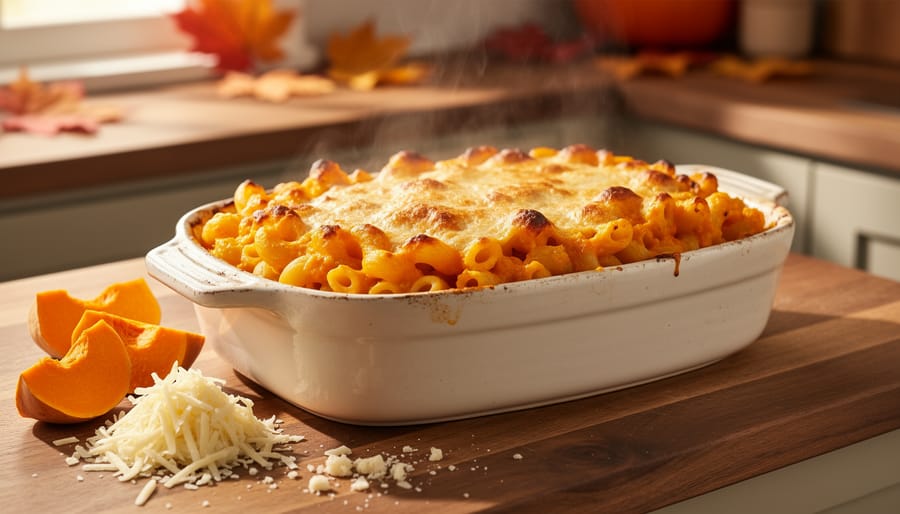
Butternut squash mac and cheese is a creamy, cozy dinner you can make at home in about an hour, and it’s easier than it sounds. You roast or steam the squash, blend it into a smooth puree, whisk it into a cheese sauce with sharp cheddar and Parmesan, toss it with pasta, and bake or serve it straight from the pot. The squash does the heavy lifting, giving the sauce body and a gentle sweetness without a pile of extra cream.
If you’ve spotted the seasonal version at Trader Joe’s, which sells for $3.79 per 12 oz, you already know why this dish keeps coming back each fall. It’s a copycat favorite for good reason. A homemade batch costs little, reheats well for leftovers, and lets you decide exactly what goes in the pot.
I like this recipe because it feels like comfort food and nourishment at the same time. There’s no pressure to make it perfect, and plenty of room to adjust it, including plant-based swaps if that’s your style. Here’s what you’ll need, how to keep your kitchen safe, and the four simple phases that take you from raw squash to a bubbling, golden pan.
Why Butternut Squash Mac and Cheese Is Having a Moment This Fall
When the leaves start turning, a certain kind of food starts showing up everywhere, and butternut squash mac and cheese is back for fall. Recipes call it creamy fall comfort food, and creators are sharing their own copycat versions of the seasonal mac and cheese Trader Joe’s sells at $3.79 per 12 oz. If you’d rather grab the store-bought one on a busy night, that’s a perfectly good choice. Making it at home is simply another option, and a rewarding one if you’re in the mood to cook.
So why the appeal? Squash melts into a puree that adds natural creaminess and a gentle sweetness, which plays beautifully against sharp cheddar and Parmesan. The recipes people are sharing describe it as easy, with minimal chopping, and it holds up well as leftovers, which makes it realistic for real weeknights, not just weekend cooking projects.
For me, this one is personal. Mac and cheese was the comfort food of my childhood, the dish that meant someone had cared enough to feed me something warm. As a dietitian, I never wanted to give that up, and I didn’t have to. I just wanted it to fit a more plant-forward, balanced way of eating. Stirring squash into the sauce was a simple way to bring in more vegetables without losing any of the coziness. It still tastes like a hug, and now it feels good to make, too.
What You’ll Need: Tools, Ingredients, and Easy Swaps
Good news: butternut squash mac and cheese doesn’t call for fancy equipment or a long shopping list. Most of it probably lives in your kitchen already, and anything that doesn’t can usually be swapped. Here’s your checklist, with options noted so you can make it work for your pantry and your needs.
- Tools: a sheet pan for roasting the squash, plus a large pot for the pasta and sauce.
- Tools: a blender or food processor to puree the squash (an immersion blender, the handheld kind you dip right into the pot, works too).
- Tools: a baking dish if you want to finish it in the oven, a box grater for fresh cheese, and a sharp knife with a sturdy cutting board.
- Ingredients: butternut squash (fresh, or pre-cut to save on chopping).
- Ingredients: pasta of your choice (gluten-free, whole-grain, or chickpea-based all work).
- Ingredients: sharp cheddar and Parmesan (melty dairy-free or vegan cheeses are a good stand-in).
- Ingredients: pantry flavor boosters like salt, pepper, garlic powder, mustard powder, or a pinch of warm spice such as nutmeg.
- Ingredients: a splash of milk or broth for thinning (any plant milk is fine).
A few gentle notes on those swaps. Chickpea-based or whole-grain pasta can add a little extra protein or fiber, which is lovely if you want the dish to feel more filling. Gluten-free pasta is a great option too, though it can go soft quickly, so keep an eye on it. And if you’re going dairy-free, look for a cheese labeled as melting well, since some plant-based cheeses stay stubbornly firm.
There’s no single right way to stock this recipe. Use what you have, and trust your own taste along the way.
Before You Start: Kitchen Safety Tips for Squash, Blenders, and Hot Sauce
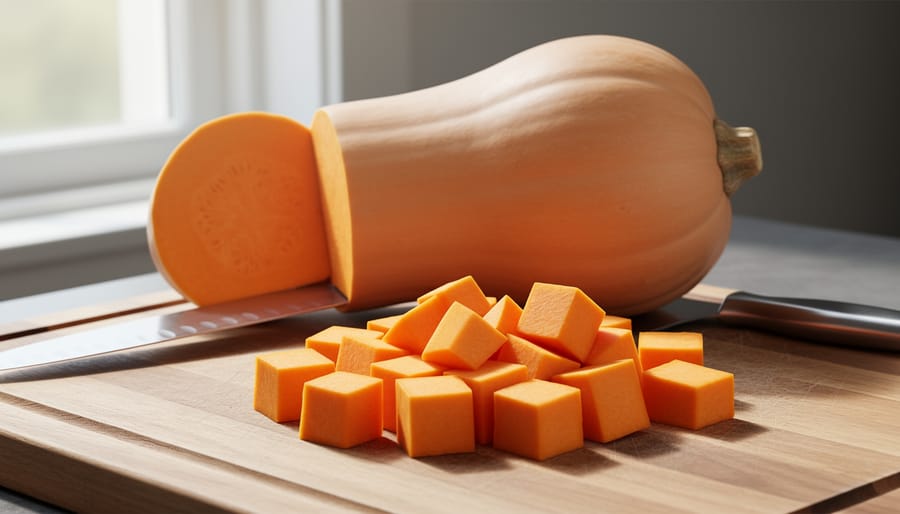
A little kitchen safety goes a long way here, and none of it needs to feel intimidating. Butternut squash is hard and round, so give it a steady setup. Put a damp towel under your cutting board so it can’t slide, use a sharp knife (a dull one slips more), and trim a slice off the bottom so the squash sits flat. If the skin feels stubborn, microwave the whole squash for a minute or two to soften it first.
Here’s your cue to pause: if the knife slips or the squash won’t sit still, stop, set the knife down, and re-stabilize. There’s no rush.
Roasted squash and sheet pans hold heat longer than you’d expect, so use oven mitts and let things cool for a few minutes before handling. When you blend hot squash, work in small batches. Steam builds up quickly, and a loosely vented lid lets it escape safely.
Think about the people at your table, too. This recipe usually includes dairy and gluten, and cashew-based swaps bring nuts into the mix, so check in with guests about allergies before you cook.
Finally, cool leftovers promptly and refrigerate them in a covered container rather than leaving them out on the counter.
How to Make Butternut Squash Mac and Cheese: Step-by-Step
Step 1: Prepare the Squash and Pasta
Start with the squash, since it takes the longest. Peel the butternut squash with a sturdy vegetable peeler, cut it in half, scoop out the seeds, and cube it into roughly one-inch pieces. Or skip the peeling entirely: halve and seed it, then roast the halves cut side down. Either way, roast at 400°F until fork-tender and lightly caramelized at the edges. If chopping isn’t your favorite, grab pre-cut squash and save yourself the effort.
While the squash roasts, bring a big pot of salted water to a boil and cook your pasta to just shy of al dente. It will finish cooking in the sauce or oven, so a little bite now is exactly what you want. Before draining, scoop out a splash of pasta water. You’ll use it later to adjust the texture.
Step 2: Blend the Squash into a Silky Sauce Base
Once the squash is tender, scoop it into a blender or food processor, or use an immersion blender right in the pot. Add a splash of warm broth or your milk of choice, then blend until completely smooth. Start with less liquid than you think you need. You can always thin it, but you can’t easily thicken it back up.
This is where the creaminess comes from. Cooked squash breaks down into a velvety puree that naturally clings to pasta, which is why the sauce feels rich without much fuss. If you’re curious about another dairy-free route, our cashew cheese sauce uses a similar blender technique.
Too thick? Stir in reserved pasta water a tablespoon at a time. Then taste. Add salt gradually, a squeeze of lemon or a dash of vinegar to brighten, and a pinch of nutmeg or paprika for warmth.
Step 3: Stir in the Cheese and Combine
Turn the heat down to low before the cheese goes in. High heat is the usual reason a cheese sauce turns grainy, so keep things gentle.
Add your freshly grated sharp cheddar a handful at a time, stirring until each addition melts before the next. Grating from a block helps, since pre-shredded cheese often carries coatings that keep it from melting smoothly. Stir in the Parmesan last for a salty, savory finish.
Once the sauce looks glossy, fold in the pasta until every noodle is coated. If it feels tight, loosen it with a splash of that reserved pasta water.
Making it dairy-free? Choose a plant-based cheese labeled as melty, and add it gradually, just like the dairy kind. These cheeses can taste milder, so you may want a bit more salt or a pinch of mustard powder. Taste, adjust, and trust yourself.
Step 4: Bake or Finish on the Stovetop
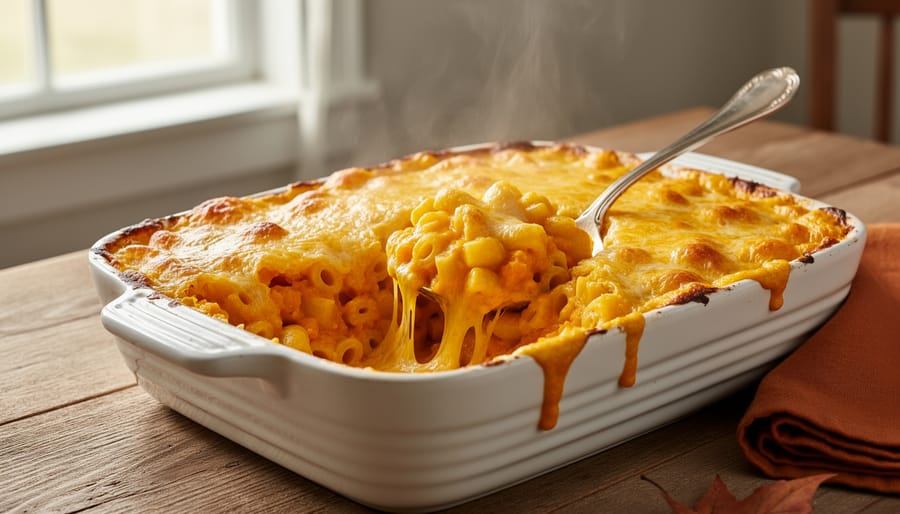
You’ve got two good options here, and neither one is wrong. For ultra-creamy mac, serve it straight from the pot while the sauce is still glossy and loose. For a golden, bubbly finish, spoon it into a baking dish, scatter extra cheese or crunchy breadcrumbs on top, and bake until the edges bubble and the top turns light brown. Go by what you see rather than the clock.
Want a more balanced plate? Stir in wilted spinach or kale, or fold in white beans for a boost of plant-based protein.
Here’s the whole process in one quick recap to follow along while you cook:
- Roast or cook the squash until fork-tender, and boil the pasta just shy of al dente.
- Blend the squash with warm liquid and seasonings until completely smooth.
- Melt in the cheddar and Parmesan over gentle heat, then fold in the pasta.
- Serve from the pot, or top and bake until bubbly and golden.
How to Tell It Turned Out Right (and What to Tweak Next Time)
A good batch is easy to spot. The sauce looks smooth and glossy, clinging to every noodle instead of pooling at the bottom of the pan. The cheese has melted in without any graininess, the flavor lands somewhere between sweet and savory, and the pasta is tender but still has a little bite.
If something’s off, it’s almost always a quick fix:
– Too thick: stir in a splash of pasta water or milk until it loosens.
– Bland: add a pinch of salt, a squeeze of lemon, or a little mustard powder.
– Too sweet: add more cheese or a bit of acid to balance it.
– Sauce separated: take it off the heat and whisk in a little warm liquid.
My first batch wasn’t pretty. The sauce was a touch too sweet and a little thick, and I nearly gave up on it. A spoonful of pasta water and a squeeze of lemon turned it around, and I’ve trusted that “taste, then tweak” habit ever since.
Leftovers keep well in an airtight container in the fridge. When you reheat them, add a splash of milk or water and warm gently, stirring, so the sauce turns creamy again.
Next time, play around. Try roasting the squash for deeper, caramelized flavor, fold in spinach or broccoli, or switch to shells or rotini, which hold sauce nicely. Nothing here has to be perfect, and each batch will teach you something.
Making Butternut Squash Mac and Cheese Fit Your Everyday Wellness
Here’s something I tell my clients all the time: a comforting bowl of mac and cheese doesn’t need to be “fixed” to belong in a healthy life. The squash already brings some fiber and a gorgeous golden color to a classic favorite, and that’s a nice place to start.
From there, build the plate in whatever way feels good to you. A crisp side salad, a tray of roasted broccoli or Brussels sprouts, or a scoop of white beans or some grilled chicken can round things out. Or skip all of it and just enjoy the bowl as it is. Both are fine.
What matters most is the bigger pattern, not any single meal. Wellness grows from everyday consistencynot from getting one dinner perfectly balanced. If you want help building habits that feel doable, these tips on everyday consistency are a gentle place to start.
Portions, ingredients, and add-ins are yours to adjust. Maybe that means a smaller serving alongside extra veggies, or a plant-based cheese swap that suits your body better. There’s no single right way to do this. If you’d like guidance shaped around your own needs, personalized support can help you find what works for you.
Butternut Squash Mac and Cheese FAQs
Can I make butternut squash mac and cheese ahead of time?
Yes, and it’s a great one for leftovers. Prepare the squash sauce and pasta, assemble in your baking dish, and bake when you’re ready, or finish it on the stovetop and reheat later.
Can I use frozen or pre-cut squash?
Absolutely. Pre-cut squash saves you the trickiest chopping, and frozen cubes work well once they’re roasted or simmered until fork-tender and blended smooth.
Can I make it dairy-free or vegan?
You can. Choose a melty plant-based cheese, use plant milk or broth to thin the sauce, and season a little more boldly, since plant cheeses can taste milder. It helps to read vegan cheese labels so you know what you’re getting.
What pasta works best?
Shapes with nooks, like elbows, shells, or cavatappi, hold the creamy sauce nicely. For more fiber or protein, whole-grain or chickpea pasta works too, just cook it a touch under al dente.
Is it worth making versus buying a seasonal version? Honestly, both have a place. Trader Joe’s sells its Butternut Squash Mac & Cheese for $3.79 per 12 oz, which is a handy option on a busy night. Making your own gives you control over the cheese, the seasoning, and the add-ins, plus a big batch of leftovers, so choose whichever fits your week.
Here’s what I love most about this dish: it’s forgiving. A little extra squash, a splash more pasta water, a different cheese on hand, and it still turns out warm, creamy, and deeply satisfying. Nothing about it needs to be perfect to be worth sitting down to.
So make it your own. Roast the squash for a deeper, caramelized flavor, or grab pre-cut cubes on a busy night. Stir in greens, toss in white beans, swap the pasta, or go dairy-free with a melty plant-based cheese. Your kitchen, your rules.
Comfort food and wellness don’t have to compete. They can share the same table, and the same bowl. When you cook in a way that feels good, you’re already building a kinder relationship with food.
I hope you try this recipe soon, and I hope you enjoy every bite. When you’re ready for more cozy inspiration, explore the other plant-based recipes on the site. And if you’d like support tailoring meals to your own needs and goals, reach out for personalized nutrition guidance. I’d love to help.